National News
Again, Nigeria fails US fiscal transparency test

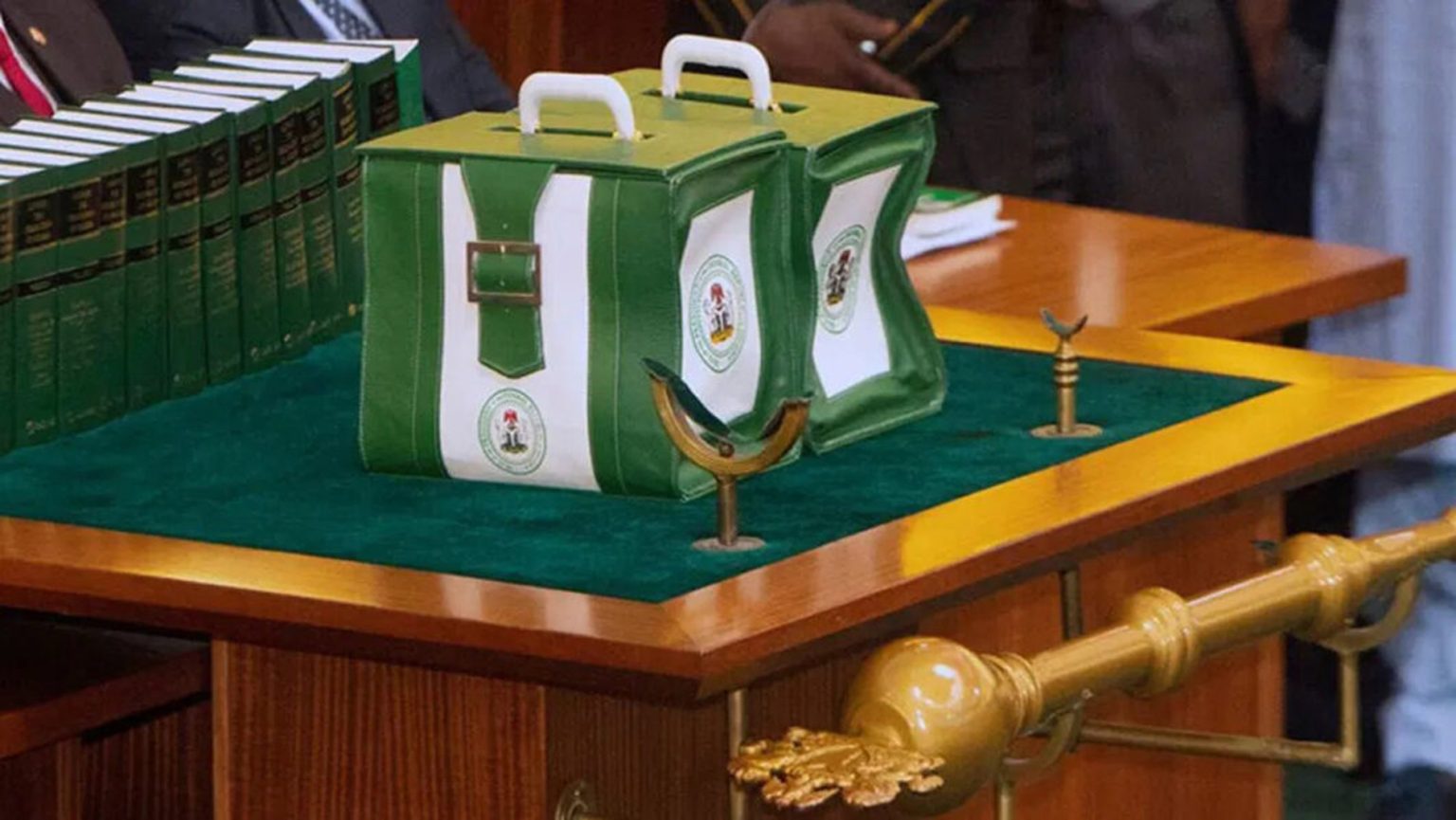
Nigeria has failed to meet the minimum fiscal transparency requirements for the second consecutive year, according to the United States Department of State.
The department said Nigeria made no significant progress in 2025 towards improving its financial management and providing greater access to information on its public finances.
This was contained in the 2026 Fiscal Transparency Report released on Tuesday. The report assessed 139 governments and the Palestinian Authority, with only 73 meeting the minimum fiscal transparency standards.
Of the 67 governments that failed to meet the required standards, 14 were found to have made significant progress, while 53 countries, including Nigeria, recorded no significant improvement.
The report came against the backdrop of complaints of poor implemetation of the nation’s budget by Nigerians, especially as the present government is running three budget – 20224, 2025 and 2026- simultaneously.
According to the State Department, the assessment was based on information gathered by the U.S Embassy in Abuja, other federal agencies, international organizations and civil society groups between January 1 and December 31, 2025.
The Presidency in a swift reaction last night, said transparency, accountability and effective public financial management remained important priorities of the federal government.
But the US report delivered a damning verdict on Nigeria’s budget process, saying the national budget remained vague on both government revenue and expenditures.
It specifically accused the federal government, among other things, of failing to provide a complete picture of its revenue and expenditures during the review period.
“Budget documents did not provide a substantially complete picture of the government’s revenues and expenditures, or break down expenditures to support executive offices in the budget,” the report stated.
According to the report, a substantially complete budget should show income and spending by ministry, detail revenue by source and type, including oil and non-oil, and disclose allocations to state-owned enterprises and special accounts.
Nigeria’s documents, the report found, fell short of that standard.
The department also flagged a credibility gap in budget execution, saying “actual revenues and expenditures did not reasonably correspond to those in the enacted budget.”
The finding marked a significant decline for Nigeria, compared to 2025 when the U.S said Nigeria’s “budget documents provided a substantially complete picture of the government’s planned expenditures and revenue and were generally reliable.”
The report also noted that while Nigeria published its enacted budget and end-of-year report online, the government “did not publish its executive budget proposal within a reasonable period.”
Under the U.S criteria, the executive proposal should be made public at least one month before the start of the fiscal year and before legislative approval to allow meaningful public debate.
Audit office lacks independence
The report also took aim at Nigeria’s oversight institutions, saying the country’s supreme audit institution, Office of the Auditor-General of the Federal, OAuGF, did not meet international standards of independence or publish substantive reports.
The audit office, which is supposed to verify how public money was spent and publish findings within 12 months of the end-of-year report, was noted to have access to the entire executed budget but failed to publish it.
“The supreme audit institution should meet international standards of independence, audit the executed budget, and verify the annual financial statements. The results of such audits… should be published within a reasonable period,” the report stated.
It stressed that without independence and published reports, citizens and lawmakers lacked a critical tool for accountability.
Public procurement, contract details hidden from public
On procurement and natural resources, the U.S report said Nigeria’s processes remained opaque, arguing that the government did not publish accessible information on public procurement contracts.
For natural resource extraction, the report acknowledged that Nigeria “specified in law the criteria and procedures for awarding contracts and licenses and followed existing regulations in practice.”
However, it added that the basic parameters of concessions such as geographic area, resource, duration, and company awarded, were not made public after decisions were taken.
The 2026 report also introduced a tougher requirement: governments must now make the terms and conditions of sovereign loans, including liabilities and collateralised assets, publicly accessible.
Nigeria made information on debt obligations, including major state-owned enterprise debt, publicly available, but the department did not assess whether loan terms met the new standard.
The State Department said fiscal transparency was not just a bureaucratic exercise but a critical element of effective public financial management that informed citizens how tax revenues were spent, built market confidence, reduced the risk of corruption, and helped create competitive conditions for businesses.
“Transparency provides citizens a window into government budgets and those citizens, in turn, hold governments accountable. It underpins market confidence and growth,” the report said.
While the report stressed that failing the test didn’t necessarily mean there was significant corruption, it noted that a lack of transparency could be an enabling factor for corruption, unfair practices, financial crimes, and predatory lending and practices.
For U.S policymakers, the report also served to ensure that American taxpayer assistance was used appropriately and to promote business-enabling environments for U.S companies abroad.
The few positives noted
Despite the broad criticisms, the State Department acknowledged areas where Nigeria met basic requirements.
According to the Department, the government made its enacted budget and end-of-year report widely and easily accessible to the public, including online, thereby meeting the U.S test for public availability for those two documents.
Secondly, it noted that Nigeria made “information on debt obligations, including major state-owned enterprise debt, publicly available.”
The report also noted that the country’s sovereign wealth fund had a sound legal framework and disclosed its source of funding and general approach to withdrawals.
According to the report, these are, however, not enough to lift Nigeria above the minimum threshold.
The U.S State Department advised Nigeria to improve fiscal transparency by taking six key steps, including publishing the executive budget proposal online in good time, providing a detailed and complete breakdown of revenues and expenditures by ministry and source, and clearly stating spending for executive offices.
Washington also urged Abuja to ensure actual spending matched the approved budget with explanations for any major changes; strengthen the independence of the Auditor-General’s office, publish its audit reports, and make public procurement contract details easily accessible.
Global picture
Globally, the U.S found that 73 governments met minimum requirements, adding that the 67 did not included major economies such as China, Egypt, Saudi Arabia, Pakistan and Ukraine.
Of those 67, only 14 made significant progress during the review period. Countries listed as making progress included Bangladesh, Cameroon, Central African Republic, Chad, Dominican Republic, Ecuador, Ethiopia, Laos, Lebanon, Liberia, Libya, Niger, Sao Tome and Principe, and Senegal.
Nigeria was grouped with 53 countries that made no significant progress, including Algeria, Angola, Uganda and Tanzania, The Gambia, Guinea, Guinea-Bissau, Mali, Sierra Leone and Togo, and Mali, among others.
The U.S verdict on Nigeria’s fiscal transparency comes amid heated debate over specific line items in the 2026 budget, including allocations for religious infrastructure, separate budget provisions for the construction and renovation of mosques and churches.
Other flagged items included billions of naira earmarked for constituency projects spread across ministries that do not have a direct mandate for such projects, duplicated road and school projects appearing in different agencies, and lump-sum allocations like “special presidential interventions” and “miscellaneous” running into hundreds of billions with no breakdown.
The congressionally-mandated Fiscal Transparency Report is published annually and used by Washington to guide engagement with partner countries and determine eligibility for certain forms of U.S assistance.
As Nigeria prepares its 2027 budget cycle, the report puts fresh pressure on the federal government to close the transparency gaps that have now kept the country below U.S standards for two years running.
Fiscal transparency, accountability remain our priority–Presidency
Reacting to the report, Special Adviser to the President on Media and Public Communication, Sunday Dare, said Nigeria would continue to implement reforms aimed at strengthening the management, reporting and disclosure of public resources.
He said: “The report by the U.S. Department of State on fiscal transparency is noted. Fiscal transparency, accountability and effective public financial management remain important priorities of the federal government, and Nigeria continues to implement reforms aimed at strengthening the management, reporting and disclosure of public resources.
“It is important, however, to properly contextualise the findings. The U.S. Fiscal Transparency Report is a specific assessment against the Department of State’s minimum fiscal-transparency requirements, particularly the public disclosure of national budget information, government contracts and natural-resource licenses.
“It should, therefore, not be interpreted as a comprehensive assessment of all fiscal and public financial management reforms currently underway in Nigeria.
“Indeed, the report itself recognises progress by Nigeria in making budget documents and debt obligations publicly available. The issues identified, particularly around procurement disclosure, budget-execution reporting and audit processes, are areas the government takes seriously and where ongoing institutional reforms are intended to produce further improvements.
“Nigeria has established a number of mechanisms to promote fiscal transparency, including the Open Treasury initiative, public budget documentation, debt disclosures and reforms to public procurement. The government is also strengthening digital procurement and other systems designed to improve the accessibility, reliability and timeliness of public financial information.
“The appropriate response, therefore, is neither to dismiss the findings nor portray them as a complete characterisation of Nigeria’s fiscal governance. Rather, the report provides an external benchmark against which existing reforms can be further strengthened.
“The federal government remains committed to improving the quality and timeliness of fiscal reporting, strengthening audit institutions, expanding access to procurement information and ensuring that citizens, investors and other stakeholders have greater visibility into the management and utilization of public resources.
“The objective is ultimately the same: a more transparent, accountable and credible fiscal system that strengthens public confidence, supports investment and ensures that public resources are managed efficiently and in the national interest.”
Budget implementation unclear, vague – BudgIT
Reacting, the Country Director of BudgIT, Mr. Vahyala Kwaga, agreed with the US report, saying the federal government’s budgets, especially the capital component were often vague.
His words: “The Nigerian federal budget has been consistently clear in terms of its revenue and expenditure composition. What hasn’t been clear for nearly one fiscal year is the report on budget implementation.
‘’It’s easy to pronounce figures but it appears incredibly difficult for this administration to report on spending and earnings from a consolidated perspective. This is all the more egregious, as Nigeria is meant to have adopted the International Public Sector Accounting Standards, IPSAS.
“For the second point, it is true that the Office of the Auditor General of the Federation is not independent. Neither the scope of his investigative authority nor his personnel are independently managed by his office.
“ While it has been recognised that the audit regime needs to change, the President seems unwilling to sign the Audit amendment bill that has been on his desk for months. It’s clear this administration is unwilling to move Nigeria away from a 1956 audit legislation.
“The budget is vague insofar as several components of capital expenditure have been moved to the nebulous ‘capital supplementation’ and the 2024 and 2025 repeal and re-enactment bills (now laws) have essentially smuggled in projects that did not undergo standard legislative scrutiny.
“Contract details have generally not been made public. While the line items within the capital expenditure component of the budget generally indicate where the government is concerned programmatically, the process of procurement, which ought to be governed by the extant 2007 law-is observed more in breach than implementation.
“For instance the procurement journal is not publicised, tenders may be announced but information on the bid opening event will not be announced and evidence of competitive bidding processes are absent.
“Debt information has been available but the necessary debt sustainability analyses have not been published since 2023.”
PFIPC: Reps C’ttee fails to sit as scheduled, raises fresh questions over investigation
The House of Representatives Ad hoc Committee investigating the controversial Presidential Foreign Investment Promotion Council, PFIPC, failed to sit yesterday as scheduled, despite adjourning its last investigative hearing to August 12 for the continuation of the probe.
Journalists and other stakeholders who were expecting the committee to proceed with its scheduled proceedings were left without an explanation as the hearing did not take place.
At press time yesterday, neither the committee nor its chairman, Yusuf Gagdi, had issued a statement explaining why the sitting did not hold or whether the hearing had been postponed to another date.
The development came at a critical stage of the investigation, with the committee earlier announcing that it would reconvene on Wednesday to invite relevant government agencies and stakeholders for what was expected to be the concluding phase of its public hearing.
Chairman of the committee, Yusuf Gagdi, had, at the end of the committee’s previous sitting, announced that the panel would reconvene on Wednesday, August 12, with relevant agencies expected to appear before it.
The committee had indicated that the session could be its final public hearing before members begin compiling their findings and recommendations.
The failure of the committee to sit as scheduled is coming against the backdrop of mounting public interest in the investigation and fresh developments surrounding the alleged fake agency.
How the controversy started
The controversy centres on the Presidential Foreign Investment Promotion Council, an organisation which allegedly operated as a federal government agency despite not having been established by law, executive order or any other valid government instrument.
The issue became public after questions were raised over the inclusion of the purported council in the 2026 Appropriation Act, with a budgetary provision of about N1.3 billion allocated to it.
The House subsequently constituted a 12-member Ad hoc Committee, chaired by Yusuf Gagdi, to investigate how an organisation that allegedly had no legal foundation found its way into the federal government’s budget and how it was able to operate within government structures.
The investigation has since widened beyond the budget allocation to include the alleged use of forged government documents, the acquisition of office space, the use of government vehicle number plates and attempts to obtain recognition from several Ministries, Departments and Agencies, MDAs.
Forged documents uncovered
One of the major revelations before the committee was the discovery of allegedly forged documents purportedly emanating from several government institutions.
The Accountant-General of the Federation, Shamseldeen Ogunjimi, told the committee that his office acted on a letter purportedly originating from the State House when it processed a budget code for the council.
However, he later told lawmakers that the letter did not originate from the Presidency.
“The letter that was received by the Treasury was respectfully addressed as coming from the State House. That letter was never issued by the State House,” Ogunjimi said.
The committee subsequently disclosed that it had uncovered about 29 allegedly forged official documents linked to the operations of the purported agency.
The documents were said to have been traced to institutions, including the State House, the Office of the Head of the Civil Service of the Federation, the Office of the Secretary to the Government of the Federation and the Federal Ministry of Finance.
The Head of the Civil Service of the Federation, Didi Esther Walson-Jack, also admitted before the panel that due diligence was not sufficiently conducted in the process through which documents relating to the purported agency were considered.
The committee chairman subsequently described the purported appointment letter of the alleged Director-General of the PFIPC, Adeniyi Adeyemi, as fake.
“It was established that the so-called letter of appointment was fake, confirmed by different agencies, and the Act presented to the Head of Service was equally fake, forged by the DG; it was established,” Gagdi said.
Adeyemi’s appearance remains a major issue
A major unresolved aspect of the probe has been the committee’s inability to publicly question Adeyemi, who presented himself as the Director-General of the purported council.
The committee had earlier ordered the Inspector-General of Police to produce Adeyemi before it within 48 hours, saying his testimony was important to resolving several outstanding questions surrounding the documents and activities of the organisation.
The police, however, informed the committee that Adeyemi was being held pursuant to a court order and could not simply be released to appear before the lawmakers without appropriate judicial authorisation.


 Follow Us on Google Discover







INEC: Over 9.32 million Nigerian youths register ahead of 2027 election

Benue: Tension as thugs kill NDC Ward Chairman in Makurdi

66th Independence: Tinubu to address Nigerians Thursday at 7am

Tinubu signs amendment bill, extends 2025 budget implementation to December 31

Fake PFIPC DG Adeniyi remanded in Kuje prison over eight-count charge

BREAKING: I will resign as FCT Minister if Tinubu loses Rivers, FCT in 2027 – Wike

DLA raises alarm over fourth extension of 2025 capital budget implementation

Speaker Abbas sponsors 120 FCT inmates for 2026 NABTEB, NECO exams

JAMB extends deadline for 2021–2025 admission to November 30

Five feared killed, several injured in Niger govt House stampede

‘Release Them Now’ — Atiku demands freedom for five arrested over ‘Tinubu Must Go’ t-shirts

BREAKING: FG declares Thursday Public Holiday to mark Nigeria’s 66th Independence Anniversary

Independence Day: NSCDC deploys 3,000 personnel across Abuja

Mambilla Saga: Lawyers petition LPDC to discipline former AGF Malami over alleged misconduct

Disaster averted as solar wiring sparks fire in Kwara building

Dangote Group announces 77 job vacancies across Nigeria, Africa – Apply Now

IITA Recruitment 2026: International Institute of Tropical Agriculture opens vacancies – Apply Now

IBEDC announces recruitment for Operations, Technical Audit Officers (Apply Now)

Court orders Wike’s son Jordan to produce American Passport over $2.1m land fraud suit
BREAKING: FG declares Thursday Public Holiday to mark Nigeria’s 66th Independence Anniversary

BREAKING: Tinubu returns home after four weeks vacation in Europe

Public Servants threaten October 2 strike over petrol price, wage award, gets NLC backing

Ogun 2027: PDP defends Adebutu, dismisses eligibility claims

Education Ministry releases approved textbooks for Nigerian schools

BREAKING: Premier League Commission confirms Manchester City guilty of financial rule breaches

Guinea-Bissau thrash sloppy Super Eagles of Nigeria 3-0 in AFCON Qualifier

Tinubu, Otedola meet at private dinner in Paris

Five arrested, remanded in prison for wearing ‘Tinubu Must Go’ T-Shirts in Borno

Supreme Court judgement: Trouble for Wike’s ally Chinda, other erring candidates as INEC moves to take action next week
