National News
High borrowing, illicit financial flows responsible for Africa’s underdevelopment – Tinubu

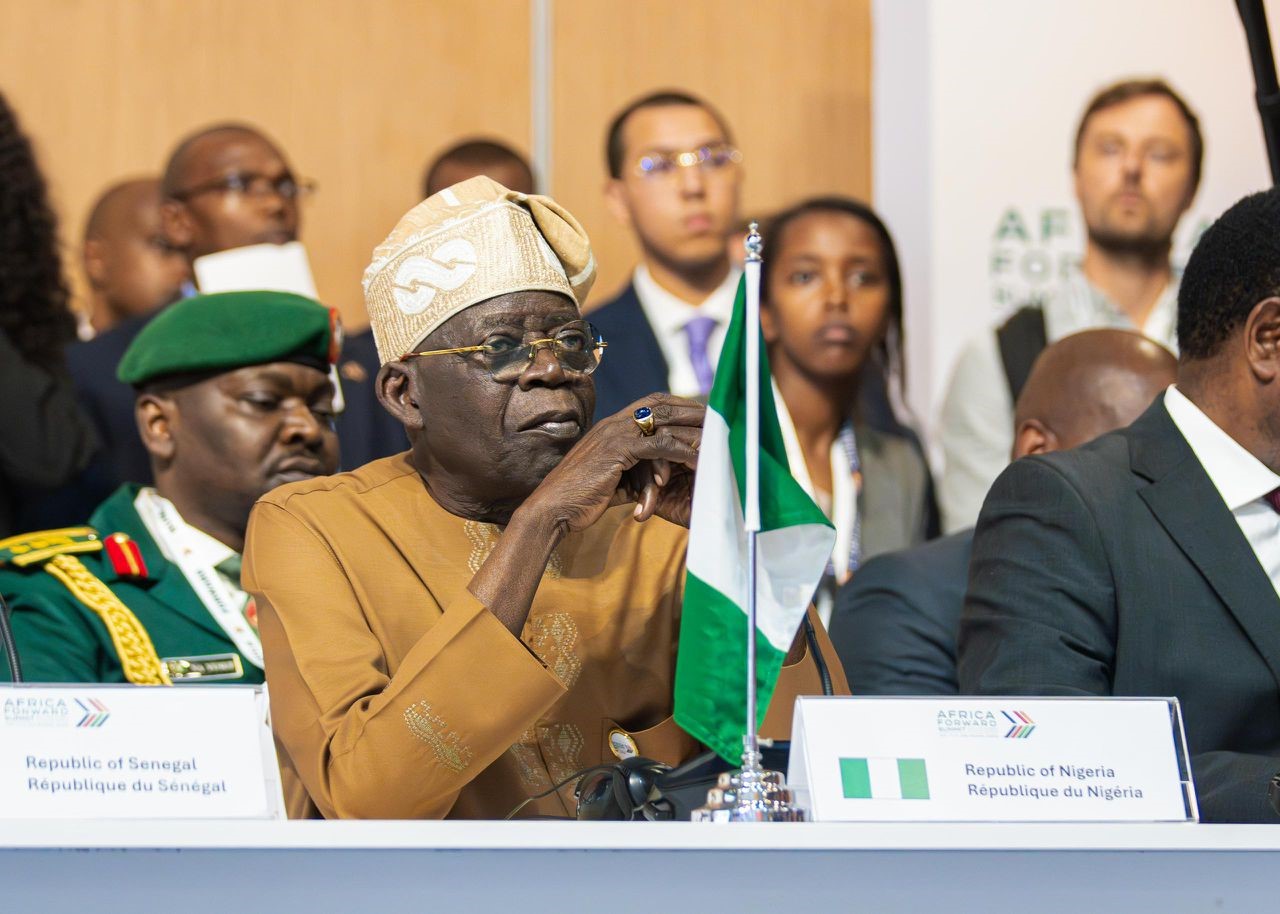
President Bola Ahmed Tinubu has blamed illicit financial flows, restrictive global financial policies and high borrowing costs for the underdevelopment of Africa’s manufacturing sector, warning that the continent will continue to lag behind unless structural inequalities in the global financial system are addressed.
According to a statement issued by presidential spokesperson, Bayo Onanuga, Tinubu made the remarks on Tuesday at the Africa Forward Summit in Nairobi, Kenya, co-hosted by French President Emmanuel Macron and Kenyan President William Ruto.
Speaking during a session on financing industrial development attended by leaders from over 30 countries, Tinubu lamented that Africa contributes less than two per cent to global manufacturing because the continent largely exports raw materials while importing finished products.
“How can an African manufacturer compete with competitors in Europe, Asia, or North America when borrowing costs in Africa are five to ten times higher?” Tinubu asked.
The President warned that the current global financial architecture risks losing relevance if it fails to address the structural disadvantages confronting developing economies.
Tinubu said Nigeria had embarked on major economic reforms aimed at restoring investor confidence, including the removal of fuel subsidies, exchange rate unification and a banking recapitalisation programme valued at over $45.5 billion.
Despite the reforms, he noted that increasing debt servicing obligations continue to limit investments in industrialisation and infrastructure development.
According to him, Nigeria is projected to spend about $11.6 billion on debt servicing in 2026, reducing the country’s fiscal space for critical sectors.
Tinubu further argued that illicit financial flows and restrictive international policies continue to weaken Africa’s industrial competitiveness, insisting that the continent must move beyond exporting raw materials.
He stressed that African countries should begin processing minerals locally, refining crude oil domestically and manufacturing essential products such as pharmaceuticals to achieve sustainable economic growth.
The President also promoted Nigeria’s blue economy strategy as a key driver of regional integration and maritime economic expansion across Africa.
“Interoperable systems, harmonised laws, and seamless joint enforcement must become operational realities,” Tinubu said.
“Secure sea lanes, predictable regulations, and functional courts remain essential to unlocking private sector investments in Africa’s maritime economy.”
He disclosed that Nigeria would make its Deep Blue Project maritime intelligence infrastructure available as a regional data hub for Gulf of Guinea countries.
Tinubu also pledged continued investment in climate-aligned port modernisation and digital transformation within the maritime sector.
He urged African nations to move “from sea blindness to ocean sovereignty” through stronger maritime cooperation and improved security coordination.


 Follow Us on Google Discover



La Liga: Unstoppable Barcelona beat Real Betis 5-2 to extend winning run

EPL: Super Eagles star Iwobi fires Fulham to first league victory

Ogun hospital under fire as Nurse dies of asthma attack amid alleged oxygen failure

Maryam Babangida Center for Women Devt gets first wheel chair ramp after 34 years

Shettima inaugurates Arewa for Asiwaju campaign office in Abuja

2027: ‘APM will beat Tinubu in 12 battleground states’ – Makinde’s campaign team

Veteran Journalist, diplomat Dele Cole dies at 86

Suspended NSCDC commandant apologises over deaths of suspected illegal miners in Niger

EPL: Martinez rushed to hospital after head injury as Chelsea beat Everton

COAS arrives Borno as Military moves to clear terrorist camps, rescue abductees

Macky Sall quits race for UN Secretary-General position

Buhari backed Osinbajo’s presidential ambition four times, Akande tells Babachir Lawal

Dr. Benjamins‑Laniyi urges media to amplify women’s leadership, adopt gender‑sensitive reporting

Pope Leo XIV set to leave hospital after lung cancer surgery

Gunmen kill four vigilantes in Plateau community

Erisco Foods announces 13 job openings across Nigeria – Apply Now

2027: Step down if you are not working for Tinubu – Deji Adeyanju dares Obi, Kwankwaso

House Officers, Nurses, Radiographers, Others wanted as DELSUTH opens recruitment – Apply Now

Tinubu reappoints Bala Bila as INEC commissioner, nominates six others

Elon Musk unveils Tesla’s ‘flying’ car in stunning demonstration

2027: Kwankwaso a goat in sheep’s clothing, secretly working for Tinubu – Atiku Campaign Council

2027: Tinubu to miss rallies in over 20 States as APC releases campaign timetable

33 Governors cannot be wrong in supporting Tinubu – Bayo Onanuga

2027: ‘Atiku, Obi, Duke, Makinde are not threats to Tinubu’, says APC
Gunmen storm Plateau, kill traditional ruler at residence

2027: ‘Don’t trust your destiny to ‘kalokalo’ people’ – Wike warns Rivers voters against Atiku, Amaechi, Obi

Outrage as suspected cultists unveil renovated police post in Rivers

Atiku fully fit, ready to campaign in all 36 states, interact with Nigerians – ADC PCC

BREAKING: Oyebanji makes history as first Ekiti Governor to win second consecutive term
