News
How NECO questions were allegedly sold for N3,000 before exams – Minister

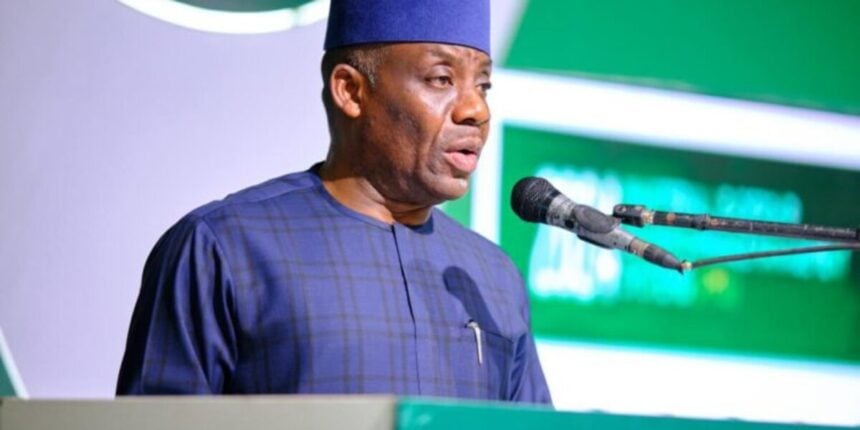
The Minister of Education, Dr Tunji Alausa, has revealed that some National Examinations Council (NECO) examination questions were allegedly sold for N3,000 before candidates sat for the papers.
Alausa disclosed this on Thursday during a meeting with the National Association of Proprietors of Private Schools and other stakeholders in the education sector.
The minister described the level of examination malpractice in Nigeria as “mind-boggling”.
He warned parents, teachers, school proprietors, principals, invigilators and students against engaging in activities that could undermine the credibility and integrity of public examinations.
The minister said examination malpractice had been tolerated for years, creating an unfair environment in which students who prepared adequately were disadvantaged by candidates who gained access to examination questions before the tests.
According to him, the practice could also encourage honest students to engage in malpractice in an attempt to compete with those who had access to leaked examination materials.
Alausa said, “It’s sad. Before she and I came, the acceptance of examination malpractice, cheating and examination leakages in this country was mind-boggling, and the country accepted it. It was a nightmare,” adding that the “danger was that the good students would also become bad.”
Recounting his experience in tackling examination malpractice, the minister alleged that examination questions had previously been available for sale before candidates sat for their papers.
He said, “The Registrar of NECO at the time had a name. His name was Wushishi. You would go to Wushishi… I didn’t know that Wushishi meant going to the dark website.
“They bought his question for N3,000. That was it. Before the examination. They called him Wushishi and bought the questions for N3,000 before the examination.”
The minister also recounted what he described as a difficult period during the 2025 examinations, when he was allegedly sent questions before candidates sat for the relevant papers.
He said officials were forced to verify the materials with examination authorities, sometimes discovering that the questions being circulated were the same ones scheduled for the day.
He said, “During that examination period, during the hardest time of my life, I was always worried, waking up. I would wake up to her text. She would send questions to me… She would say, ‘I just got this question.’
“It could be English or Chemistry. I was always waking up with trepidation every morning, doing work. I would send it to the HNO and ask, ‘HNO, is this correct?’ And the answer I got was, ‘Unfortunately, that’s the question we’re doing today.’
“So, that was a more aggressive intervention because we were seeing the question and confirming from the other side.”
Alausa said examination malpractice could not be treated as a problem caused solely by students, stressing that the wider education ecosystem must take responsibility for curbing the practice.
He identified parents, school owners, teachers, invigilators and principals as key stakeholders whose actions could either prevent or facilitate access to examination materials.
The minister said, “You might be in that isolated school, but the school system is also involved. In fact, I don’t blame the students that much. Any child can be bad.
“But when we have an ecosystem where parents, schools, teachers, invigilators and principals are in full connivance, the students are the smallest players. The people who should put the deterrents in place are the ones involved.”
He warned that the Federal Government would intensify measures aimed at protecting the credibility of public examinations and ensuring that academic qualifications reflected genuine learning and merit.
Alausa said the reforms were part of President Bola Ahmed Tinubu’s broader efforts to raise standards and reposition the education sector.
He said, “What are we doing? Desecrating the Nigerian system? It won’t happen. Not under the watch of this President.
“This is a country with rule of law. President Bola Ahmed Tinubu is transforming this country in a way that’s never been transformed before. This is Nigeria renaissance that we’re building to be sustainable into the future.”
He said the country had tolerated practices that weakened its education system for too long, but insisted that the Tinubu administration was determined to reverse the trend.
Minister of State for Education, Prof Suwaiba Ahmad, also urged private school proprietors and other education stakeholders to support the government’s reforms.
Ahmad noted that tighter examination controls could initially expose weaknesses in students’ actual academic preparation.
She explained that some students who appeared to perform exceptionally well in internal examinations might have become accustomed to accessing leaked questions before external examinations.
According to her, the introduction of serialised examination questions would make it more difficult for candidates to depend on leaked materials and encourage students to prepare genuinely for their examinations.


 Follow Us on Google Discover






Wike, Akpabio, Uzodimma: Unity at the podium, rival ambitions behind the Scenes? can Tinubu keep his associates together?

Real reason we removed universities from IPPIS, recruitment waiver – FG

Macron condemns looting, vandalism during cost-of-living protests in France

Lagos State: List of LGAs, population, land mass, government, other key facts

Oyo State: List of LGAs, population, land mass, government, other key facts

Osun State: List of LGAs, population, land mass, government, other key facts

Ondo State: List of LGAs, population, land mass, government, other key facts

Eight Nigerian Soldiers killed as ISWAP landmine hits Army patrol vehicle in Borno

Bauchi Health Agency boss, four children die in Road accident

‘Nigeria cannot become prosperous in four years’ — Tinubu’s Economic Adviser says

2027: Tinubu must be stopped, ‘even Buhari saw him as bad news’ — Hakeem Baba-Ahmed

APC sweeps all 21 chairmanship seats, 239 Councillorship positions in Kogi LG poll

‘₦29,000 Cannot sustain a retired officer’ — Atiku challenges Tinubu on police pensions, proposes initiative

FG ends 17-year blackout in Gombe community with 1MW solar mini-grid

EPL: Leeds hold Man Utd to 1-1 draw as pressure mounts on Carrick

Opposition will front a single candidate against Tinubu, announcement will be made few days to election – Lukman
‘₦29,000 Cannot sustain a retired officer’ — Atiku challenges Tinubu on police pensions, proposes initiative

Gunmen kill four vigilantes in Plateau community

Suspended NSCDC commandant apologises over deaths of suspected illegal miners in Niger

Veteran Journalist, diplomat Dele Cole dies at 86

Tension as traditional ruler collapses, dies in Ondo

2027: NDC will never step down for Atiku, stop attacking us – Kwankwaso replies ADC Campaign Council

2027: ‘APM will beat Tinubu in 12 battleground states’ – Makinde’s campaign team

Ogun hospital under fire as Nurse dies of asthma attack amid alleged oxygen failure

Buhari backed Osinbajo’s presidential ambition four times, Akande tells Babachir Lawal

Macky Sall quits race for UN Secretary-General position

COAS arrives Borno as Military moves to clear terrorist camps, rescue abductees

Dr. Benjamins‑Laniyi urges media to amplify women’s leadership, adopt gender‑sensitive reporting

Messi’s double fires Inter Miami to 3-1 victory over Atlanta United
