
World
Iceland votes on renewing push to join European Union

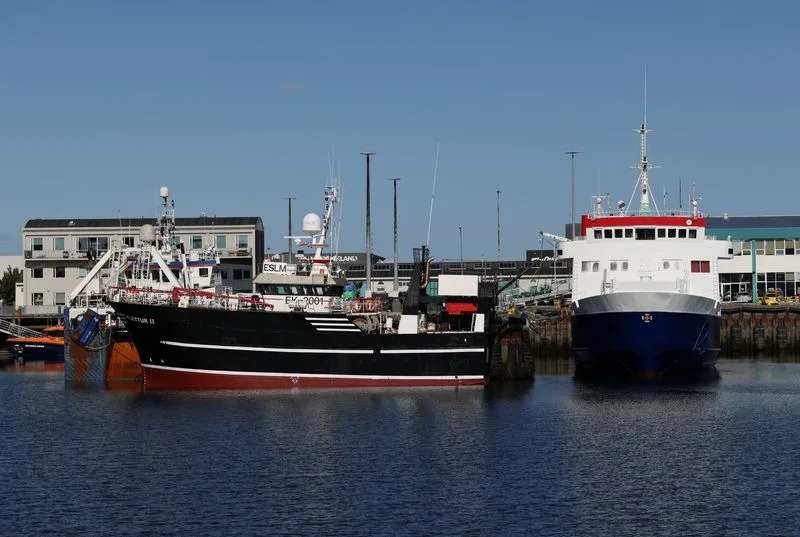
Icelanders are heading to the polls on Saturday to decide whether the country should restart negotiations to join the European Union, in a closely contested referendum being watched with interest in Brussels.
The referendum comes years after Iceland first applied for EU membership following the 2009 financial crisis, which severely affected the country’s economy.
However, the membership negotiations were suspended in 2013 after a eurosceptic government came to power.
With the vote now underway, the outcome is expected to be tight. Recent opinion polls show that supporters and opponents of resuming the EU membership talks are almost evenly matched.
“It’s pretty tight, but I’m always optimistic,” Foreign Minister Thorgerdur Katrin Gunnarsdottir, a staunch europhile, told AFP. “It’s not done until it’s done.”
Voting begins at 9:00 am (0900 GMT) and closes at 10:00 pm. With no exit polls and given the tight race, the first reliable results are only expected late Saturday at the earliest.
The around 273,000 voters are being asked to answer ‘Yes’ or ‘No’ to the question: “Should Iceland resume accession negotiations with the European Union?”
If the “Yes” side wins, an accession agreement would be negotiated with Brussels and then put to a new referendum on actual membership.
The issue of fisheries — a pillar of Iceland’s economy and over which Reykjavik wants to retain exclusive control — would have to be hammered out with Brussels, which this time around appears more willing to compromise.
“The fundaments are very domestic, but there is a significant impact that has come with the second term of (US President) Donald Trump and this sort of geopolitical upheaval,” Bifrost University political scientist Eirikur Bergmann told AFP.
With Iceland’s economy now flourishing, some voters see no reason to discuss EU membership, seeing as the country already has access to the single market as a member of the European Economic Area.
“It’s like if you are in a relationship with someone you don’t live with, and if you lose something you have by getting married, then why get married?” said Hjordis Vilhjalmsdottir, a 60-year-old radio presenter whose eyeglasses bore the red, blue and white of Iceland’s flag.
“We don’t need Brussels to rule us. We can do it ourselves,” said Elias Theodorsson, a 65-year-old entrepreneur.
“We used to be one of the poorest countries in Europe only a hundred years ago. And now we are the most prominent country in Europe. We did it ourselves,” he said.
The flip side of Iceland’s regained prosperity is soaring inflation and interest rates.
Some households are paying nine percent interest on their mortgages, making the prospect of joining the eurozone — with its much lower rates — very appealing.
“There’s such a big gap, and it would mean so much for my household,” said Alexandra Yr van Erven, a 32-year-old university administrator.
“I just think it’s the responsible thing to do, to give this government the agency to negotiate a deal with the EU, so we can see what the possibilities are. And then we can evaluate the deal.”
On the global stage, the return of war in Europe with Russia’s invasion of Ukraine has shaken established security doctrines.
The unpredictability of US President Donald Trump and his threats to take over neighbouring Greenland have added to Icelanders’ concerns.
Their island is strategically located in the sub-Arctic, has no military and depends on NATO and a 1951 bilateral agreement with the United States for its defence.
“People are now bringing into question the validity of that agreement,” Bergmann said. “The geopolitical shifts are impacting the debate, but they’re not driving it.”
The referendum result will be followed closely by the EU, which has not welcomed a wealthy, net contributor to its budget since 1994.
Brussels would see Icelandic membership as an example of positive enlargement that could also make it more palatable to take in poorer countries like Montenegro — or even help change some minds in ultra-wealthy non-EU member Norway, which could end up finding itself isolated.
“Iceland’s decision would undoubtedly strengthen the case for the EU to welcome new members,” EU Enlargement Commissioner Marta Kos noted.


 Follow Us on Google Discover






LAUTECH Resident Doctors halt 50-day strike as Makinde intervenes

House Officers, Nurses, Radiographers, Others wanted as DELSUTH opens recruitment – Apply Now

FG raises health fund allocation to N40.76bn, extends insurance to prison inmates

Erisco Foods announces 13 job openings across Nigeria – Apply Now

Tinubu reappoints Bala Bila as INEC commissioner, nominates six others

2027: ‘Don’t trust your destiny to ‘kalokalo’ people’ – Wike warns Rivers voters against Atiku, Amaechi, Obi

BREAKING: Cross River PDP Chairman Venatius Ikem resigns, cites leadership crisis

Real Madrid call for immediate resignation of La Liga President over controversial remarks

BREAKING: Oyebanji makes history as first Ekiti Governor to win second consecutive term

Atiku fully fit, ready to campaign in all 36 states, interact with Nigerians – ADC PCC

2027: Tinubu afraid to face Nigerians, has no business seeking re-election — Atiku campaign council

2027: Hamzat visits MFM GO Olukoya with running mate in Lagos(Photos)

BREAKING: Tragedy averted as Aircraft makes emergency landing in Abuja after door opens mid-air

Outrage as suspected cultists unveil renovated police post in Rivers

2027: ‘It will take a miracle to stop Tinubu if opposition is divided’ – Dan Ulasi

Popular gospel singer Toluwanisings is dead

2027: Atiku, Obi, Makinde, Adebayo, Duke hold talks with six opposition parties

2027: ‘I won’t go to every state with you’ — Tinubu tells APC campaign team

Ex-Senator Bello Mandiya’s body found in Abuja home three days after he slipped, hit his head in the bathroom

‘You Betrayed Osun People’ — Adeleke, Davido face backlash over support for Tinubu

‘Nobody can destabilise Tinubu through N’Assembly’, Akpabio declares support for 2027 re-election

JUST IN: Finnish Appeal Court reduces Simon Ekpa’s jail term to four years, upholds terrorism conviction

Zamfara govt set to empower 36,176 residents with Dangote shares

Umahi reopens first Niger bridge after emergency repairs, displays Tinubu’s photos

Over 10 soldiers, four civilians feared dead as Boko Haram terrorists attack Borno military base

Tension escalates as thugs attack NDC secretariat in Edo, destroy properties

‘Local champion’ – Donald Duke takes fresh swipe at Gov Diri over Lagos-Calabar coastal highway

Lagos govt announces 3-day traffic diversion on Independence bridge for emergency repairs

Tension mounts as NLC rejects FG’s response to 14-day ultimatum
