
National News
INEC Chairman Amupitan seeks Senate backing ahead of 2027 polls

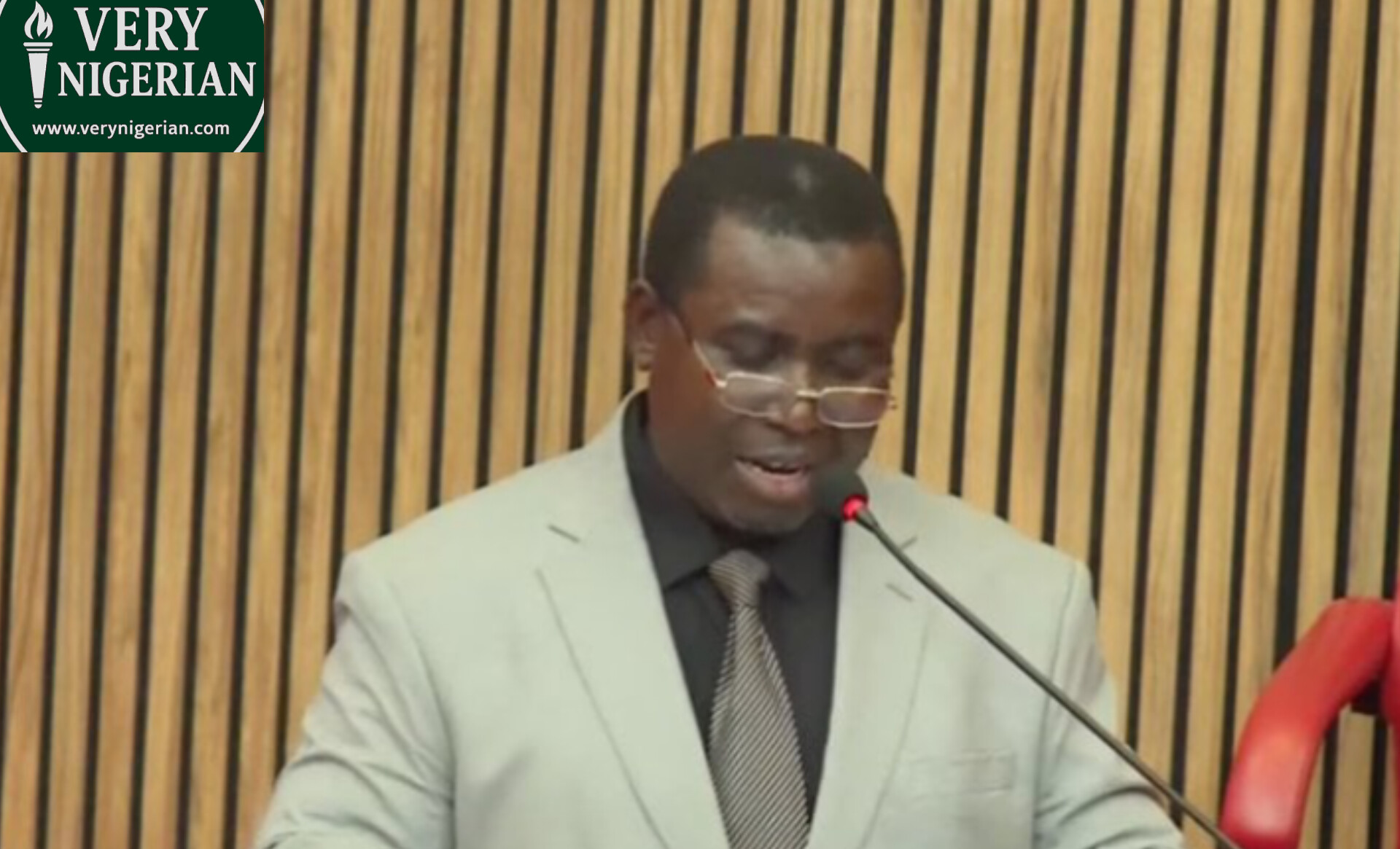
Professor Joash Amupitan, SAN, the chairman of the Independent National Electoral Commission (INEC), has highlighted key priorities to improve Nigeria’s electoral system, focusing on electoral reform, infrastructure development, and voter education.
He made the remarks during his first formal meeting with the Senate Committee on Electoral Matters.
The meeting took place on Tuesday, December 16, 2025, at Room 107 of the Senate New Wing. Professor Amupitan was joined by all National Commissioners, the Secretary to the Commission, and his technical aides, reflecting the significance INEC placed on the interaction.
Senators present included the Committee Chairman, Simon Bako Lalong, alongside Adams Oshiomhole, Tony Nwoye, Ireti Kingibe, Ede Dafinone, Emma Nwachukwu, Kelvin Chukwu, and Sunday Katum.
Speaking at the meeting, Prof. Amupitan described the Senate Committee on Electoral Matters as a vital part of Nigeria’s democracy. He noted that the Committee’s legislative and oversight roles are crucial for maintaining the credibility and stability of the country’s elections.
He also expressed gratitude to the Senate for the thorough confirmation process that led to his appointment, calling the engagement an example of institutional collaboration based on constitutional principles.
Reflecting on the early days of his tenure, the INEC Chairman recalled that the Commission was immediately confronted with the conduct of the Anambra Governorship Election of November 8, 2025. He reported that the election was successfully concluded in a single day, a notable departure from previous experiences, and attributed the outcome to effective inter-agency cooperation and the support of the National Assembly and other stakeholders. According to him, the exercise provided valuable lessons and insights into areas requiring further improvement, particularly in logistics and operational efficiency.
Prof. Amupitan emphasised that Nigeria’s electoral system operates within a tripartite framework comprising the Constitution, the Electoral Act, and INEC’s Regulations and Guidelines. While the Commission is empowered to conduct elections and issue regulations, he stressed that these responsibilities must remain consistent with the provisions of the Constitution and the laws enacted by the National Assembly. He commended the legislature for granting INEC the opportunity to contribute to the ongoing process of constitutional and electoral amendments.
Outlining his vision for the Commission, the INEC Chairman stated that supporting the National Assembly in achieving meaningful electoral reforms remains a core priority of his leadership. He further emphasised the need to strengthen existing infrastructure and deploy technology in a manner that enhances transparency, credibility, and inclusiveness in the electoral process. He acknowledged the challenges associated with public perception and expectations, emphasising the importance of adhering to constitutionalism, due process, and institutional boundaries in the conduct of elections.
The INEC chairman also identified voter education as a critical mandate that will receive increased attention under his leadership, noting that informed participation by citizens is essential to the integrity and credibility of elections. He emphasised the central role of logistics in electoral success and observed that preparations for forthcoming elections, including the FCT Area Council Election and other off-cycle elections scheduled for 2026, are closely linked to the timely conclusion of electoral reforms by the National Assembly.
Earlier in his remarks, the Chairman of the Senate Committee on Electoral Matters, Senator Simon Bako Lalong, welcomed Prof. Amupitan and his delegation, describing the interactive session as a significant milestone in efforts to strengthen Nigeria’s democratic institutions. He reaffirmed the central role of INEC in shaping public confidence in governance and stressed that credible elections remain fundamental to democratic legitimacy.
Senator Lalong congratulated the INEC Chairman on his appointment and noted that he assumed office at a time of heightened public expectations and evolving challenges, including technological innovation, voter education, electoral security, logistics, and public trust. He assured the Commission of the Committee’s readiness to provide legislative support, constructive oversight, and policy guidance to enable INEC to effectively discharge its constitutional mandate.
He emphasised that the interactive session was designed to promote frank dialogue and institutional collaboration rather than ceremonial engagement. While reaffirming the Committee’s commitment to electoral reforms through legislation and budgetary support, Senator Lalong stressed that oversight does not amount to interference, noting that respect for INEC’s constitutional independence remains a guiding principle.


 Follow Us on Google Discover






Macky Sall quits race for UN Secretary-General position

Buhari backed Osinbajo’s presidential ambition four times, Akande tells Babachir Lawal

Dr. Benjamins‑Laniyi urges media to amplify women’s leadership, adopt gender‑sensitive reporting

Pope Leo XIV set to leave hospital after lung cancer surgery

Gunmen kill four vigilantes in Plateau community

Tension as traditional ruler collapses, dies in Ondo

2027: Kwankwaso a goat in sheep’s clothing, secretly working for Tinubu – Atiku Campaign Council

DSS arrests Maina’s fugitive son in Abuja, hands him over to EFCC

2027: Step down if you are not working for Tinubu – Deji Adeyanju dares Obi, Kwankwaso

2027: ‘I wont join my Uncle to support Tinubu’ – Davido says

Enugu NYSC death: NAFDAC debunks claims linking corps members death to fake drugs

33 Governors cannot be wrong in supporting Tinubu – Bayo Onanuga

Security forces arrest five suspects over abduction of 20 NYSC members in Imo

Rugby star Hyron Andrews dies at 31 after accidental fall in South Africa

LAUTECH Resident Doctors halt 50-day strike as Makinde intervenes

Erisco Foods announces 13 job openings across Nigeria – Apply Now
‘You Betrayed Osun People’ — Adeleke, Davido face backlash over support for Tinubu

Ex-Senator Bello Mandiya’s body found in Abuja home three days after he slipped, hit his head in the bathroom

Tinubu reappoints Bala Bila as INEC commissioner, nominates six others

House Officers, Nurses, Radiographers, Others wanted as DELSUTH opens recruitment – Apply Now

‘I love Islam, I’ve sent people to Mecca to pray for me, Nigeria for 25 years’ – Akpabio

Over 10 soldiers, four civilians feared dead as Boko Haram terrorists attack Borno military base
2027: Step down if you are not working for Tinubu – Deji Adeyanju dares Obi, Kwankwaso

Panic in Rivers community as pipeline explosion injures 20, razes over 50 houses

Umahi reopens first Niger bridge after emergency repairs, displays Tinubu’s photos

Elon Musk unveils Tesla’s ‘flying’ car in stunning demonstration

2027: Tinubu to miss rallies in over 20 States as APC releases campaign timetable

Tension mounts as NLC rejects FG’s response to 14-day ultimatum

INEC refutes claims of missing voters’ register in Lagos wards
