
News
Mark, Atiku, Obi, others accuse FG of selective justice


A coalition of opposition leaders has accused the Federal Government of weaponising anti-corruption agencies to intimidate and weaken political opponents, warning that the trend poses a grave threat to Nigeria’s multiparty democracy ahead of the 2027 general election.
In a joint statement titled “Anti-Corruption, Not Anti-Opposition,” the opposition figures alleged that key state institutions, particularly the Economic and Financial Crimes Commission (EFCC), the Nigeria Police Force and the Independent Corrupt Practices and Other Related Offences Commission (ICPC), are increasingly being perceived as instruments of political persecution.
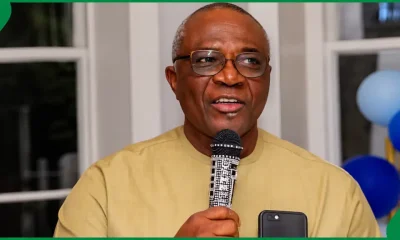
The statement was jointly signed by former Senate President and African Democratic Congress (ADC) chairman, David Mark; former Vice-President Atiku Abubakar; former Minister of State for Defence, Lawal Batagarawa; Peoples Democratic Party (PDP) Board of Trustees member, Bode George; former Labour Party presidential candidate, Peter Obi; and former All Progressives Congress (APC) national chairman, John Odigie-Oyegun.
According to them, Nigerians and the international community must be alerted to what they described as a gradual erosion of institutional independence.
“We are compelled by duty to nation and conscience to issue this statement to alert our compatriots and the international community to the unfortunate and gradual slide of our country into a state where key national institutions are increasingly perceived as tools of political intimidation, selective justice and systematic persecution of opposition leaders,” the statement read.
The opposition leaders alleged that state power is being deployed not for the genuine prevention of economic crimes, but for the persecution of perceived political adversaries, with the aim of weakening opposition voices ahead of the 2027 polls.
They also warned against what they described as a covert and undemocratic agenda to force opposition-controlled states into the ruling party through intimidation rather than fair electoral competition.
“Recent defections of opposition governors into the ruling party have reinforced public suspicion that political pressure, not ideological conviction or personal persuasion, is driving this realignment,” they said.
The leaders further accused the EFCC of selective enforcement, claiming that allegations against members of the ruling APC are often ignored, while opposition figures are subjected to investigations and media trials.
They referenced a comment previously attributed to a former APC national chairman, Adams Oshiomhole, that “once you have joined APC, all your sins are forgiven,” noting that the remark has come to symbolise public distrust in the fairness of anti-corruption enforcement.
“Whether intended as political rhetoric or not, this statement has come to symbolise a troubling reality: allegations against members of the ruling party are routinely perceived to be overlooked, while even unsubstantiated accusations against opposition figures are vigorously pursued,” they said.
The coalition warned that the perceived erosion of the EFCC’s independence undermines public trust and could fuel political instability as the country approaches another election cycle.
“The President must recognise that evident social and political injustice could snowball into mayhem as the nation approaches another election cycle. This trend must be halted immediately if the nation must be spared a major catastrophe,” the statement added.
Among their demands, the opposition leaders called for the immediate depoliticisation of the EFCC and a return to its statutory mandate, stressing that the agency must not serve the interests of any political party or faction.
“The operations of the EFCC must be urgently shielded from political interference and must not serve the whims and caprices of any president, party or political faction,” they said.
They also urged Nigerians to remain vigilant against any attempt to turn the country into a de facto one-party state, calling on citizens across political, ethnic and religious lines to defend democracy.
The opposition further proposed the establishment of an independent review body to examine public accounts from 2015 to 2025, arguing that such a process would expose patterns of selective prosecution and recommend reforms to strengthen Nigeria’s anti-corruption institutions.
“Now is the time for all of us to rise in defence of our cherished multiparty democracy, and indeed, in defence of the very soul of our nation,” the statement concluded.


 Follow Us on Google Discover






Tension as traditional ruler collapses, dies in Ondo

2027: Kwankwaso a goat in sheep’s clothing, secretly working for Tinubu – Atiku Campaign Council

DSS arrests Maina’s fugitive son in Abuja, hands him over to EFCC

2027: Step down if you are not working for Tinubu – Deji Adeyanju dares Obi, Kwankwaso

2027: ‘I wont join my Uncle to support Tinubu’ – Davido says

Enugu NYSC death: NAFDAC debunks claims linking corps members death to fake drugs

33 Governors cannot be wrong in supporting Tinubu – Bayo Onanuga

Security forces arrest five suspects over abduction of 20 NYSC members in Imo

Rugby star Hyron Andrews dies at 31 after accidental fall in South Africa

LAUTECH Resident Doctors halt 50-day strike as Makinde intervenes

House Officers, Nurses, Radiographers, Others wanted as DELSUTH opens recruitment – Apply Now

FG raises health fund allocation to N40.76bn, extends insurance to prison inmates

Erisco Foods announces 13 job openings across Nigeria – Apply Now

Tinubu reappoints Bala Bila as INEC commissioner, nominates six others

2027: ‘Don’t trust your destiny to ‘kalokalo’ people’ – Wike warns Rivers voters against Atiku, Amaechi, Obi
Erisco Foods announces 13 job openings across Nigeria – Apply Now
‘You Betrayed Osun People’ — Adeleke, Davido face backlash over support for Tinubu

Ex-Senator Bello Mandiya’s body found in Abuja home three days after he slipped, hit his head in the bathroom
Tinubu reappoints Bala Bila as INEC commissioner, nominates six others

JUST IN: Finnish Appeal Court reduces Simon Ekpa’s jail term to four years, upholds terrorism conviction
House Officers, Nurses, Radiographers, Others wanted as DELSUTH opens recruitment – Apply Now

‘I love Islam, I’ve sent people to Mecca to pray for me, Nigeria for 25 years’ – Akpabio

Zamfara govt set to empower 36,176 residents with Dangote shares

Over 10 soldiers, four civilians feared dead as Boko Haram terrorists attack Borno military base

Umahi reopens first Niger bridge after emergency repairs, displays Tinubu’s photos

Panic in Rivers community as pipeline explosion injures 20, razes over 50 houses

Tension escalates as thugs attack NDC secretariat in Edo, destroy properties

‘Local champion’ – Donald Duke takes fresh swipe at Gov Diri over Lagos-Calabar coastal highway

Lagos govt announces 3-day traffic diversion on Independence bridge for emergency repairs
