Sports
South Africa moves to host 2026 WAFCON after Morocco pulls out

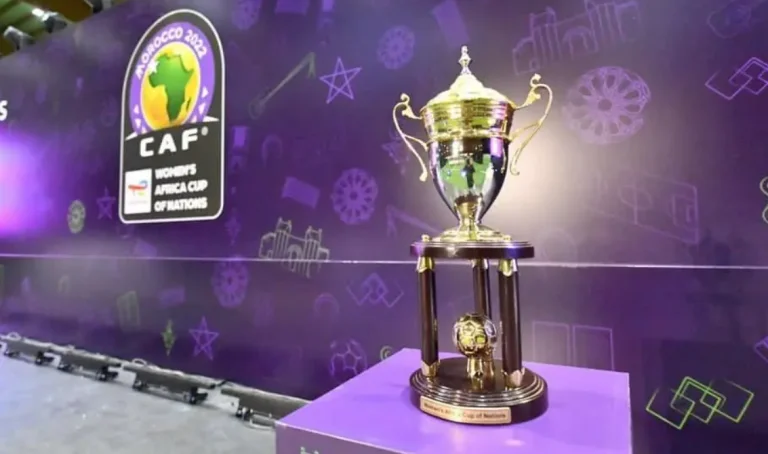
South Africa has moved to take over as host of the 2026 Women’s Africa Cup of Nations following Morocco’s reported withdrawal from staging the tournament just 60 days before kickoff.
The competition is scheduled to hold from March 17 to April 3, 2026, under a tight calendar.
The compressed schedule comes after the delayed 2024 edition, which was affected by global events, including the Paris Olympic Games.
The development was confirmed on Sunday night by South Africa’s Deputy Minister of Sport, Arts and Culture, Peace Mabe.
She said the country, also known as the Rainbow Nation, would assume hosting responsibilities after Morocco’s sudden decision to pull out of the tournament.
Speaking at the Super League Awards ceremony in Johannesburg, Mabe confirmed that the handover had been finalised, leaving South Africa with a tight window to prepare for Africa’s flagship women’s football tournament, which also doubles as a qualification pathway for the 2027 FIFA Women’s World Cup in Brazil.
“Tonight, I would like to announce that South Africa will be hosting the 2026 WAFCON, which we all know is a qualifying tournament for the 2027 Women’s World Cup in Brazil,” Mabe said.
Morocco’s withdrawal has come as a surprise, especially after the North African nation hosted the men’s Africa Cup of Nations just weeks ago.
Although no official explanation has been issued by Moroccan authorities or the Confederation of African Football (CAF), the decision is believed to follow heightened domestic tensions after the dramatic AFCON final in Rabat, where the hosts lost to Senegal.
The 2026 WAFCON was originally scheduled for March 17 to April 3 and will feature an expanded 16-team format. However, it remains unclear whether the dates will change following the switch in hosts.
The aftermath of the AFCON final was marred by controversy, disciplinary actions and public criticism, with reports suggesting growing internal pressure on Morocco to step back from hosting further major CAF competitions in the short term.
South Africa’s late confirmation as hosts presents a significant logistical challenge, but the country is no stranger to staging top-level women’s football on the continent.
Banyana Banyana lifted the WAFCON trophy on home soil in 2022, a triumph that underlined South Africa’s status as one of Africa’s leading forces in the women’s game.
The 2026 Women’s Africa Cup of Nations carries added significance, with the expanded format allowing the four semi-finalists to qualify automatically for the 2027 Women’s World Cup. The remaining two African slots will be decided through inter-confederation play-offs involving the losing quarter-finalists.


 Follow Us on Google Discover










Pope Leo XIV set to leave hospital after lung cancer surgery

Gunmen kill four vigilantes in Plateau community

Tension as traditional ruler collapses, dies in Ondo

2027: Kwankwaso a goat in sheep’s clothing, secretly working for Tinubu – Atiku Campaign Council

DSS arrests Maina’s fugitive son in Abuja, hands him over to EFCC

2027: Step down if you are not working for Tinubu – Deji Adeyanju dares Obi, Kwankwaso

2027: ‘I wont join my Uncle to support Tinubu’ – Davido says

Enugu NYSC death: NAFDAC debunks claims linking corps members death to fake drugs

33 Governors cannot be wrong in supporting Tinubu – Bayo Onanuga

Security forces arrest five suspects over abduction of 20 NYSC members in Imo

Rugby star Hyron Andrews dies at 31 after accidental fall in South Africa

LAUTECH Resident Doctors halt 50-day strike as Makinde intervenes

House Officers, Nurses, Radiographers, Others wanted as DELSUTH opens recruitment – Apply Now

FG raises health fund allocation to N40.76bn, extends insurance to prison inmates

Erisco Foods announces 13 job openings across Nigeria – Apply Now
Erisco Foods announces 13 job openings across Nigeria – Apply Now
‘You Betrayed Osun People’ — Adeleke, Davido face backlash over support for Tinubu

Ex-Senator Bello Mandiya’s body found in Abuja home three days after he slipped, hit his head in the bathroom

Tinubu reappoints Bala Bila as INEC commissioner, nominates six others
House Officers, Nurses, Radiographers, Others wanted as DELSUTH opens recruitment – Apply Now

JUST IN: Finnish Appeal Court reduces Simon Ekpa’s jail term to four years, upholds terrorism conviction

‘I love Islam, I’ve sent people to Mecca to pray for me, Nigeria for 25 years’ – Akpabio

Over 10 soldiers, four civilians feared dead as Boko Haram terrorists attack Borno military base

Zamfara govt set to empower 36,176 residents with Dangote shares

Panic in Rivers community as pipeline explosion injures 20, razes over 50 houses

Umahi reopens first Niger bridge after emergency repairs, displays Tinubu’s photos

Elon Musk unveils Tesla’s ‘flying’ car in stunning demonstration

Tension mounts as NLC rejects FG’s response to 14-day ultimatum

Lagos govt announces 3-day traffic diversion on Independence bridge for emergency repairs
