
Politics
Ted Cruz’s narrative on Nigeria’s insecurity misleading — Sen. Sumaila

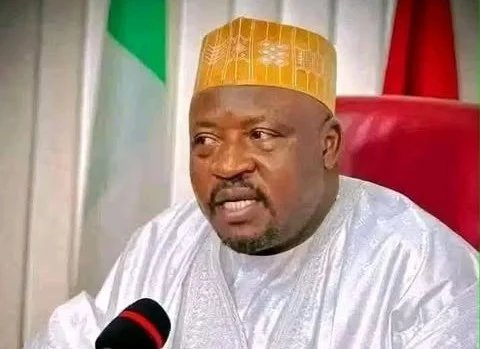
Senator Kawu Sumaila, representing Kano South, has urged United States Senator Ted Cruz to stop portraying Nigeria’s security challenges as a religious conflict, warning that such narratives could deepen divisions and undermine ongoing peace efforts.
Sumaila’s remarks followed Cruz’s criticism of the Nigerian government’s decision to engage DCI Group, a United States-based public affairs and lobbying firm, to communicate its efforts to protect Christians and tackle insecurity.
The Nigerian government retained the firm under a $9 million contract signed in December after the country was designated a “Country of Particular Concern” by the administration of US President Donald Trump.
In a post on X, Cruz alleged that Nigerian authorities had created conditions that enable violence against Christians and other religious minorities through the enforcement of blasphemy and Sharia laws while failing to effectively tackle attacks by extremist groups.
He also accused the Federal Government of focusing on a public relations campaign instead of addressing concerns raised by US lawmakers over the country’s security situation.
Reacting in a statement issued on Thursday, Sumaila said Cruz’s repeated calls for Nigeria to be redesignated as a Country of Particular Concern failed to reflect the complex realities of the nation’s security challenges.
According to the senator, the US lawmaker’s position oversimplifies Nigeria’s security crisis by presenting it mainly as persecution of Christians.
“Senator Cruz’s continued campaign to re-label Nigeria appears to be driven not by an objective assessment of the facts, but by a narrative that oversimplifies Nigeria’s security challenges and portrays them primarily through a religious lens,” the statement read.
“By presenting Nigeria’s multifaceted security crisis, which affects Muslims, Christians and adherents of other faiths alike, as a purely religious conflict, Senator Cruz contributes to a distorted international perception of the country.”
Sumaila warned that such rhetoric could inflame religious tensions, undermine ongoing peace initiatives and encourage foreign policies that do not accurately reflect the realities on the ground.
He called on Christians in Nigeria and around the world to reject narratives capable of promoting religious division, stressing that genuine friends of the country should support peace, reconciliation and interfaith cooperation.
“Any rhetoric that heightens religious polarisation ultimately places all Nigerians at greater risk, regardless of faith,” he said.
The senator noted that members of Nigeria’s security agencies, made up of Christians and Muslims, continue to work together in confronting terrorism, insurgency, banditry and kidnapping across the country.
He added that victims of insecurity include worshippers in churches and mosques, as well as residents of schools, markets and rural communities, irrespective of their religious affiliation.
Sumaila further urged the international community, diplomatic partners, media organisations and Nigerians to reject divisive narratives and support initiatives that promote peace, national unity, security and sustainable development.


 Follow Us on Google Discover







‘How does jumping relate to governance?’ – APM Chieftain questions Makinde

Tinubu’s Gov’t only about him, his wife, son and bank account; ‘Renewed Hope’ Is ‘Renewed Hunger’ — Emir of Katsina

Flamingos battle Korea DPR for U-17 World Cup round of 16 spot

Presidential campaign: Kaduna Police restrict heavy-duty vehicles ahead of Tinubu’s visit

One killed, three rescued as building collapses in Lagos

Appeal Court rejects EFCC bid to challenge bank account ruling against Aisha Achimugu at Supreme Court

Cross River: One dead, several injured in stampede at First Lady’s empowerment programme

Late Afenifere leader, Pa Reuben Fasoranti to be buried December 17

Reps urge FG to begin Oron-Calabar road project 12 years after approval

10 things you never knew about late Nollywood veteran, Francis Duru
BREAKING: Veteran Nollywood actor Francis Duru is dead

FIFA takes over NFF affairs, approves normalisation committee ahead of fresh elections

Sultan of Sokoto meets Tinubu, calls for peaceful elections

Ebola: FG directs agencies to intensify public awareness

Salah shines as Trabzonspor beat Hearts 2-0 in Conference League

Seven-Up opens recruitment for 17 positions across Nigeria – Apply Now

Backend Office HQ announces 9 job openings with salaries of up to ₦400,000 – Apply Now

CDCFIB Recruitment: Portal opens October 28 for shortlisted candidates

‘Politics Is Not Madness’: Emir of Katsina warns Tinubu Campaign DG Yari

Toluwanisings: Family announces night of tributes, service of songs for late gospel singer

Seven-year-old boy found dead after suspected kidnappers demand N2.5m ransom in Plateau

2027: He is a ‘wole wole’ man – APC National Secretary questions Atiku’s ability to fix Nigeria’s economy

History and service have kept us intertwined – Tinubu celebrates Kwankwaso at 70

Oyebanji appoints four officials, swears in SSG, chief of staff in Ekiti

Tinubu meets NELFUND Chairman Jim Ovia at Aso Rock

UCL: Man United suffer 4-1 defeat to Como as pressure mounts on Carrick
BREAKING: Veteran Nollywood actor Francis Duru is dead

‘Where is my house?’ – Ortom questions Alia over denial of ex-governor’s benefits

Ebola: Akwa-Ibom govt intensifies surveillance after confirmed case in Abuja
