
News
Terrorists already in Lagos’ — Primate Ayodele calls for urgent bans on okada, beggars

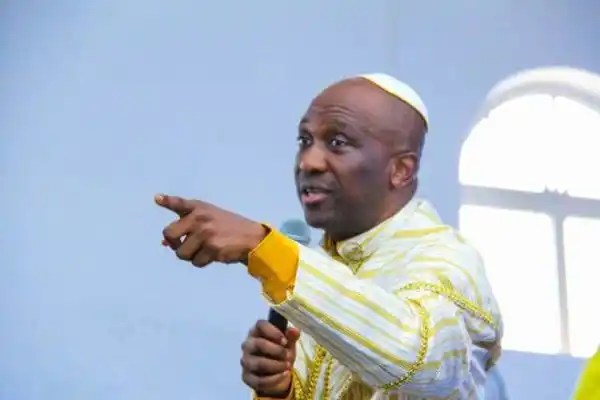
Popular cleric, Primate Ayodele, has issued a strong warning to the Lagos State Government over what he describes as rising security risks in the state, calling for sweeping restrictions on commercial motorcycle operators (Okada riders), beggars, and other street-related activities.
According to him, the presence of Okada riders and some street dwellers could pose a growing threat to public safety in Lagos if not urgently addressed.
He warned that the government must act decisively to prevent what he described as potential breakdown of order.
Primate Ayodele was quoted as saying that Lagos State should consider an outright ban on Okada operations across all parts of the state, arguing that their continued presence could lead to avoidable violence and insecurity.
He further suggested that individuals who pose security concerns, including beggars and itinerant street workers, should be relocated or removed from the streets under a coordinated government task force.
In his words, he urged the government to take immediate action:
“This is a very serious security alert for Lagos State Government. Lagos State should ban Okada riders. In all spheres of Lagos State, they should ban Okada riders. If we don’t ban Okada riders, they may injure Lagos State too.
All these wheelbarrow pushers, ban them. Ban beggars so they will not attack Lagos. If they attack Lagos, Nigeria will go into disorder.
These are warnings. The government should act now and remove people who are pretending to be mentally unstable from the streets. Government should set up a task force now.
Ban Okada for now—maybe for some years. If they see Okada, they should sentence riders to imprisonment.”
The cleric’s remarks come amid ongoing debates over the regulation of commercial motorcycles in Lagos, a sector that has already faced partial restrictions in several parts of the state due to security and traffic concerns.
His comments are expected to stir further public discussion around urban safety, transportation policy, and the treatment of vulnerable populations in Nigeria’s commercial capital.


 Follow Us on Google Discover




Court convicts 21 companies over illegal investment schemes in Nasarawa

Tragedy as driver allegedly runs over Police Sergeant during stop-and-search in Lagos

‘At 17, I was already casting out demons’ – Gov Okpebholo

We’ll restore fuel subsidy after tackling corruption – Obi

‘Tinubu hospitalised, receiving treatment in France’ – Sowore

Education Ministry releases approved textbooks for Nigerian schools

Atiku’s subsidy plan will bring petrol down to N400–N500 – Dino Melaye

2027: ‘Atiku will be physically present to lead Nigeria’ – ADC campaign council

Aiyedatiwa steps in as Ondo tertiary institutions suspend indefinite strike

FG issues flood alert to 24 states, FCT over heavy rainfall

Gunmen attack Plateau mining site, kill three women, injure one

Court sets October 13 for Atiku’s bid to amend Tinubu NYSC certificate suit
Court directs NMDPRA to grant import licences to Matrix Energy, AA Rano, AYM Shafa

UBEC launches digital platform to track basic education projects, state funds

Lagos’ Danielle Adewusi crowned Miss Universe Nigeria 2026

Nigerian Navy Batch 39 Recruitment 2026: Application opens October 2 — Requirements, How to Apply

Six NDC governorship candidates reject Babachir Lawal’s appointment as North-East campaign coordinator

2027: APC chapters reject Wike’s Rainbow Coalition, demand formal defection to APC

NDLEA nabs 25-year-old newlywed with 72 cocaine wraps at Enugu airport

Flamingos crush Togo 4-0 to clinch 2026 WAFU-B U-17 Girls Cup title

US rejects Iran’s Strait of Hormuz reopening proposal

Tinubu hale and hearty, still performing his duties from Paris – Presidency replies Atiku, Obi, Others

2027 Poll: Supreme court verdict opens fresh legal battle over PDP, opposition candidates
Court directs NMDPRA to grant import licences to Matrix Energy, AA Rano, AYM Shafa

PSC announces dates for 2026 Police promotion examinations

FG moves to revamp four ports nationwide

2027: PDP members dump party for APC in Kwara

NECO 2026: Kano emerges best performing state in Nigeria

Nollywood Actor Rykardo Agbor escapes death in tragic auto crash
