News
US pulls majority of troops out of Nigeria, says mission was successful

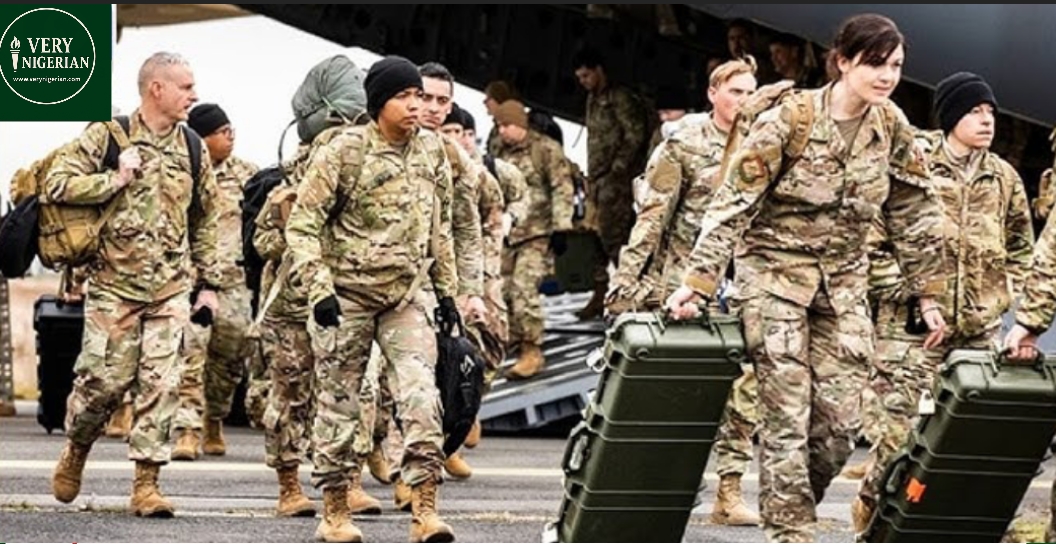
The United States has withdrawn most of its military personnel deployed to Nigeria for a joint counterterrorism mission in the Lake Chad Basin, while maintaining intelligence sharing and other security cooperation with Nigerian authorities.
Commander of US Air Forces in Africa, General Dagvin R.M. Anderson, announced the development during a virtual briefing on the outcome of the African Chiefs of Defence Conference 2026. He said the partnership between Washington and Abuja remains active, particularly in intelligence operations targeting the Islamic State (ISIS/Daesh).
According to Anderson, the mission that required the deployment of US troops has been completed, leading to the withdrawal of most personnel. He, however, noted that the United States would continue providing intelligence support at the request of the Nigerian government.
“That operation in the Lake Chad Basin of Nigeria not only helped the countries in that immediate region; it also helps countries globally as that disrupts the ISIS network,” Anderson said.
“We have withdrawn much of our forces that were just there for that operation, but are continuing the partnership that Nigeria has asked for to help continue with the intelligence sharing and the understanding that’s necessary to prosecute these difficult tasks,” he added.
The US Air Force commander described Nigeria as a key regional partner with a capable military, saying the collaboration between both countries had produced significant gains in the fight against ISIS.
He credited intelligence cooperation between Nigeria and the US for enabling an operation that eliminated the second-highest-ranking figure in the global ISIS network.
“Nigeria is a very capable and large country. It has a strong economy, a large educated population, and a very capable military,” Anderson said.
He added that the US contributed specialised capabilities and intelligence that complemented Nigeria’s military operations.
“We were able to assist and integrate with them to help them with their intelligence and intelligence sharing, which eventually led to a cooperative effort where we brought unique US capabilities to eliminate the number two leader within the ISIS or Daesh organisation, who was responsible for much of their global operations, media and recruitment,” he said.
According to Anderson, the operation demonstrates that intelligence cooperation is more effective than prolonged foreign troop deployments.
“As we go forward, that is an example of how we’re looking at engaging with partners by bringing only unique US capabilities that allow the partner to be effective in these fights,” he stated.
He also called for stronger intelligence collaboration among African countries to combat terrorism, drug trafficking and other transnational crimes.
Anderson cited a recent multinational operation that intercepted a record 31-ton shipment of cocaine originating from South America and transiting through the West African coastline.
“Through our interagency in the United States, AFRICOM and our partners, a Spanish ship eventually intercepted the vessel carrying 31 tons of cocaine. It turned out to be the largest maritime drug seizure ever recorded,” he said.
He stressed that sustained cooperation among African governments, international allies and private-sector stakeholders would be crucial to tackling security threats while promoting economic growth and investment across the continent.
The United States deployed about 200 military personnel to Nigeria in February 2026 to support intelligence, surveillance and counterterrorism operations in the Lake Chad Basin as both countries intensified efforts against ISIS and other extremist groups operating in the region.
The deployment followed US President Donald Trump’s redesignation of Nigeria as a Country of Particular Concern and his administration’s pledge to strengthen American support for counterterrorism operations.
On December 25, 2025, US forces carried out air strikes on two terrorist camps in the Bauni Forest in Tangaza Local Government Area of Sokoto State.
The security partnership reached a major milestone in May 2026 when a joint US-Nigerian operation killed Abu-Bilal Al-Minuki, the second-in-command of ISIS, during a raid on his hideout in Borno State.


 Follow Us on Google Discover






Insecurity: Tinubu hold crucial meeting with defence Minister Musa in Lagos

Military aircraft crash: Tinubu declares three-day national mourning

Nigeria vs Russia: Date, time, venue where to stream

2027: 58 deregistered parties back Tinubu, Sokoto gov Aliyu

SSANU threatens University shutdown over unpaid arrears, gives FG 14 days deadline

Niger tragedy: Shettima announces N250m support for families dead miners

JAMB to establish UTME Centre in Canada for Nigerians in North America from 2027

Rivers govt shut down 21 health facilities over alleged child trafficking

Abiy Ahmed reappointed Prime Minister of Ethiopia

BREAKING: 32 persons were on board says FG, as NAF confirms ownership of crashed aircraft

2027: INEC to begin PVC distribution October 8

Shettima arrives Niger, visits families of NSCDC custodial death victims

2027: ‘He betrayed APGA’ – Anambra govt tells electorate to reject Obi, NDC

Ondo APC names 228-member campaign council for Tinubu’s 2027 re-election

BREAKING: Many feared dead as suspected Military Helicopter crashes in Ondo
BREAKING: Many feared dead as suspected Military Helicopter crashes in Ondo
BREAKING: 32 persons were on board says FG, as NAF confirms ownership of crashed aircraft

Tinubu meets Uzodinma in Lagos amid rift with Wike’s Rainbow Coalition – Details Emerge

‘I warned El-Rufai to go on exile or they would jail him’ — Buba Galadima

Nine Zamfara lawmakers join ADC after dumping APC

JUST IN: Kidnappers torture 20 corps members, demand N5m ransom each
2027: ‘He betrayed APGA’ – Anambra govt tells electorate to reject Obi, NDC

Panic as fuel tanker catches fire, destroys shops, vehicles in Cross River

BREAKING: 8 Zamfara Assembly members dump APC

BREAKING: Temi Nkem wins BBNaija Season 11 ‘Show Ya Sef’

2027: Anxiety mounts as INEC awaits Supreme Court judgment on party membership rules

2027: PDP begins Anambra South campaign, vows to reclaim senate seat

‘Tinubu saved Nigeria from economic collapse, be generous to him’ – VP Shettima

Meet Temi Nkem, winner of BBnaija season 11
