Special Features
Who is Mojtaba Khamenei, Iran’s new Supreme Leader

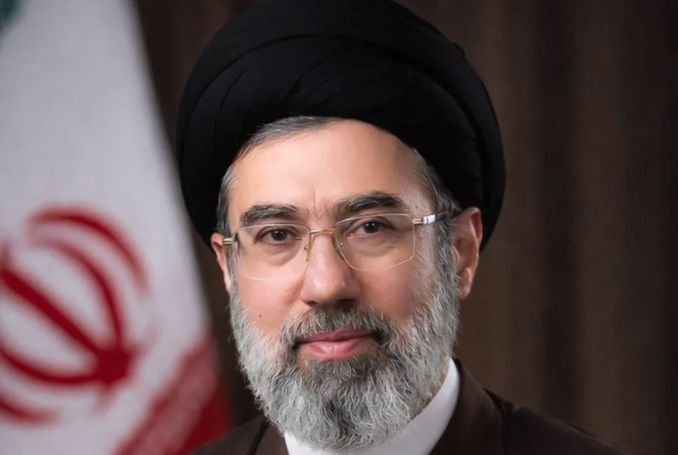
Mojtaba Hosseini Khamenei is an Iranian Shia cleric and political figure who became the third Supreme Leader of Iran on March 8, 2026, following the death of his father, Ayatollah Ali Khamenei.
His emergence as the country’s highest authority marks a significant moment in the history of the Islamic Republic, as he becomes the first son of a former supreme leader to assume the position.
Early life
Born on September 8, 1969, in Mashhad, Mojtaba Khamenei is the second son of Ali Khamenei and Mansoureh Khojasteh Bagherzadeh.
He grew up during the years leading to the 1979 Iranian Revolution, when his father rose to prominence as a key revolutionary figure opposed to the rule of Shah Mohammad Reza Pahlavi.
The revolution eventually established the Islamic Republic and reshaped Iran’s political and religious institutions.
Religious education
Khamenei spent part of his childhood in the northwestern Iranian cities of Sardasht and Mahabad, where he received his early education.
He later moved to Tehran, where he completed his secondary education at Alavi High School.
After finishing high school, he began studying Islamic theology, receiving instruction from several prominent clerics, including his father and the late Ayatollah Mahmoud Hashemi Shahroudi.
Military movement
In 1987, at the age of 17, Mojtaba Khamenei joined the Islamic Revolutionary Guard Corps (IRGC) during the closing stages of the Iran–Iraq War.
During his time with the IRGC, he was reportedly part of the Habib bin Muzahir Battalion and participated in several military operations during the final phase of the conflict.
Following the war, he continued his religious education in the city of Qom, the main center of Shia scholarship in Iran.
There, he studied under several well-known clerics, including Mohammad-Taqi Mesbah-Yazdi, Ayatollah Lotfollah Safi Golpaygani, and Mohammad Bagher Kharazi.
He eventually became associated with the Qom Seminary, where he served as a teacher of Islamic theology.
Entry into Iranian politics
Although Mojtaba Khamenei rarely appeared publicly, he gradually became known as one of the most influential figures within the inner circle of Iran’s leadership.
For years, he was believed to have played a key role in managing political and security affairs within the office of his father, who served as Iran’s second Supreme Leader from 1989 until 2026.
Diplomatic cables and various reports over the years suggested that Mojtaba exercised considerable influence over access to his father and over decisions within the leadership structure surrounding the supreme leader’s office.
He was also believed to maintain strong relationships with senior members of the Islamic Revolutionary Guard Corps.
His name gained wider international attention during the 2009 Iranian presidential election crisis, when reformist groups accused him of supporting the crackdown on protests that followed the disputed vote.
Critics alleged that he was closely linked to the Basij, a paramilitary volunteer force associated with the IRGC that played a major role in suppressing demonstrations.
Sanctions
In 2019, the United States Department of the Treasury placed Mojtaba Khamenei under sanctions, accusing him of acting on behalf of his father and working closely with Iranian security institutions.
The sanctions were part of Washington’s broader strategy to pressure individuals connected to Iran’s leadership.
Politically, analysts have frequently described Mojtaba Khamenei as belonging to the hardline conservative camp within Iran’s political system.
He has longstanding ties with conservative clerics and is often associated with the principlist faction, which supports strict adherence to the ideological foundations of the Islamic Republic.
Family
In his personal life, Mojtaba Khamenei married Zahra Haddad-Adel, the daughter of conservative politician Gholam-Ali Haddad-Adel, in 1999. The couple had three children together.
Over the years, Mojtaba Khamenei maintained a relatively low public profile, rarely giving speeches or public addresses despite his significant influence within Iran’s political structure.
Nevertheless, his close ties to the security establishment and conservative clerical networks positioned him as a key figure in the country’s leadership.
Appointment as Super leader
His rise to the position of supreme leader has been closely watched both inside Iran and internationally, as the role carries immense power.
The supreme leader serves as Iran’s highest political and religious authority, overseeing the armed forces, judiciary, state media, and key elements of the country’s domestic and foreign policy.
With his appointment as Iran’s third Supreme Leader, Mojtaba Khamenei now occupies the most powerful office in the Islamic Republic, a role that will shape Iran’s political direction, domestic policies, and international relations in the years ahead.


 Follow Us on Google Discover

Ebola: Senate urges FG to release emergency funds, enforce screening at entry points

Seven-year-old boy found dead after suspected kidnappers demand N2.5m ransom in Plateau

2027 Election: Court rejects suit to compel INEC to register new party

Cross River Assembly backs constitutional amendment for state police

Rivers Police arrest four suspected Robbers, kidnappers, recover rifles

Oyebanji appoints four officials, swears in SSG, chief of staff in Ekiti

Toluwanisings: Family announces night of tributes, service of songs for late gospel singer

‘You are the Egypt Nigerians are desperate to escape’ – Atiku slams Tinubu over fuel subsidy policy

Mexico approves Reno Omokri’s appointment as Nigeria’s Ambassador

2027: ‘Tinubu, APC are undermining Northerners, we will show them’ – Hakeem Baba-Ahmed

Ebola: 10 Warning signs and prevention tips you should know

Zamfara Governor, 14 other candidates sign peace accord ahead of 2027 polls

2027: APC campaign council restructures youth, women mobilisation teams

Delta mourns as ex-governor Uduaghan’s remains arrive
BREAKING: FG reports confirmed Ebola case in Abuja, identifies 44 contacts for tracing

TeamAce announces 64 job openings across Nigeria, with salaries up to ₦2 Million – Apply Now

Proten International opens 18 job positions across states in Nigeria

R & R recruitment announces 31 job openings across Nigeria – Apply Now

Bauchi NDC governorship candidate Ibrahim Kashim resigns from party

FG to introduce fuel taxes when economy stabilises, Oyedele says

BREAKING: DSS arraigns five suspects over abduction of 20 Prospective Corps Members in Imo

Subsidy removal is here to stay, ‘we will never go back to Egypt’ – Tinubu

If Buhari a General could not end insecurity, you cannot blame Tinubu – Yari
BREAKING: FG reports confirmed Ebola case in Abuja, identifies 44 contacts for tracing

Gregory University founder Gregory Ibe dies at 63

Sanwo-Olu reportedly demands LAWMA boss’ resignation over mounting refuse in Lagos

Petrol subsidy return could crash naira to N4,000/$ – Oyedele warns

Wike’s son Jordan dragged to EFCC over alleged $2.1m land fraud

Abia: NAFDAC uncovers suspected N500m fake alcohol factory in Aba
