
Politics
2027: Akume–Alia clash throws Benue APC into turmoil

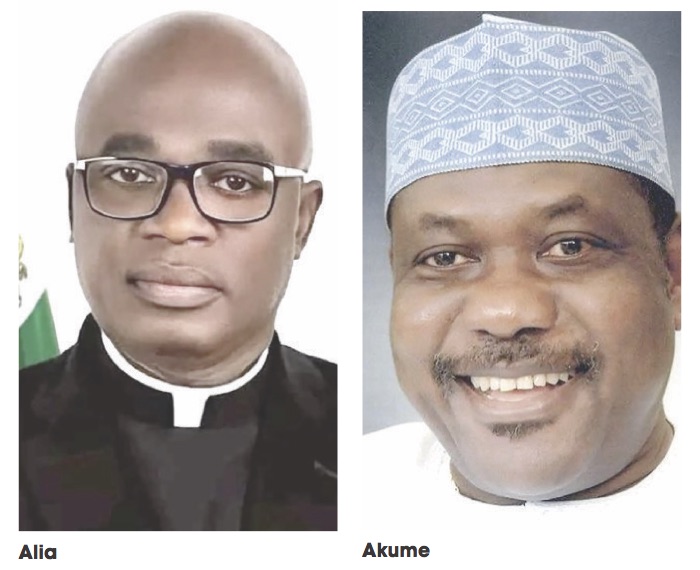
As political activities intensify ahead of the 2027 general elections, Benue State has emerged as a key battleground, with growing alignments, internal divisions, and strategic calculations shaping the state’s political landscape.
At the centre of the unfolding drama is the crisis within the All Progressives Congress (APC), where factions loyal to Governor Hyacinth Alia and the Secretary to the Government of the Federation, George Akume, are locked in a struggle for control.
The division has led to the emergence of parallel party executives from ward to state level, raising fears that the APC could produce multiple governorship candidates during its primaries — a scenario analysts warn may trigger prolonged legal battles.
Amid the uncertainty, there are indications that Governor Alia’s camp may be exploring alternative political platforms, including the African Democratic Congress (ADC) and the Accord Party, should disputes over the primaries escalate. However, the governor, through his aides, has consistently denied any plans to defect, insisting his engagements with opposition figures are aimed at strengthening the APC.
Recent political movements have further deepened intrigue. A caucus meeting convened by former governor Samuel Ortom attracted key political figures, including aspirants aligned with the Akume faction. Ortom, a chieftain of the Peoples Democratic Party (PDP) and ally of Nyesom Wike, is believed to be playing a strategic role in efforts to reshape the state’s political alliances.
Some analysts interpret the meeting as part of a broader plan to either challenge Governor Alia’s re-election bid or hedge against possible legal outcomes from APC primaries. Others see it as a calculated move to build a coalition capable of unseating the ruling party if internal disputes persist.
Political stakeholders, however, have downplayed claims of anti-party activities. Mathias Byuan, an APC governorship aspirant who attended the meeting, said his involvement was strictly in support of mobilisation efforts for the re-election of President Bola Ahmed Tinubu.
Analysts warn that the existence of parallel party structures could weaken the APC significantly. According to observers, rival factions may conduct separate primaries, potentially producing multiple candidates and triggering legal disputes that could disqualify the party from fielding candidates altogether.
This scenario, they argue, presents a strategic opportunity for the PDP, which has already signalled readiness to form alliances with other political parties ahead of 2027.
While APC officials insist the party will ultimately produce a single governorship candidate, the political atmosphere in Benue remains tense and unpredictable.
With alliances forming, rival camps consolidating, and legal uncertainties looming, the coming months are expected to determine whether the APC can resolve its internal crisis or risk ceding ground to a resurgent opposition in the race for 2027.
Background
Benue State’s political landscape has, in recent times, been characterised by deepening internal divisions within the ruling All Progressives Congress (APC), setting the stage for heightened uncertainty ahead of the 2027 general elections.
The crisis, largely driven by a power struggle between factions loyal to Governor Hyacinth Alia and Secretary to the Government of the Federation, Senator George Akume, has fractured party structures across various levels.
This rift has led to the emergence of parallel executive councils, raising concerns about the legitimacy of party leadership and the credibility of future primaries.
The development mirrors a broader national trend where intra-party disputes and shifting loyalties are fuelling realignments and alliance-building among political actors.
Against this backdrop, opposition elements and aggrieved stakeholders within the APC have begun exploring strategic partnerships, while key figures in the state continue to reposition themselves in anticipation of possible legal battles and electoral contests.
The unfolding situation underscores the fragile nature of party cohesion in Benue and highlights the growing importance of alliances as the 2027 elections draw closer.


 Follow Us on Google Discover











2027: Kwankwaso a goat in sheep’s clothing, secretly working for Tinubu – Atiku Campaign Council

DSS arrests Maina’s fugitive son in Abuja, hands him over to EFCC

2027: Step down if you are not working for Tinubu – Deji Adeyanju dares Obi, Kwankwaso

2027: ‘I wont join my Uncle to support Tinubu’ – Davido says

Enugu NYSC death: NAFDAC debunks claims linking corps members death to fake drugs

33 Governors cannot be wrong in supporting Tinubu – Bayo Onanuga

Security forces arrest five suspects over abduction of 20 NYSC members in Imo

Rugby star Hyron Andrews dies at 31 after accidental fall in South Africa

LAUTECH Resident Doctors halt 50-day strike as Makinde intervenes

House Officers, Nurses, Radiographers, Others wanted as DELSUTH opens recruitment – Apply Now

FG raises health fund allocation to N40.76bn, extends insurance to prison inmates

Erisco Foods announces 13 job openings across Nigeria – Apply Now

Tinubu reappoints Bala Bila as INEC commissioner, nominates six others

2027: ‘Don’t trust your destiny to ‘kalokalo’ people’ – Wike warns Rivers voters against Atiku, Amaechi, Obi

BREAKING: Cross River PDP Chairman Venatius Ikem resigns, cites leadership crisis
Erisco Foods announces 13 job openings across Nigeria – Apply Now
‘You Betrayed Osun People’ — Adeleke, Davido face backlash over support for Tinubu

Ex-Senator Bello Mandiya’s body found in Abuja home three days after he slipped, hit his head in the bathroom

2027: Atiku, Obi, Makinde, Adebayo, Duke hold talks with six opposition parties
Tinubu reappoints Bala Bila as INEC commissioner, nominates six others

JUST IN: Finnish Appeal Court reduces Simon Ekpa’s jail term to four years, upholds terrorism conviction

Over 10 soldiers, four civilians feared dead as Boko Haram terrorists attack Borno military base

‘I love Islam, I’ve sent people to Mecca to pray for me, Nigeria for 25 years’ – Akpabio
House Officers, Nurses, Radiographers, Others wanted as DELSUTH opens recruitment – Apply Now

Zamfara govt set to empower 36,176 residents with Dangote shares

Umahi reopens first Niger bridge after emergency repairs, displays Tinubu’s photos

Elon Musk unveils Tesla’s ‘flying’ car in stunning demonstration

Panic in Rivers community as pipeline explosion injures 20, razes over 50 houses

Tension escalates as thugs attack NDC secretariat in Edo, destroy properties
