
News
FG introduces national policy to boost regional development

The Federal Government on Thursday unveiled a National Regional Development Policy designed to provide a strategic framework for the operations of Nigeria’s regional development commissions, ending months of uncertainty surrounding their activities since their establishment.
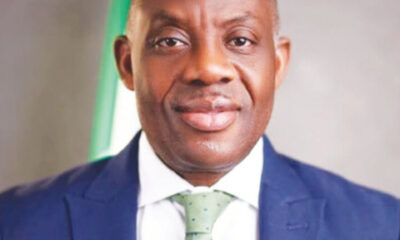
Minister of Regional Development, Engr. Abubakar Momoh, announced the policy while briefing State House correspondents at the Presidential Villa in Abuja.
Momoh, who was accompanied by the Minister of State and the Permanent Secretary of the ministry, said he had earlier presented the policy document to the National Economic Council (NEC), chaired by Vice President Senator Kashim Shettima.
According to the minister, the policy is expected to guide and harmonise the activities of the regional development commissions, ensuring coordinated efforts toward sustainable development across the country’s regions.
The Minister said the policy became necessary after the inauguration of the first batch of regional development commissions in February 2025 and a second batch in August 2025, noting that the ministry had operated without a formal policy framework despite growing engagement with stakeholders and development partners.
According to him, the absence of a guiding policy had become increasingly apparent as international agencies and development partners repeatedly sought clarity on the ministry’s strategic direction.
“We came to brief the National Economic Council on the National Regional Development Policy. Since the inauguration of the first set of regional development commissions in February 2025 and the second set in August 2025, the ministry has not had a policy document to guide its operations.
“Several international and development partners requested the ministry’s policy framework, but we were unable to provide one because it did not exist. It was not that we did not appreciate the need for such a policy, but we needed to properly define the direction of the ministry. Once that became clearer, we commenced the process of developing the document,” he said.
Engr. Momoh explained that the policy was developed with technical support from the United Nations Development Programme (UNDP), while a committee headed by the Permanent Secretary coordinated the drafting process.
To ensure broad stakeholder participation and ownership, the ministry embarked on consultations and validation exercises across the country’s six geopolitical zones.
The consultations, led by the Permanent Secretary, took place in Enugu, Port Harcourt, Ibadan, Kano, Nasarawa and Maiduguri, bringing together representatives of state governments, private sector operators, civil society organisations and other stakeholders.
“The objective was to ensure that those directly affected by the policy participated in shaping it. We informed governors before the consultations, and many of them sent representatives.
Stakeholders from various sectors also made valuable contributions, many of which have been incorporated into the final document,” Momoh stated.
He said the NEC presentation marked a critical stage in the policy approval process, adding that the document would subsequently be presented to the Federal Executive Council (FEC) for final approval.
According to the minister, governors at the NEC meeting generally welcomed the initiative, although some raised constitutional concerns regarding the regional development commissions.
“A number of governors supported the policy and commended the initiative. Some also raised constitutional issues. However, these commissions were established through Acts of the National Assembly and duly constituted by the President.
“They are institutions backed by law. For any bill to pass through the National Assembly and receive presidential assent, it means it has undergone extensive legislative scrutiny and enjoys broad national support,” he said.
Momoh further disclosed that Vice President Kashim Shettima, who chairs the National Economic Council, commended the ministry’s efforts and encouraged further engagement with stakeholders to deepen understanding of the policy framework.
He added that the ministry would continue consultations with governors and other stakeholders ahead of the policy’s submission to the Federal Executive Council.


 Follow Us on Google Discover







Gunmen storm Kebbi community, kill village head

Former Kogi Gov Ibrahim Idris dies in UK

NDLEA seizes N3.4bn drugs, nab fake cop, mechanic

Falconets crash out of 2026 U-20 Women’s World Cup after 1-0 loss to Colombia

BREAKING: Tinubu confirms absence from 81st UN General Assembly in New York, directs Shettima to lead Nigerian delegation

2027: ‘Obi will defeat Tinubu by a wider margin in Lagos’ — NDC

NDC disowns OK Movement campaign council, refers John Ugulu for discipline

Raphinha set to sign new Barcelona contract until 2030

Four Nigerians receive UNGA Humanitarian, Goodwill Ambassador honours in New York

‘We Won’t Go Back to Egypt’ — Showunmi rejects Atiku’s petrol subsidy proposal

NSCDC names new Niger commandant following death of miners in custody

ECOWAS court set to hold 2026 international conference in Dakar

Nigerians already seeing reductions in transport fares – Tinubu

PL: Brighton thrash Arsenal 3-0, end Gunners’ winning run

Sowore as best president Nigeria refuses to have: by Farooq A. Kperogi

BREAKING: Court of Appeal overturns Lokoja ruling, upholds NDC’s registration
BREAKING: Tinubu confirms absence from 81st UN General Assembly in New York, directs Shettima to lead Nigerian delegation
Nigerians already seeing reductions in transport fares – Tinubu

Tinubu may shun UN General Assembly in New York – Fresh details emerge

‘Before lecturing Tinubu, you must answer questions from your past’ — Presidency to Atiku
‘We Won’t Go Back to Egypt’ — Showunmi rejects Atiku’s petrol subsidy proposal

Deji Adeyanju, Buhari others appointed as FG constitutes committee to probe NSCDC custody deaths (Full List)

‘The Site Belongs To Babangida’ – Survivor links deaths of miners in NSCDC custody to ex-Military Ruler
PL: Brighton thrash Arsenal 3-0, end Gunners’ winning run

Anambra Debt Row: Expect more Peter Obi’s records in coming days – Presidency

Why EFCC must prosecute Atiku – Agbonayinma
Four Nigerians receive UNGA Humanitarian, Goodwill Ambassador honours in New York

NSCDC detains suspended Niger commandant, 21 officers over deaths of 37 miners
ECOWAS court set to hold 2026 international conference in Dakar