
Business News
Dangote Refinery slashes petrol price by ₦75 Per litre as global oil market cools

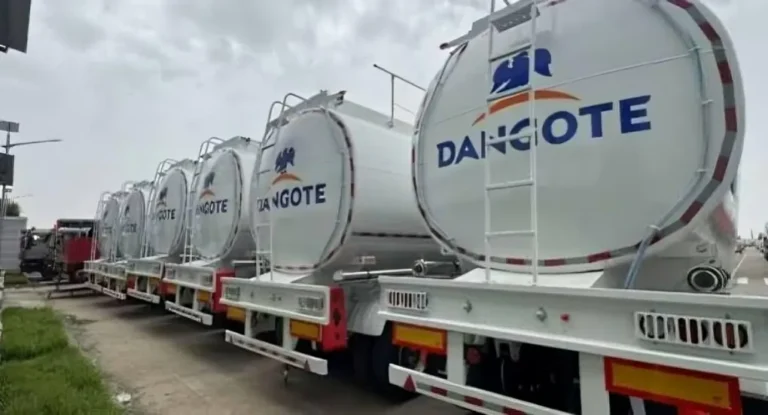
The Dangote Petroleum Refinery has reduced the gantry price of Premium Motor Spirit (PMS), popularly known as petrol, by ₦75 per litre, offering fresh hope of lower fuel costs across Nigeria.
In a circular issued to fuel marketers on Monday, the refinery announced that the ex-depot price had been cut from ₦1,250 per litre to ₦1,175 per litre, effective from midnight on June 16, 2026.
The refinery attributed the downward review to the recent easing of geopolitical tensions in the Middle East, which had previously triggered sharp increases in global crude oil prices and fuel costs.
Under the revised pricing structure, the coastal price per metric tonne was also reduced from ₦1,595,790 to ₦1,495,215. Dangote Refinery stated that all pending and unloaded product volumes would be recalculated using the new rates.
The company expressed appreciation to its partners and customers, reaffirming its commitment to ensuring steady supply and efficient service delivery.
The latest adjustment comes amid a broader decline in global oil prices following a ceasefire agreement between the United States and Iran, which resulted in the reopening of the Strait of Hormuz, one of the world’s most critical oil shipping routes.
Crude oil prices, which reportedly surged above $120 per barrel during the conflict, have fallen to about $83 per barrel, easing pressure on global energy markets.
During the period of heightened tensions, petrol prices in Nigeria climbed sharply from around ₦830 per litre to nearly ₦1,300 per litre, while diesel and aviation fuel prices also recorded significant increases.
Industry analysts believe the latest reduction could pave the way for further price cuts if international crude prices remain stable. Some projections suggest pump prices could eventually fall below ₦1,000 per litre, depending on market conditions and existing inventories.
However, refinery officials cautioned that future reductions may be influenced by previously purchased crude stocks acquired at higher prices.
The development has renewed expectations among consumers and businesses for sustained relief in fuel costs, which could also help ease transportation and production expenses nationwide.


 Follow Us on Google Discover







BREAKING: ‘I have nothing to hide, release my academic records’ – Peter Obi tells UNN

Shettima returns to Nigeria after BRICS summit in India

2027: Big battle for Wike as APC Govs move against Rainbow Coalition, parallel structures capable of undermining Tinubu, APC candidates

2027: Support Tinubu as he supported Buhari, Yari urges Northerners

2027: ‘Tinubu will win, Atiku second, Obi third’ – Afegbua

FG signs N729bn bond to offset power sector debts

LASUTH Resident Doctors embark on indefinite strike over unpaid allowances

Show proof I left Anambra with debts, I’ll stop my 2027 campaign – Obi dares Soludo

‘I Don’t Want to Be Called Africa’s Richest Man Again’ — Dangote

600 Northern Lecturers who attended Tinubu endorsement show must be bared 2027 election duties – ADC warns INEC

BBNaija S11: Barry wins HoH title, becomes first finalist

Ondo students set 14-day deadline for Aiyedatiwa over ASUU strike

Nigeria, India target $15bn trade as Modi pushes for more crude imports

2027: Oba of Lagos backs Tinubu, says ‘ no vacancy in Aso Rock’

2027: NDC says Nigerians can fund party with contributions as low as N1,500

International Breweries Recruitment: 5 Job vacancies across Nigeria (How to Apply)

Food and Agriculture Organization Of the United Nations (FAO-UN) announces 4 recruitment vacancies across Nigeria (How to Apply)

2027 Elections: INEC publishes final list of 1,195 Senate, 3,213 Reps candidates (Full List)

2027: Over 600 Northern Lecturers endorse Tinubu’s re-election bid

15 feared killed as gunmen strike Plateau communities
2027: NDC says Nigerians can fund party with contributions as low as N1,500

Average Nigerian can survive on N3,000 daily, says Reno Omokri

Yamal double fires Barcelona to 4-2 victory over Levante

Hon. Desmond Elliot kneels down, begs Gbajabiamila for forgiveness

Haaland scores as 10-man Man City beat Manchester United 1-0

Tinubu’s FBI records are not evidence of criminal history, it won’t be released – Reno Omokri

BBNaija Season 11: Abi, Araga evicted from ‘Show Ya Sef’ House
‘I Don’t Want to Be Called Africa’s Richest Man Again’ — Dangote

Tinubu lands in Paris for second leg of holiday
