
Politics
Don’t usurp INEC’s powers, David Mark warns Akpabio over electronic transmission of results
The former Senate President spoke on Saturday at the public presentation of The Burden of Legislators in Nigeria held in Abuja.

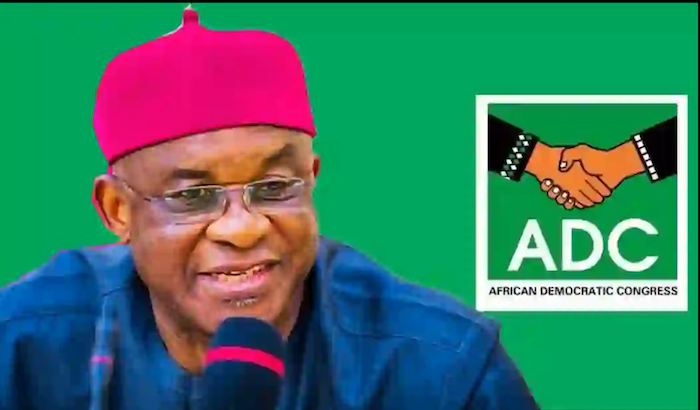
The National Chairman of the African Democratic Congress (ADC), David Mark, has urged the leadership of the National Assembly to allow the Independent National Electoral Commission (INEC) determine whether it can electronically transmit election results.
Mark specifically cautioned the Senate, led by Godswill Akpabio, against usurping the constitutional powers of the electoral body ahead of the 2027 general election.
He argued that INEC, as the institution constitutionally empowered to conduct elections, is best positioned to assess its operational capacity and deploy appropriate technology for credible polls.
The former Senate President made the remarks on Saturday during the public presentation of The Burden of Legislators in Nigeria at the NAF Conference Centre, Abuja.
“There should be electronic transmission. Let INEC decide whether they can do real-time electronic transmission or not. Don’t speak for INEC; speak for the National Assembly,” Mark said.
“And what the public wants is electronic transmission of election results. If INEC cannot do it, that is INEC’s problem, not for the National Assembly to speak on its behalf,” he added.
His comments come amid growing criticism from civil society organisations, opposition parties and pro-democracy groups over the Senate’s refusal to make real-time electronic transmission of election results mandatory in the ongoing review of the Electoral Act.
Last week, the Senate passed the Electoral Act, 2022 (Repeal and Re-enactment) Bill, 2026, but rejected a proposed amendment that would have mandated the electronic transmission of results from polling units.
Instead, lawmakers retained the existing framework, which allows for the manual completion, signing, stamping and physical transfer of election results, in accordance with procedures prescribed by INEC.
Critics argue that the continued reliance on manual collation creates room for manipulation and could undermine electoral transparency, potentially reversing gains recorded in recent elections.
However, some federal lawmakers have defended the decision, citing challenges such as poor network coverage in rural areas and logistical constraints, which they say make compulsory electronic transmission impractical nationwide.
Mark’s intervention adds to mounting pressure on the National Assembly to strengthen electoral reforms, rather than dilute them, as the country prepares for the next general elections.


 Follow Us on Google Discover








Opposition will front a single candidate against Tinubu, announcement will be made few days to election – Lukman

La Liga: Unstoppable Barcelona beat Real Betis 5-2 to extend winning run

EPL: Super Eagles star Iwobi fires Fulham to first league victory

Ogun hospital under fire as Nurse dies of asthma attack amid alleged oxygen failure

Maryam Babangida Center for Women Devt gets first wheel chair ramp after 34 years

Shettima inaugurates Arewa for Asiwaju campaign office in Abuja

2027: ‘APM will beat Tinubu in 12 battleground states’ – Makinde’s campaign team

Veteran Journalist, diplomat Dele Cole dies at 86

Suspended NSCDC commandant apologises over deaths of suspected illegal miners in Niger

EPL: Martinez rushed to hospital after head injury as Chelsea beat Everton

COAS arrives Borno as Military moves to clear terrorist camps, rescue abductees

Macky Sall quits race for UN Secretary-General position

Buhari backed Osinbajo’s presidential ambition four times, Akande tells Babachir Lawal

Dr. Benjamins‑Laniyi urges media to amplify women’s leadership, adopt gender‑sensitive reporting

Pope Leo XIV set to leave hospital after lung cancer surgery

Erisco Foods announces 13 job openings across Nigeria – Apply Now

2027: Step down if you are not working for Tinubu – Deji Adeyanju dares Obi, Kwankwaso

House Officers, Nurses, Radiographers, Others wanted as DELSUTH opens recruitment – Apply Now

Tinubu reappoints Bala Bila as INEC commissioner, nominates six others

Elon Musk unveils Tesla’s ‘flying’ car in stunning demonstration

2027: Kwankwaso a goat in sheep’s clothing, secretly working for Tinubu – Atiku Campaign Council

2027: Tinubu to miss rallies in over 20 States as APC releases campaign timetable

33 Governors cannot be wrong in supporting Tinubu – Bayo Onanuga

Atiku fully fit, ready to campaign in all 36 states, interact with Nigerians – ADC PCC

Gunmen storm Plateau, kill traditional ruler at residence

2027: ‘Atiku, Obi, Duke, Makinde are not threats to Tinubu’, says APC

2027: ‘Don’t trust your destiny to ‘kalokalo’ people’ – Wike warns Rivers voters against Atiku, Amaechi, Obi

Outrage as suspected cultists unveil renovated police post in Rivers

BREAKING: Oyebanji makes history as first Ekiti Governor to win second consecutive term
