
Politics
Explain to Nigerians why you are still borrowing despite significant oil price windfall – Atiku to Tinubu

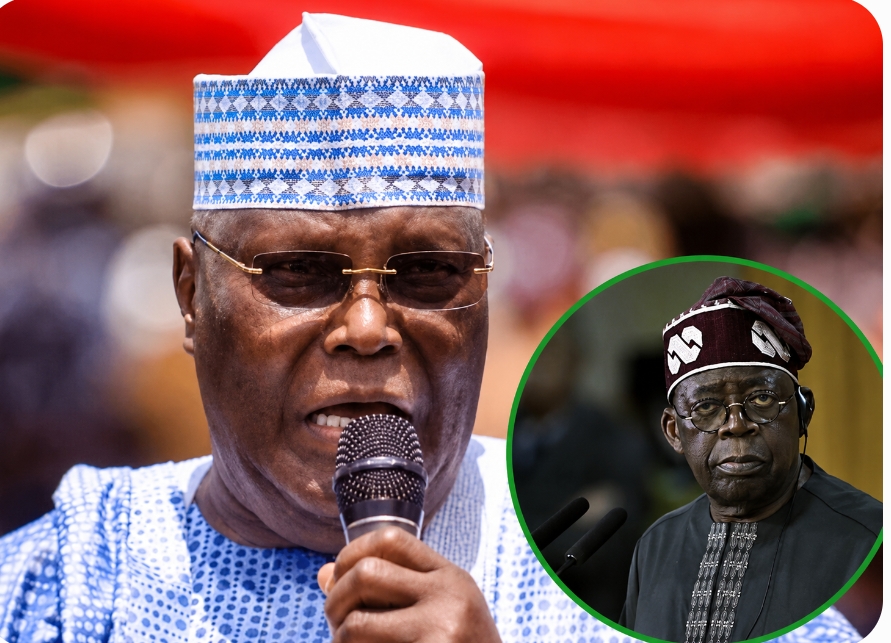
Former Vice President and presidential candidate of the African Democratic Congress (ADC), Atiku Abubakar, has criticised the Tinubu administration over what he described as “unprecedented domestic borrowing” despite earning significantly higher revenues from rising international crude oil prices.
In a statement issued on Sunday by his Senior Special Assistant on Public Communication, Phrank Shaibu, Atiku described the Federal Government’s economic management as “contradictory, opaque, and bereft of fiscal discipline.”
The former vice president noted that the Federal Government had already raised about ₦5 trillion from the domestic bond market in the first half of 2026, representing nearly 80 per cent of the total amount borrowed during the same period in 2025.
According to him, such aggressive borrowing would ordinarily be expected only if government revenues had collapsed.
“Such aggressive borrowing would only be understandable if government revenues had collapsed. The exact opposite is the case,” Atiku said.
He pointed out that while the 2026 Appropriation Act benchmarked crude oil at $64.84 per barrel, Brent crude had averaged about $92 per barrel between March 1 and July 14, adding that Nigerian crude typically trades at a premium above Brent.
Atiku said the development raised serious questions about the management of the country’s finances.
“This naturally raises two unavoidable questions.
“First, why is a government enjoying such an extraordinary oil windfall borrowing at almost twice last year’s pace as though the nation were in financial distress? Second, where is the money?” he asked.
The ADC presidential candidate estimated that the $27.15 difference between the budget benchmark and prevailing market price, based on average production of 1.5 million barrels per day, translates to approximately $42.7 million in additional revenue every day.
He said over a 135-day period, the country would have realised about $5.76 billion in extra earnings, equivalent to roughly ₦7.98 trillion.
“Nigerians deserve a full accounting of this windfall. Where has the money gone? Why is there no transparent disclosure of the proceeds from excess crude sales? Why is government borrowing heavily when oil revenues are significantly above budget projections?” he queried.
Atiku recalled that previous administrations maintained established mechanisms, including the Sovereign Wealth Fund and other fiscal buffers, to warehouse excess crude earnings.
He argued that Nigerians have now been left in the dark over the utilisation of excess oil revenues.
“Today, Nigerians have been left completely in the dark. A government that cannot explain what it has done with an estimated ₦7.98 trillion in additional oil receipts has no moral authority to continue plunging the country deeper into debt,” he stated.
The former vice president further lamented that despite higher oil earnings and the removal of fuel subsidy, millions of Nigerians continue to experience worsening economic hardship.
Citing recent United Nations findings, Atiku claimed that about 80 per cent of Nigerians can no longer afford a decent meal daily, while infrastructure has continued to deteriorate despite government assurances that subsidy savings would be invested in roads, healthcare, education and other critical sectors.
“It is increasingly evident that this administration lacks the competence, discipline, and transparency required to manage the nation’s resources. Rather than allowing Nigerians to benefit from favourable global oil prices, it has chosen the path of endless borrowing, mounting debt, and deepening poverty,” he said.
Atiku pledged that an ADC administration under his leadership would adopt a rules-based fiscal framework to ensure transparent accounting of every kobo earned above the budget oil benchmark.
He said excess revenues would be channelled towards reducing public debt, strengthening fiscal buffers and investing in infrastructure, education, healthcare, agriculture and other sectors capable of creating jobs.
He also promised that his administration would publish regular reports on excess crude earnings, subject public finances to the highest standards of accountability, reduce the cost of governance and ensure that borrowing is limited to productive investments.
According to him, borrowing should not be used to finance consumption or conceal fiscal irresponsibility.
“Nigerians deserve answers. They deserve accountability. Above all, they deserve a government that manages national wealth in the public interest, not one that presides over unprecedented opacity while asking future generations to repay debts incurred in the midst of plenty,” Atiku added.


 Follow Us on Google Discover

Tinubu’s Renewed Hope has turned to Renewed Hopelessness, I’ll give Nigerians genuine hope — Obi

Step-by-step guide to registering for the NDE RHEI Phase 3 programme

He sounded boring, lacked substance during Channels TV interview — Bwala mocks Peter Obi

Explain to Nigerians why you are still borrowing despite significant oil price windfall – Atiku to Tinubu

2027: Tinubu hosts NDC chieftains Hanga, Gaya at Aso Villa

BREAKING: Gunmen massacre 30 residents including women, children in fresh Southern Kaduna community, raze homes

Kaduna 2027: Uba Sani dumps Muslim-Muslim ticket, picks Christian running mate from Southern Kaduna

One State missing as APC uploads 27 governorship candidates to INEC portal (Full List)

Tinubu’s govt budgets ₦962.83bn for new SUVs, empowerment projects amid rising debt, hardship

Xenophobia: Tinubu snubs South African president’s envoy; delegation stranded in Abuja

‘Come out from the ‘Aso Rock Bunker’ and address Nigerians’ – Obi tells Tinubu

Why Tinubu should retire in 2027 — Peter Obi

Electricity: Tinubu finally copied my 21-Year power sector blueprint — Atiku

‘Show Ya Sef’: Meet the 24 Housemates of BBNaija Season 11 [Full List]

Accord Party, Adeleke endorse Tinubu for 2027 presidential election
One State missing as APC uploads 27 governorship candidates to INEC portal (Full List)
Kaduna 2027: Uba Sani dumps Muslim-Muslim ticket, picks Christian running mate from Southern Kaduna
Electricity: Tinubu finally copied my 21-Year power sector blueprint — Atiku
Xenophobia: Tinubu snubs South African president’s envoy; delegation stranded in Abuja

2027: ‘It’s not the North’s birthright to always rule Nigeria,’ Kwankwaso says

“He likes silk cigarettes very much” – Babachir Lawal speaks on Tinubu’s lifestyle

Obi-Kwankwaso ticket will defeat Tinubu, Atiku in 2027 — Babachir Lawal

‘True Wealth Is the Lives We Uplift’ — Maituta celebrates Wife’s birthday

BREAKING: Two killed, dozens missing as herdsmen attack Benue communities

‘Jonathan met militants, who’ll meet Boko Haram, bandits?’ – Gumi questions FG

Benue probes suspected Mpox cases in Konshisha LG
Tinubu’s govt budgets ₦962.83bn for new SUVs, empowerment projects amid rising debt, hardship

Bandits strike in Kebbi, abduct High court Judge

NUJ FCT charges new SOPTCAM excos to embrace digital innovation, raise journalism standards
