
Politics
FG says Atiku, others agreed to rotational presidency after June 12 crisis

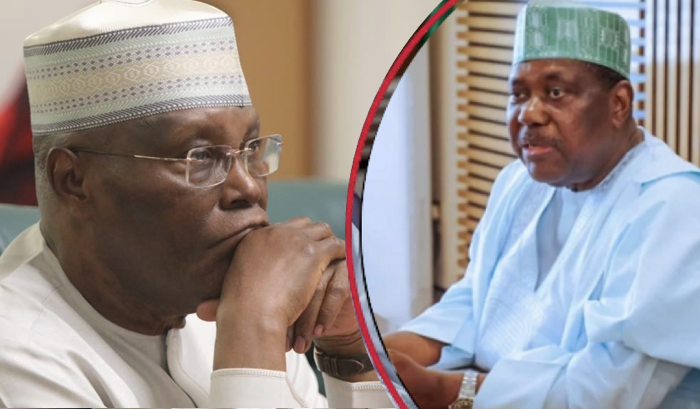
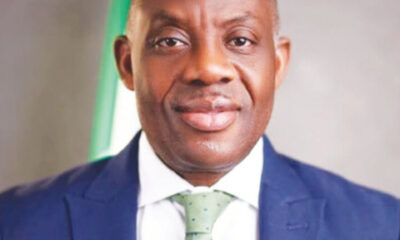
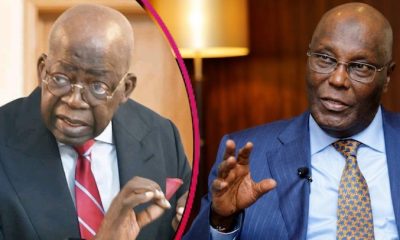
The Secretary to the Government of the Federation (SGF), Senator George Akume, has stated that former Vice President Atiku Abubakar was among political leaders who supported the adoption of rotational presidency in Nigeria following the annulment of the June 12, 1993 presidential election.
Akume made the clarification on Tuesday in Abuja during a World Press Conference marking Nigeria’s 27th Democracy Day anniversary.
He said the political aftermath of the June 12 annulment, which denied late MKO Abiola victory in what is widely regarded as Nigeria’s freest and fairest election, forced political leaders to seek a consensus arrangement aimed at preserving national unity.
According to him, leaders of the then Peoples Democratic Party (PDP) held a crucial meeting in Kaduna under the leadership of the late Chief Solomon Lar and Alhaji Adamu Ciroma, where the issue of power rotation between North and South was discussed and eventually agreed upon.
“It was a tough argument before the issue of rotational presidency was agreed on. At the end, we had to concede. We must do this… It was finally agreed that we’ll be alternating between North and South,” Akume said.
He added that Atiku Abubakar was present at the meeting and was part of the agreement that shaped Nigeria’s zoning arrangement.
“Atiku was one of the leaders at that meeting… He was part of that agreement,” he stated.
Akume explained that the decision was taken in response to the political tension created by the annulment, with stakeholders seeking a formula that would promote fairness, inclusion and national cohesion.
Reflecting on June 12, the SGF described the annulment as a painful setback to Nigeria’s democratic evolution, stressing that Abiola clearly won the election.
“Abiola won that election round and square… It was very painful because the people spoke and they spoke freely,” he said.
He maintained that one of the key lessons from the June 12 crisis is the supremacy of the people’s will in any democratic system, insisting that electoral mandates must be respected.
Akume also expressed confidence in Nigeria’s electoral institutions, particularly the Independent National Electoral Commission (INEC), noting that the country had learned from past mistakes and would not repeat them.
“If an election is conducted very fairly and one wins, no problem… Never again would such happen in this country,” he said.
He urged political actors to respect democratic processes and accept electoral outcomes, adding that Nigeria’s 27 years of uninterrupted civilian rule reflects the country’s commitment to democracy.
“We prefer the ballot to bullets… there is no system that is as beautiful as democracy,” he added.


 Follow Us on Google Discover







BREAKING: ‘I have nothing to hide, release my academic records’ – Peter Obi tells UNN

Shettima returns to Nigeria after BRICS summit in India

2027: Big battle for Wike as APC Govs move against Rainbow Coalition, parallel structures capable of undermining Tinubu, APC candidates

2027: Support Tinubu as he supported Buhari, Yari urges Northerners

2027: ‘Tinubu will win, Atiku second, Obi third’ – Afegbua

FG signs N729bn bond to offset power sector debts

LASUTH Resident Doctors embark on indefinite strike over unpaid allowances

Show proof I left Anambra with debts, I’ll stop my 2027 campaign – Obi dares Soludo

‘I Don’t Want to Be Called Africa’s Richest Man Again’ — Dangote

600 Northern Lecturers who attended Tinubu endorsement show must be bared 2027 election duties – ADC warns INEC

BBNaija S11: Barry wins HoH title, becomes first finalist

Ondo students set 14-day deadline for Aiyedatiwa over ASUU strike

Nigeria, India target $15bn trade as Modi pushes for more crude imports

2027: Oba of Lagos backs Tinubu, says ‘ no vacancy in Aso Rock’

2027: NDC says Nigerians can fund party with contributions as low as N1,500

International Breweries Recruitment: 5 Job vacancies across Nigeria (How to Apply)

Food and Agriculture Organization Of the United Nations (FAO-UN) announces 4 recruitment vacancies across Nigeria (How to Apply)

2027 Elections: INEC publishes final list of 1,195 Senate, 3,213 Reps candidates (Full List)

2027: Over 600 Northern Lecturers endorse Tinubu’s re-election bid
2027: NDC says Nigerians can fund party with contributions as low as N1,500

15 feared killed as gunmen strike Plateau communities

Average Nigerian can survive on N3,000 daily, says Reno Omokri

Yamal double fires Barcelona to 4-2 victory over Levante

Haaland scores as 10-man Man City beat Manchester United 1-0

Hon. Desmond Elliot kneels down, begs Gbajabiamila for forgiveness

Tinubu’s FBI records are not evidence of criminal history, it won’t be released – Reno Omokri

BBNaija Season 11: Abi, Araga evicted from ‘Show Ya Sef’ House
‘I Don’t Want to Be Called Africa’s Richest Man Again’ — Dangote

Tinubu lands in Paris for second leg of holiday
