
News
FG suspends production, sales of sachet, bottle alcohol

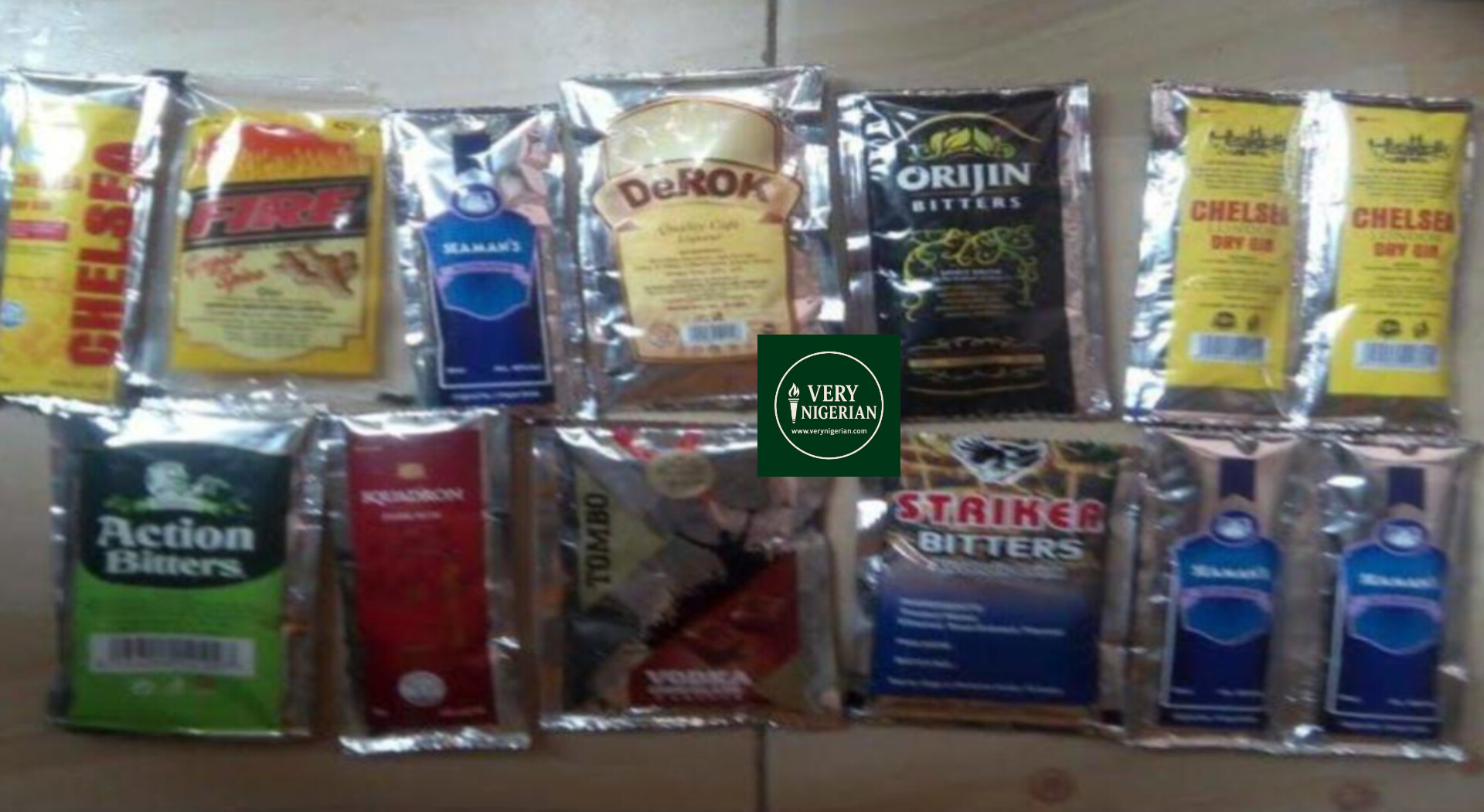
The Federal Government has officially prohibited the production, sale, and distribution of alcoholic beverages packaged in sachets and bottles smaller than 200 millilitres, in a decisive effort to combat alcohol abuse and safeguard public health.
The National Agency for Food and Drug Administration and Control (NAFDAC) announced that full enforcement of the ban will commence on January 1, 2026.
Speaking at a press briefing in Abuja on Tuesday, NAFDAC’s Director-General, Prof. Mojisola Adeyeye, disclosed that the Federal Government has approved the recruitment of 1,000 additional personnel for the agency beginning in December.
The new recruits are expected to boost NAFDAC’s regulatory and enforcement capabilities as it implements the nationwide ban.
Prof. Adeyeye said the ban followed a Senate resolution and a directive from the Federal Ministry of Health and Social Welfare, reinforcing NAFDAC’s mandate to safeguard public health and protect vulnerable groups, particularly children, adolescents, and young adults, from the harmful effects of alcohol.
“This decisive action underscores our duty to protect Nigerians from the health and social hazards of unregulated alcohol consumption. Alcohol in sachets and small bottles is cheap, accessible, and easily concealable, making it a major driver of misuse and addiction, especially among minors and commercial drivers,” she stated.
The NAFDAC DG noted that the proliferation of high-alcohol-content drinks in small packages has created not just a public health challenge but also a national security concern, as early alcohol exposure among youths often leads to substance abuse and criminal behaviour.
“This public health menace is associated with increased domestic violence, road accidents, school dropouts, and other social vices,” she added.
Prof. Adeyeye stressed that the ban is protective, not punitive, and is guided by scientific evidence and global best practices.
“Our decision is to protect the health and future of Nigerian youths. We cannot continue to trade national well-being for short-term economic benefits. The health of our people is the true wealth of the nation,” she said.
She clarified that the regulation specifically targets spirit drinks packaged in sachets and small-volume PET or glass bottles below 200ml, and does not apply to all alcoholic beverages.
Recounting previous efforts, the NAFDAC DG explained that in December 2018, the agency, alongside the Federal Ministry of Health and the Federal Competition and Consumer Protection Commission (FCCPC), signed a five-year Memorandum of Understanding, MoU, with industry associations, the Association of Food, Beverage and Tobacco Employers, AFBTE and the Distillers and Blenders Association of Nigeria, to phase out such packaging by January 2024.
That moratorium was later extended to December 2025 to allow operators to adjust their production processes.
Prof. Adeyeye emphasised that the Senate’s latest resolution aligns with both the earlier agreement and Nigeria’s commitment to the World Health Organisation’s Global Strategy to Reduce the Harmful Use of Alcohol (WHA63.13, 2010).
She urged all stakeholders, manufacturers, distributors, and retailers to comply fully with the December 2025 deadline, warning that no further extension will be granted.
On enforcement strategy, she said NAFDAC will continue working with the Federal Ministry of Health, FCCPC, and the National Orientation Agency (NOA) to intensify nationwide awareness campaigns on the health and social dangers of alcohol misuse.
“This is a shared responsibility. We must act collectively to protect the health, safety, and future of our nation,” she further said.


 Follow Us on Google Discover









Shettima inaugurates Arewa for Asiwaju campaign office in Abuja

2027: ‘APM will beat Tinubu in 12 battleground states’ – Makinde’s campaign team

Veteran Journalist, diplomat Dele Cole dies at 86

Suspended NSCDC commandant apologises over deaths of suspected illegal miners in Niger

EPL: Martinez rushed to hospital after head injury as Chelsea beat Everton

COAS arrives Borno as Military moves to clear terrorist camps, rescue abductees

Macky Sall quits race for UN Secretary-General position

Buhari backed Osinbajo’s presidential ambition four times, Akande tells Babachir Lawal

Dr. Benjamins‑Laniyi urges media to amplify women’s leadership, adopt gender‑sensitive reporting

Pope Leo XIV set to leave hospital after lung cancer surgery

Gunmen kill four vigilantes in Plateau community

Tension as traditional ruler collapses, dies in Ondo

2027: Kwankwaso a goat in sheep’s clothing, secretly working for Tinubu – Atiku Campaign Council

DSS arrests Maina’s fugitive son in Abuja, hands him over to EFCC

2027: Step down if you are not working for Tinubu – Deji Adeyanju dares Obi, Kwankwaso

Erisco Foods announces 13 job openings across Nigeria – Apply Now

‘You Betrayed Osun People’ — Adeleke, Davido face backlash over support for Tinubu

House Officers, Nurses, Radiographers, Others wanted as DELSUTH opens recruitment – Apply Now

Tinubu reappoints Bala Bila as INEC commissioner, nominates six others
2027: Step down if you are not working for Tinubu – Deji Adeyanju dares Obi, Kwankwaso

‘I love Islam, I’ve sent people to Mecca to pray for me, Nigeria for 25 years’ – Akpabio

Panic in Rivers community as pipeline explosion injures 20, razes over 50 houses

Elon Musk unveils Tesla’s ‘flying’ car in stunning demonstration

2027: Tinubu to miss rallies in over 20 States as APC releases campaign timetable

33 Governors cannot be wrong in supporting Tinubu – Bayo Onanuga

2027: ‘Atiku, Obi, Duke, Makinde are not threats to Tinubu’, says APC
2027: Kwankwaso a goat in sheep’s clothing, secretly working for Tinubu – Atiku Campaign Council

Osun Police arrest three suspects over murder, recover weapons
Gunmen storm Plateau, kill traditional ruler at residence
