
Editorials
No Doctors, No Nurses, No Mercy: The human cost of the FCT Workers Strike

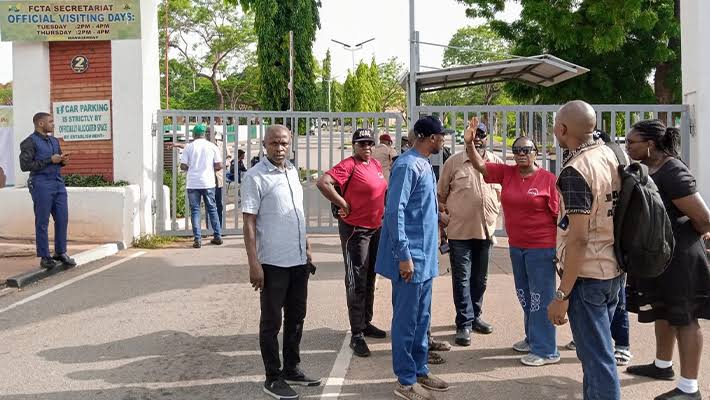
Patients across the Federal Capital Territory were left stranded on Wednesday as primary healthcare centres and general hospitals in the six area councils shut their doors, following the escalation of an indefinite strike declared by the Joint Union Action Committee (JUAC).
From Abaji to Kuje and Kwali, hospitals that ordinarily serve as the first and sometimes only point of care for low-income residents were eerily empty. At several facilities visited by Very Nigerian Newspapers, there were no doctors, nurses or support staff on duty, leaving patients confused, frustrated and abandoned.
“I came early this morning for a routine check-up,” said Mrs Grace Yohana at the Naharati Comprehensive Health Centre, Abaji. “Only to be told there is no service today. I don’t have money for a private hospital.”
For many residents, the strike has turned access to healthcare into a luxury. In Kwaku community in Kuje Area Council and Yebu in Kwali, locals lamented that they were now forced to travel long distances into the city centre to seek care they can barely afford.
The strike, which began last Monday, has paralysed not only health services but also primary and secondary schools and key agencies of the Federal Capital Territory Administration (FCTA), including the Abuja Geographic Information Systems (AGIS), the Abuja Environmental Protection Board (AEPB) and the FCT Water Board.
JUAC insists the industrial action is the result of what it describes as the FCTA’s persistent “breach of trust”, unresolved welfare issues and what it calls the “deliberate demoralisation” of workers.
However, the crisis took a new turn on Tuesday when the National Industrial Court ordered an immediate suspension of the strike. Justice Emmanuel Subilim ruled that while the right to strike exists, it is not absolute, particularly when a dispute has been formally referred to the court, as stipulated under the Trade Disputes Act.
The FCT Minister, Nyesom Wike, swiftly warned that workers who failed to return to duty would face consequences. Yet the order has done little to calm tensions.
Instead, JUAC has approached the Court of Appeal, challenging the ruling, while the Nigeria Labour Congress (NLC) has openly defied the court order, instructing its Abuja-based affiliates to “reinforce, intensify and sustain” the strike.
In a circular signed by NLC President Joe Ajaero and Acting Secretary Benson Upah, the Congress accused authorities of intimidation and continued neglect of workers’ welfare, urging members to attend daily “Solidarity Sessions” as a show of resistance.
Caught in the middle of this institutional showdown are ordinary citizens—patients who need medication, pregnant women seeking antenatal care, children due for immunisation, and families with no alternatives.
Some workers who returned to the FCTA Secretariat on Wednesday admitted they did so out of fear rather than conviction, underscoring the atmosphere of coercion and uncertainty surrounding the dispute.
While the FCT minister’s spokesman, Lere Olayinka, claimed most workers were never in support of the strike, the deserted hospitals and closed schools tell a more complicated story—one of a system where labour disputes quickly translate into human suffering.
This strike has exposed, yet again, the fragility of public service delivery in Nigeria’s capital. When government and labour lock horns without urgency or empathy, it is the weakest citizens who bear the cost.
The courts will rule. The unions will posture. The politicians will trade blame. But until a genuine, good-faith resolution is reached, Abuja’s most vulnerable residents will continue to pay for a crisis they did not create.


 Follow Us on Google Discover









Tension as traditional ruler collapses, dies in Ondo

2027: Kwankwaso a goat in sheep’s clothing, secretly working for Tinubu – Atiku Campaign Council

DSS arrests Maina’s fugitive son in Abuja, hands him over to EFCC

2027: Step down if you are not working for Tinubu – Deji Adeyanju dares Obi, Kwankwaso

2027: ‘I wont join my Uncle to support Tinubu’ – Davido says

Enugu NYSC death: NAFDAC debunks claims linking corps members death to fake drugs

33 Governors cannot be wrong in supporting Tinubu – Bayo Onanuga

Security forces arrest five suspects over abduction of 20 NYSC members in Imo

Rugby star Hyron Andrews dies at 31 after accidental fall in South Africa

LAUTECH Resident Doctors halt 50-day strike as Makinde intervenes

House Officers, Nurses, Radiographers, Others wanted as DELSUTH opens recruitment – Apply Now

FG raises health fund allocation to N40.76bn, extends insurance to prison inmates

Erisco Foods announces 13 job openings across Nigeria – Apply Now

Tinubu reappoints Bala Bila as INEC commissioner, nominates six others

2027: ‘Don’t trust your destiny to ‘kalokalo’ people’ – Wike warns Rivers voters against Atiku, Amaechi, Obi
Erisco Foods announces 13 job openings across Nigeria – Apply Now
‘You Betrayed Osun People’ — Adeleke, Davido face backlash over support for Tinubu

Ex-Senator Bello Mandiya’s body found in Abuja home three days after he slipped, hit his head in the bathroom
Tinubu reappoints Bala Bila as INEC commissioner, nominates six others

JUST IN: Finnish Appeal Court reduces Simon Ekpa’s jail term to four years, upholds terrorism conviction

Zamfara govt set to empower 36,176 residents with Dangote shares

Over 10 soldiers, four civilians feared dead as Boko Haram terrorists attack Borno military base

‘I love Islam, I’ve sent people to Mecca to pray for me, Nigeria for 25 years’ – Akpabio
House Officers, Nurses, Radiographers, Others wanted as DELSUTH opens recruitment – Apply Now

Umahi reopens first Niger bridge after emergency repairs, displays Tinubu’s photos

Lagos govt announces 3-day traffic diversion on Independence bridge for emergency repairs

Elon Musk unveils Tesla’s ‘flying’ car in stunning demonstration

Panic in Rivers community as pipeline explosion injures 20, razes over 50 houses

Tension escalates as thugs attack NDC secretariat in Edo, destroy properties
