National News
Tinubu says Nigeria will spend $11.6bn on debt servicing in 2026, blames global financial system

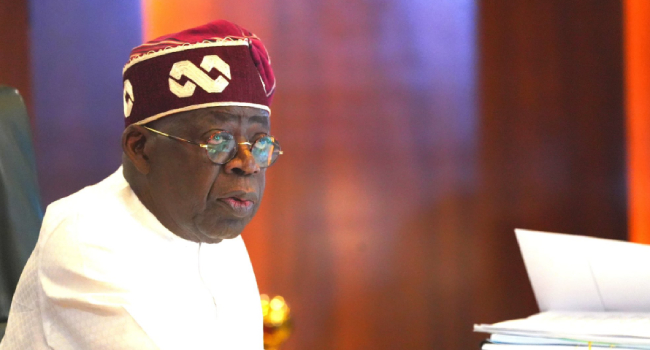
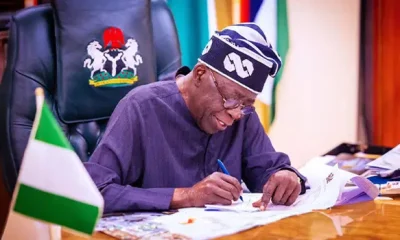
President Bola Tinubu has disclosed that Nigeria will spend about $11.6 billion on debt servicing in 2026, warning that the country’s debt obligations are significantly limiting investment in critical sectors of the economy.
Tinubu made the statement on Tuesday at the Africa Forward Summit in Nairobi, Kenya, according to a release by his Special Adviser on Information and Strategy, Bayo Onanuga.
The President said that nearly half of Nigeria’s projected revenue for 2026 would be committed to debt repayment, leaving limited fiscal space for development projects.
“Every single dollar that leaves our treasury to pay punitive interest rates is a dollar that did not go into our steel sector, our textile mills, our agro-processed, or our digital industries,” Tinubu said.
He added that such funds could have been used to train young engineers or improve electricity supply for industries across the country.
Tinubu also argued that African countries continue to face unfair treatment in global financial markets, describing them as “permanent high-risk borrowers” despite ongoing economic reforms.
He criticised the cost of borrowing across the continent, noting that African manufacturers struggle to compete globally due to high interest rates compared to other regions.
“How can an African manufacturer compete with a competitor in Europe, Asia, or North America when the cost of borrowing in our nations is five to ten times higher?” he asked.
The President further described the current international financial system as one that undermines Africa’s industrial growth by restricting access to affordable capital.
Tinubu maintained that Nigeria had taken “painful, homegrown decisions” to stabilise its economy, including fuel subsidy removal, exchange rate unification, banking recapitalisation, and exiting the Financial Action Task Force (FATF) grey list.
He said these reforms have contributed to improved investor confidence, a declining debt-to-GDP ratio projected at 32.3 percent in 2026, and external reserves of about $45.5 billion.
The President added that Nigeria is not seeking financial aid, but a fair global system that enables Africa to industrialise, refine its resources locally, and compete effectively in global markets.


 Follow Us on Google Discover



Opposition will front a single candidate against Tinubu, announcement will be made few days to election – Lukman

La Liga: Unstoppable Barcelona beat Real Betis 5-2 to extend winning run

EPL: Super Eagles star Iwobi fires Fulham to first league victory

Ogun hospital under fire as Nurse dies of asthma attack amid alleged oxygen failure

Maryam Babangida Center for Women Devt gets first wheel chair ramp after 34 years

Shettima inaugurates Arewa for Asiwaju campaign office in Abuja

2027: ‘APM will beat Tinubu in 12 battleground states’ – Makinde’s campaign team

Veteran Journalist, diplomat Dele Cole dies at 86

Suspended NSCDC commandant apologises over deaths of suspected illegal miners in Niger

EPL: Martinez rushed to hospital after head injury as Chelsea beat Everton

COAS arrives Borno as Military moves to clear terrorist camps, rescue abductees

Macky Sall quits race for UN Secretary-General position

Buhari backed Osinbajo’s presidential ambition four times, Akande tells Babachir Lawal

Dr. Benjamins‑Laniyi urges media to amplify women’s leadership, adopt gender‑sensitive reporting

Pope Leo XIV set to leave hospital after lung cancer surgery

Erisco Foods announces 13 job openings across Nigeria – Apply Now

2027: Step down if you are not working for Tinubu – Deji Adeyanju dares Obi, Kwankwaso

House Officers, Nurses, Radiographers, Others wanted as DELSUTH opens recruitment – Apply Now

Tinubu reappoints Bala Bila as INEC commissioner, nominates six others

Elon Musk unveils Tesla’s ‘flying’ car in stunning demonstration

2027: Kwankwaso a goat in sheep’s clothing, secretly working for Tinubu – Atiku Campaign Council

2027: Tinubu to miss rallies in over 20 States as APC releases campaign timetable

33 Governors cannot be wrong in supporting Tinubu – Bayo Onanuga

Gunmen storm Plateau, kill traditional ruler at residence

Outrage as suspected cultists unveil renovated police post in Rivers

2027: ‘Atiku, Obi, Duke, Makinde are not threats to Tinubu’, says APC

Atiku fully fit, ready to campaign in all 36 states, interact with Nigerians – ADC PCC

2027: ‘Don’t trust your destiny to ‘kalokalo’ people’ – Wike warns Rivers voters against Atiku, Amaechi, Obi

Security forces arrest five suspects over abduction of 20 NYSC members in Imo
