
World
US, Iran reach breakthrough agreement as Trump, Pezeshkian sign peace pact

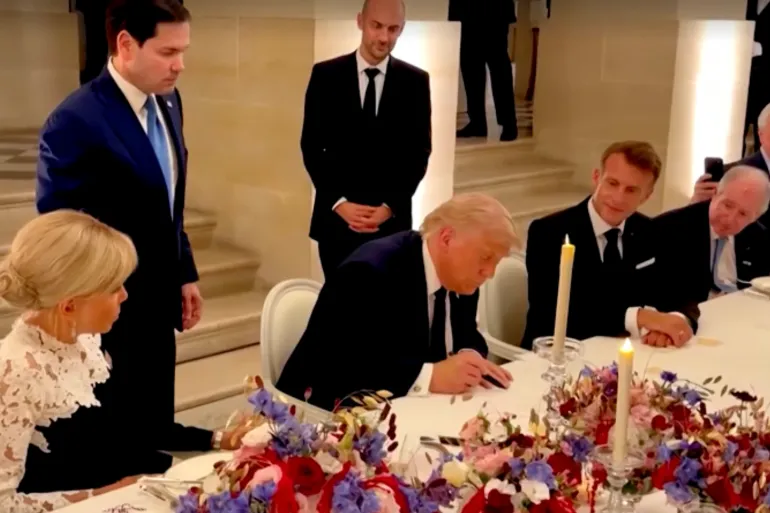
The United States and Iran have electronically signed a memorandum of understanding extending their ceasefire and paving the way for the reopening of the Strait of Hormuz, a critical global shipping route.
Iran’s Ministry of Foreign Affairs confirmed that the agreement has already taken effect, with spokesperson Esmaeil Baghaei describing it as the beginning of a monitored implementation phase.
According to both Iranian and US accounts, the deal—reportedly signed at Versailles by US President Donald Trump—extends the ceasefire for 60 days while laying the groundwork for broader negotiations on Iran’s nuclear programme and the gradual easing of sanctions.
The agreement includes provisions for Iran to gradually reopen the Strait of Hormuz, while the United States moves toward lifting restrictions on Iranian ports and easing selected sanctions. Both sides have also agreed to continue discussions on broader regional and economic issues.
Iran, however, has drawn a clear line, insisting that its missile programme remains non-negotiable and that its defence capabilities will not be part of any talks. Tehran has also warned it will closely monitor US compliance “without leniency,” signalling deep mistrust despite the diplomatic breakthrough.
While the White House has confirmed the signing, analysts note that the agreement is not a final peace deal but an interim framework intended to stabilise tensions and create space for further negotiations.
The development has already sparked political debate in Washington, where critics warn that the deal could be perceived as overly lenient toward Tehran. The Trump administration, however, insists the memorandum is a strategic step toward preventing nuclear escalation rather than a concession.
Iran, on its part, has framed the agreement as evidence of US failure to achieve its objectives, even as it prepares to engage in further negotiations over sanctions relief and nuclear oversight.
With the Strait of Hormuz playing a vital role in global energy supply chains, the success or failure of the next 60 days of implementation is likely to have far-reaching economic and geopolitical consequences.


 Follow Us on Google Discover







Nigerian Navy denies recruitment notice circulating online

JAMB relaxes rules, allows candidates to change registered phone numbers, emails

Tinubu to appoint Wike as Rivers, FCT campaign council coordinator amid rift with APC Govs

Nigeria set to address UN General Assembly Thursday

Mambilla Project: EFCC opens probe into Adesanya, Atiku, Malami, others named in Tribunal Award

UNGA: Tinubu afraid of becoming Trump’s next Nicolas Maduro – Atiku

NSCDC releases names of 37 suspected illegal miners who died in custody (Full list)

Crisis looms in NDC as OK Movement clash with pary chairman, Head of Operations resign over campaign council list

APM, Makinde sue Otti over alleged N200m campaign levy in Abia

‘Why are afraid of entering America?’, Atiku blasts Tinubu for missing third consecutive UNGA

Gunmen storm Kebbi community, kill village head

Former Kogi Gov Ibrahim Idris dies in UK

NDLEA seizes N3.4bn drugs, nab fake cop, mechanic

Falconets crash out of 2026 U-20 Women’s World Cup after 1-0 loss to Colombia

BREAKING: Tinubu confirms absence from 81st UN General Assembly in New York, directs Shettima to lead Nigerian delegation
BREAKING: Tinubu confirms absence from 81st UN General Assembly in New York, directs Shettima to lead Nigerian delegation

Nigerians already seeing reductions in transport fares – Tinubu

‘We Won’t Go Back to Egypt’ — Showunmi rejects Atiku’s petrol subsidy proposal

PL: Brighton thrash Arsenal 3-0, end Gunners’ winning run

Four Nigerians receive UNGA Humanitarian, Goodwill Ambassador honours in New York

Sowore as best president Nigeria refuses to have: by Farooq A. Kperogi
Crisis looms in NDC as OK Movement clash with pary chairman, Head of Operations resign over campaign council list

NDC disowns OK Movement campaign council, refers John Ugulu for discipline

NSCDC names new Niger commandant following death of miners in custody

Raphinha set to sign new Barcelona contract until 2030
NSCDC releases names of 37 suspected illegal miners who died in custody (Full list)

ECOWAS court set to hold 2026 international conference in Dakar
Falconets crash out of 2026 U-20 Women’s World Cup after 1-0 loss to Colombia
NDLEA seizes N3.4bn drugs, nab fake cop, mechanic