
Editorials
Bandits fleeing northern crackdown moving into South-East, South-South forests — Sources

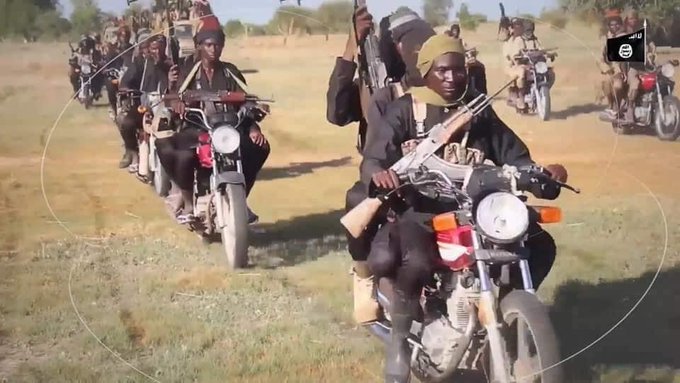
Recent intelligence reports indicating that terrorists dislodged from Zamfara and Sokoto states are relocating towards parts of the South-East and South-South should raise urgent national concern.
According to security and intelligence sources, the insurgents are reportedly exploiting interconnected forest corridors and riverine routes stretching through Niger, Kogi, Kwara and into southern states such as Anambra, Abia, Imo and beyond.
These routes, including dense forest belts and difficult terrains along the Niger River axis, are said to be providing cover for movement and regrouping following sustained military pressure in the North.
Security officials, including a retired Army General and a Department of State Services officer, described how these groups allegedly navigate through cattle routes, forest reserves and ungoverned spaces linking multiple states across the federation.
Kogi State, in particular, was identified as a critical convergence point due to its central geography and extensive forest network linking the North and South.
The development comes amid rising concerns over insecurity across Nigeria, including kidnappings, attacks on rural communities and school closures triggered by security threats in some parts of the country.
In Edo State, for instance, schools were recently shut following intelligence warnings of possible abductions, underscoring the growing unpredictability of criminal networks.
While some state authorities in the South-East and South-South insist there is no confirmed terrorist occupation within their forests, intelligence narratives suggest that these groups are increasingly testing new routes and adapting operational strategies, including a shift towards mass abductions and prisoner exchange demands rather than conventional ransom negotiations.
This evolving pattern points to a troubling shift in Nigeria’s security landscape, from regionally concentrated insurgency to a more fluid, nationwide threat network capable of mobility across forest belts, riverine corridors and inter-state borders.
Security analysts warn that the movement of displaced armed groups, if not decisively neutralised, risks spreading criminal activity into previously less affected regions.
The presence of dense forested areas across Anambra, Imo, Abia, Ondo, Ekiti, Edo, Oyo and Kwara has repeatedly been identified as a structural vulnerability in Nigeria’s internal security architecture.
The situation is further complicated by overlapping security narratives in affected regions. While some agencies report successful clearance operations, others acknowledge encounters with armed groups in forests, riverbanks and border communities, suggesting that the threat environment remains fluid and contested.
The emergence of coordinated forest routes linking multiple geopolitical zones underscores the urgent need for improved inter-agency intelligence sharing, strengthened border surveillance within internal territories, and a unified national response strategy that treats insecurity as a single, interconnected threat rather than isolated regional incidents.
Beyond military operations, the situation also highlights the importance of community-based intelligence, early warning systems and stronger collaboration between federal and state security structures, particularly as debates continue over proposed reforms such as the establishment of state police.
Nigeria is clearly at a critical juncture. The migration of armed groups from the North into southern corridors, whether temporary or sustained, reflects the adaptive nature of modern insecurity and the consequences of fragmented containment strategies.
What is now required is not reassurance, but coordinated national action capable of closing identified forest corridors, dismantling emerging networks and preventing further territorial expansion of criminal groups across the federation.
The warning signs are no longer theoretical. They are operational, visible, and spreading across regions. Nigeria must respond accordingly before containment becomes escalation.
Credit: The Punch


 Follow Us on Google Discover






BREAKING: ‘I have nothing to hide, release my academic records’ – Peter Obi tells UNN

Shettima returns to Nigeria after BRICS summit in India

2027: Big battle for Wike as APC Govs move against Rainbow Coalition, parallel structures capable of undermining Tinubu, APC candidates

2027: Support Tinubu as he supported Buhari, Yari urges Northerners

2027: ‘Tinubu will win, Atiku second, Obi third’ – Afegbua

FG signs N729bn bond to offset power sector debts

LASUTH Resident Doctors embark on indefinite strike over unpaid allowances

Show proof I left Anambra with debts, I’ll stop my 2027 campaign – Obi dares Soludo

‘I Don’t Want to Be Called Africa’s Richest Man Again’ — Dangote

600 Northern Lecturers who attended Tinubu endorsement show must be bared 2027 election duties – ADC warns INEC

BBNaija S11: Barry wins HoH title, becomes first finalist

Ondo students set 14-day deadline for Aiyedatiwa over ASUU strike

Nigeria, India target $15bn trade as Modi pushes for more crude imports

2027: Oba of Lagos backs Tinubu, says ‘ no vacancy in Aso Rock’

2027: NDC says Nigerians can fund party with contributions as low as N1,500

International Breweries Recruitment: 5 Job vacancies across Nigeria (How to Apply)

Food and Agriculture Organization Of the United Nations (FAO-UN) announces 4 recruitment vacancies across Nigeria (How to Apply)

2027 Elections: INEC publishes final list of 1,195 Senate, 3,213 Reps candidates (Full List)

2027: Over 600 Northern Lecturers endorse Tinubu’s re-election bid

15 feared killed as gunmen strike Plateau communities
2027: NDC says Nigerians can fund party with contributions as low as N1,500

Average Nigerian can survive on N3,000 daily, says Reno Omokri

Yamal double fires Barcelona to 4-2 victory over Levante

Haaland scores as 10-man Man City beat Manchester United 1-0

Hon. Desmond Elliot kneels down, begs Gbajabiamila for forgiveness

Tinubu’s FBI records are not evidence of criminal history, it won’t be released – Reno Omokri

BBNaija Season 11: Abi, Araga evicted from ‘Show Ya Sef’ House

Tinubu lands in Paris for second leg of holiday

Real Warri Pikin apologises after viral on-stage moment with Timaya (Video)