
Politics
EFCC: How APC chieftain warned me against challenging Tinubu in 2027 – Makinde

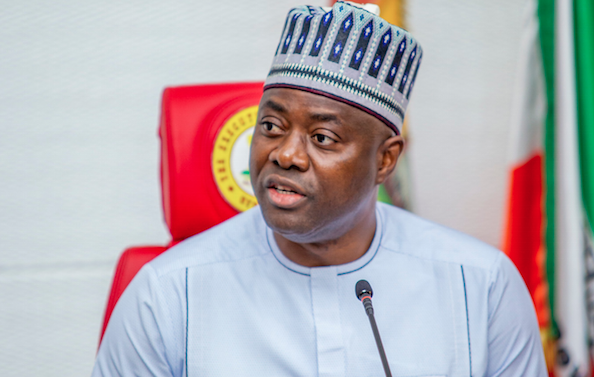
Oyo State Governor, Seyi Makinde, has alleged that an unnamed chieftain of the All Progressives Congress (APC) warned him against contesting the 2027 presidential election against President Bola Tinubu.
Makinde made the claim in the July 2026 edition of his monthly newsletter, obtained by Tribune Online, where he also linked the warning to a subsequent request by the Economic and Financial Crimes Commission (EFCC) for records of the state’s contracts and payments.
According to the governor, the APC chieftain approached him on June 1, 2025, shortly after President Tinubu was endorsed as the APC’s sole presidential candidate for the 2027 election.
He said that a day after the warning, the EFCC requested copies of all Oyo State Government contracts and payments to contractors from 2021 without identifying any contractor, company, transaction or specific allegation of wrongdoing.
Makinde explained that his administration did not oppose the investigation but instead asked the anti-graft agency to specify the contractors or transactions under scrutiny so the relevant documents could be made available.
According to him, the EFCC did not respond to the request, prompting the Oyo State Government to seek judicial interpretation on whether such a broad demand was lawful.
The governor recalled that the Federal High Court in Ibadan, while delivering judgment in Suit No. FHC/IB/CS/61/2025, affirmed the EFCC’s constitutional authority to investigate financial crimes but ruled that such powers must be exercised in accordance with the Constitution and the rule of law.
Makinde said the court described the EFCC’s request as “speculative” and a “fishing expedition,” holding that requests for information must be linked to a specific allegation rather than broad, unspecified inquiries.
His position echoed an earlier statement by his Special Adviser on Media, Sulaimon Olarenwaju, who argued that the EFCC’s request, particularly its letter dated June 2, 2025, amounted to a speculative investigation that could infringe on the constitutional rights of those involved.
According to Makinde, while he would not speculate on the timing of the EFCC’s request, Nigerians should examine the sequence of events and draw their own conclusions.
He maintained that no government or public official should be above legitimate investigation but insisted that accountability must be rooted in credible evidence rather than broad investigations conducted in the hope of uncovering wrongdoing.
The governor described the court’s verdict as a victory for the rule of law rather than a setback for the EFCC, saying the judgment reinforces the principle that every institution must operate within constitutional and legal limits.
He added that the ruling highlights the importance of leadership anchored on due process, constitutionalism and respect for the rule of law.


 Follow Us on Google Discover










FIFA takes over NFF affairs, approves normalisation committee ahead of fresh elections

Sultan of Sokoto meets Tinubu, calls for peaceful elections

Ebola: FG directs agencies to intensify public awareness

Salah shines as Trabzonspor beat Hearts 2-0 in Conference League

BREAKING: Tinubu appoints former DSS DG Yusuf Bichi as NISS Governing Board Chairman

NEC approves 90-Day plan to tackle high food prices, transport cost

Tinubu tasks Medical experts on brain drain after receiving WACP Fellowship

CDCFIB Recruitment: Portal opens October 28 for shortlisted candidates

Adamawa court sentences three to death over abduction of Catholic priests

‘You called them cancer, now you’re their ally’ – Rufai Oseni slams Wike for embracing APC

‘Every Nigerian made poorer by 300%’ – Obasanjo slams Tinubu reforms

Hardship: NLC, TUC threaten nationwide action, give FG October 27 deadline

Seven-Up opens recruitment for 17 positions across Nigeria – Apply Now

Backend Office HQ announces 9 job openings with salaries of up to ₦400,000 – Apply Now

Reps consider bill to ban landlords from demanding more than one year’s rent in FCT
Seven-Up opens recruitment for 17 positions across Nigeria – Apply Now
Backend Office HQ announces 9 job openings with salaries of up to ₦400,000 – Apply Now

‘Politics Is Not Madness’: Emir of Katsina warns Tinubu Campaign DG Yari
CDCFIB Recruitment: Portal opens October 28 for shortlisted candidates

Toluwanisings: Family announces night of tributes, service of songs for late gospel singer

Oyebanji appoints four officials, swears in SSG, chief of staff in Ekiti

Seven-year-old boy found dead after suspected kidnappers demand N2.5m ransom in Plateau

2027: He is a ‘wole wole’ man – APC National Secretary questions Atiku’s ability to fix Nigeria’s economy

History and service have kept us intertwined – Tinubu celebrates Kwankwaso at 70

‘Where is my house?’ – Ortom questions Alia over denial of ex-governor’s benefits

Tinubu meets NELFUND Chairman Jim Ovia at Aso Rock

2027 Election: Court rejects suit to compel INEC to register new party

Ebola: 10 Warning signs and prevention tips you should know

UCL: Man United suffer 4-1 defeat to Como as pressure mounts on Carrick
