Editorials
Nigeria’s fragile union and the burden of Igbo marginalisation

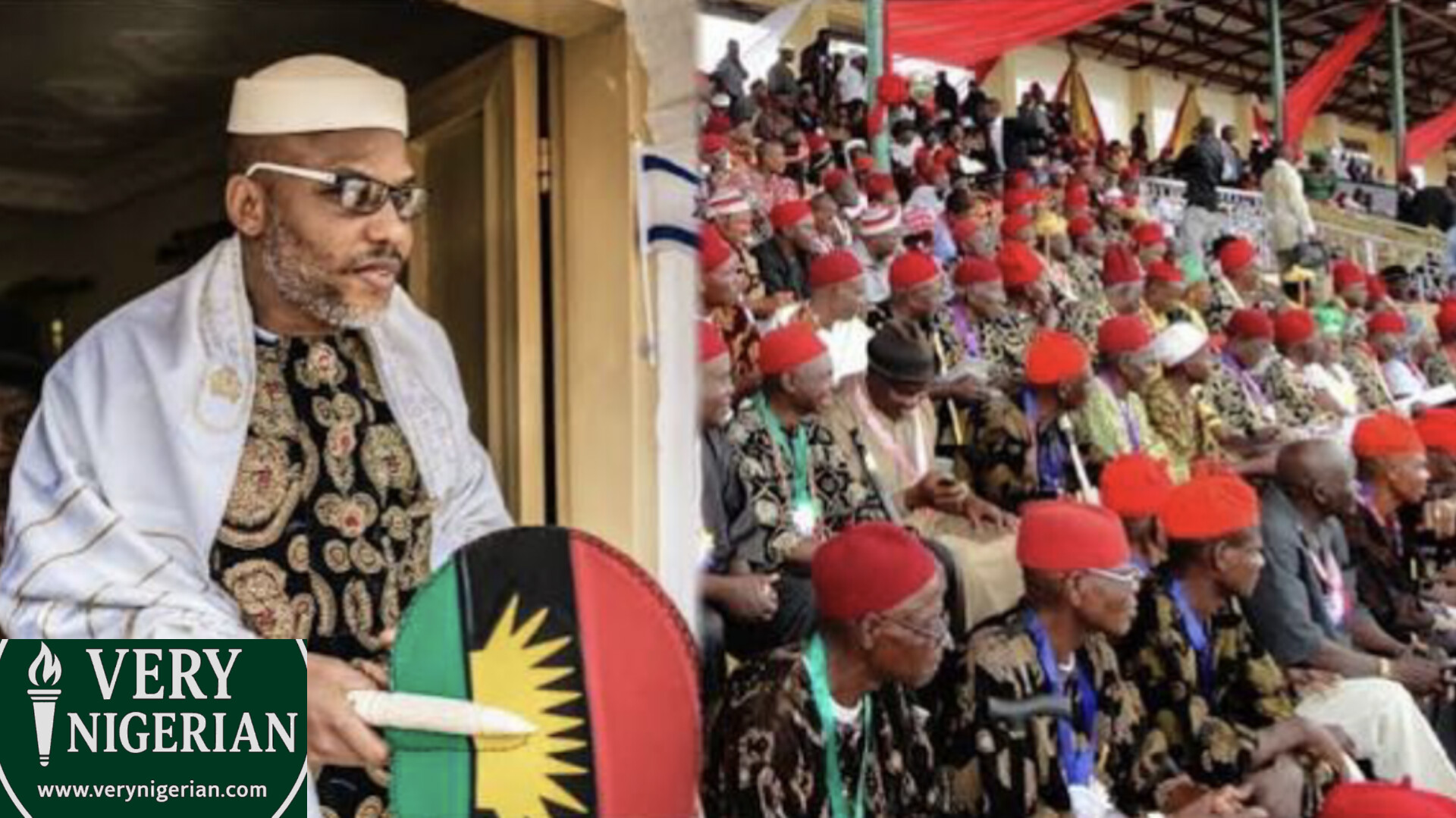
Nigeria’s nationhood has always been a fragile conversation, but it must be stated from the onset: balkanisation is not the answer.
Despite the clear opposition to secession, whether openly declared or pursued through subtle agitation, that position is not rooted in self-righteous patriotism.
It is rooted in 22 years of observing ordinary Nigerians closely.
For the average citizen, ethnicity is not the centre of life.
Survival is.
Across divides, Muslim or Christian, northern or southern, the everyday Nigerian is consumed by the search for food, jobs, better roads, hospitals, schools and above all, security.
Our fault lines are real.
Our disagreements are many.
But conflict is not a uniquely Nigerian phenomenon; it comes naturally with diversity.
And while diversity can be challenging, it is not a curse.
What threatens a nation is not difference but the failure to manage it with fairness and wisdom.
Even within supposedly “homogenous” societies, intra-ethnic bitterness and violent rivalries still thrive.
Hate doesn’t disappear by drawing borders, it simply relocates.
Yet, hard truths remain.
The grievances of many Igbo about the Nigerian federation should not be dismissed as mere political tantrums.
Historically, the Nigerian project was structured around three dominant blocs: Hausa/Fulani, Igbo and Yoruba.
In that arrangement, the Igbo believe, with significant justification, that they have been short-changed at the highest levels of power.
The Igbos complain about state and LGA distribution, federal appointments, quota systems and constitutional arrangements that have left them feeling structurally disadvantaged.
The scars run deep, dating back to the tragic events of 1966, the pogroms in the north, and the eventual declaration of Biafra.
The secession failed, and subsequent political efforts by Igbo leaders yielded limited results.
Since 1999, democracy offered yet another opportunity, but the path to the presidency has remained elusive.
New agitations emerged, notably MASSOB, but again, political dividends were minimal.
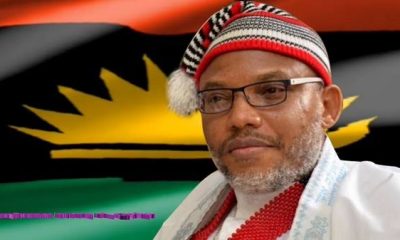
The rise of Nnamdi Kanu and IPOB around 2015 marked a shift.
Through Radio Biafra and a brand of rhetoric laced with anger and alienation, Kanu became the most influential public figure in the South-East.
The streets embraced him as traditional political structures lost legitimacy in the region.
However, at the peak of his influence in 2019, Kanu could have taken a different route.
With his followership, he could have engineered a political hurricane across the South-East, winning governorships, National Assembly seats, and creating a formidable bloc capable of negotiating power, much like the South-West did in 1999.
Instead, he rejected politics as a tool.
His two major strategic blunders are well documented:
First, his rhetoric antagonised entire regions and hardened Nigeria’s fault lines.
Second, the violence unleashed within the South-East, sit-at-home orders, attacks, killings, ultimately weakened the very people IPOB claimed to defend.
A region cannot prosper under fear. Progress cannot grow where businesses are forced to close on Mondays and streets are ruled by gunmen.
That strategy was neither revolutionary nor pragmatic, it was self-sabotage.
Violence has never earned any region the presidency. June 12 was a democratic struggle powered by protests and political negotiation.
The Niger Delta militants fought for resource control, not secession or Aso Rock.
Boko Haram seeks a caliphate, not national leadership.
These are not precedents for Igbo political aspirations.
The South-East’s setbacks are not rooted in lack of capability or contribution, but in strategic missteps and internal contradictions.
Kanu had the leverage to mainstream the Igbo agenda; instead he ceded the field to chaos.
His path has hurt businesses, discouraged investors, and created fear among ordinary people.
A movement that hurts its base is not a liberation struggle, it is a tragedy.
Nigeria must listen to the Igbo. But the Igbo must also engage Nigeria. Power is negotiated, not inflicted. No region has ever succeeded in isolation.
This other things follow;
The Depressed
Some Nigerians were inexplicably upset that captives rescued in Kwara and Kebbi returned home alive.
Such reactions expose the warped politics of our country.
It is easy to oppose negotiation with bandits until your own mother is the one in captivity.
Too often, our politicians play chess with human lives.
That is the real disgrace.
Military Coup
Guinea-Bissau has once again sunk into another familiar cycle, a military takeover.
The new junta leader, Gen Horta N’Tam, is reportedly a loyalist of the ousted President Umaro Sissoco Embaló, raising suspicions of a stage-managed transition.
Either way, West Africa is slipping further into instability. Sadly, coups are now becoming regional tradition.
Rest in peace Jimmy Cliff
Before Bob Marley, there was Jimmy Cliff, the pioneer who first introduced Jamaican reggae to the world.
His track Vietnam, praised by Bob Dylan as the greatest protest song, was a timeless masterpiece.
Cliff lived many lives: Christian, Rastafarian, Muslim, and ultimately unaffiliated.
With his passing at 81, the reggae world has lost another legend.
Nothing to comment
The annual ritual has returned: over 11,000 police personnel withdrawn from VIP escorts. It happens every year, and nothing changes.
Former Deputy Speaker Idris Wase has raised alarm that politicians may now be vulnerable to kidnappers.
Meanwhile, ordinary Nigerians have lived with this vulnerability for years. The irony is self-explanatory.


 Follow Us on Google Discover





Pope Leo XIV set to leave hospital after lung cancer surgery

Gunmen kill four vigilantes in Plateau community

Tension as traditional ruler collapses, dies in Ondo

2027: Kwankwaso a goat in sheep’s clothing, secretly working for Tinubu – Atiku Campaign Council

DSS arrests Maina’s fugitive son in Abuja, hands him over to EFCC

2027: Step down if you are not working for Tinubu – Deji Adeyanju dares Obi, Kwankwaso

2027: ‘I wont join my Uncle to support Tinubu’ – Davido says

Enugu NYSC death: NAFDAC debunks claims linking corps members death to fake drugs

33 Governors cannot be wrong in supporting Tinubu – Bayo Onanuga

Security forces arrest five suspects over abduction of 20 NYSC members in Imo

Rugby star Hyron Andrews dies at 31 after accidental fall in South Africa

LAUTECH Resident Doctors halt 50-day strike as Makinde intervenes

House Officers, Nurses, Radiographers, Others wanted as DELSUTH opens recruitment – Apply Now

FG raises health fund allocation to N40.76bn, extends insurance to prison inmates

Erisco Foods announces 13 job openings across Nigeria – Apply Now
Erisco Foods announces 13 job openings across Nigeria – Apply Now
‘You Betrayed Osun People’ — Adeleke, Davido face backlash over support for Tinubu

Ex-Senator Bello Mandiya’s body found in Abuja home three days after he slipped, hit his head in the bathroom

Tinubu reappoints Bala Bila as INEC commissioner, nominates six others
House Officers, Nurses, Radiographers, Others wanted as DELSUTH opens recruitment – Apply Now

JUST IN: Finnish Appeal Court reduces Simon Ekpa’s jail term to four years, upholds terrorism conviction

‘I love Islam, I’ve sent people to Mecca to pray for me, Nigeria for 25 years’ – Akpabio

Over 10 soldiers, four civilians feared dead as Boko Haram terrorists attack Borno military base

Panic in Rivers community as pipeline explosion injures 20, razes over 50 houses

Umahi reopens first Niger bridge after emergency repairs, displays Tinubu’s photos

Elon Musk unveils Tesla’s ‘flying’ car in stunning demonstration
2027: Step down if you are not working for Tinubu – Deji Adeyanju dares Obi, Kwankwaso

Tension mounts as NLC rejects FG’s response to 14-day ultimatum

2027: Tinubu to miss rallies in over 20 States as APC releases campaign timetable
