
Editorials
CPC designation effect? – Badaru’s exit and the growing pressure on Matawalle

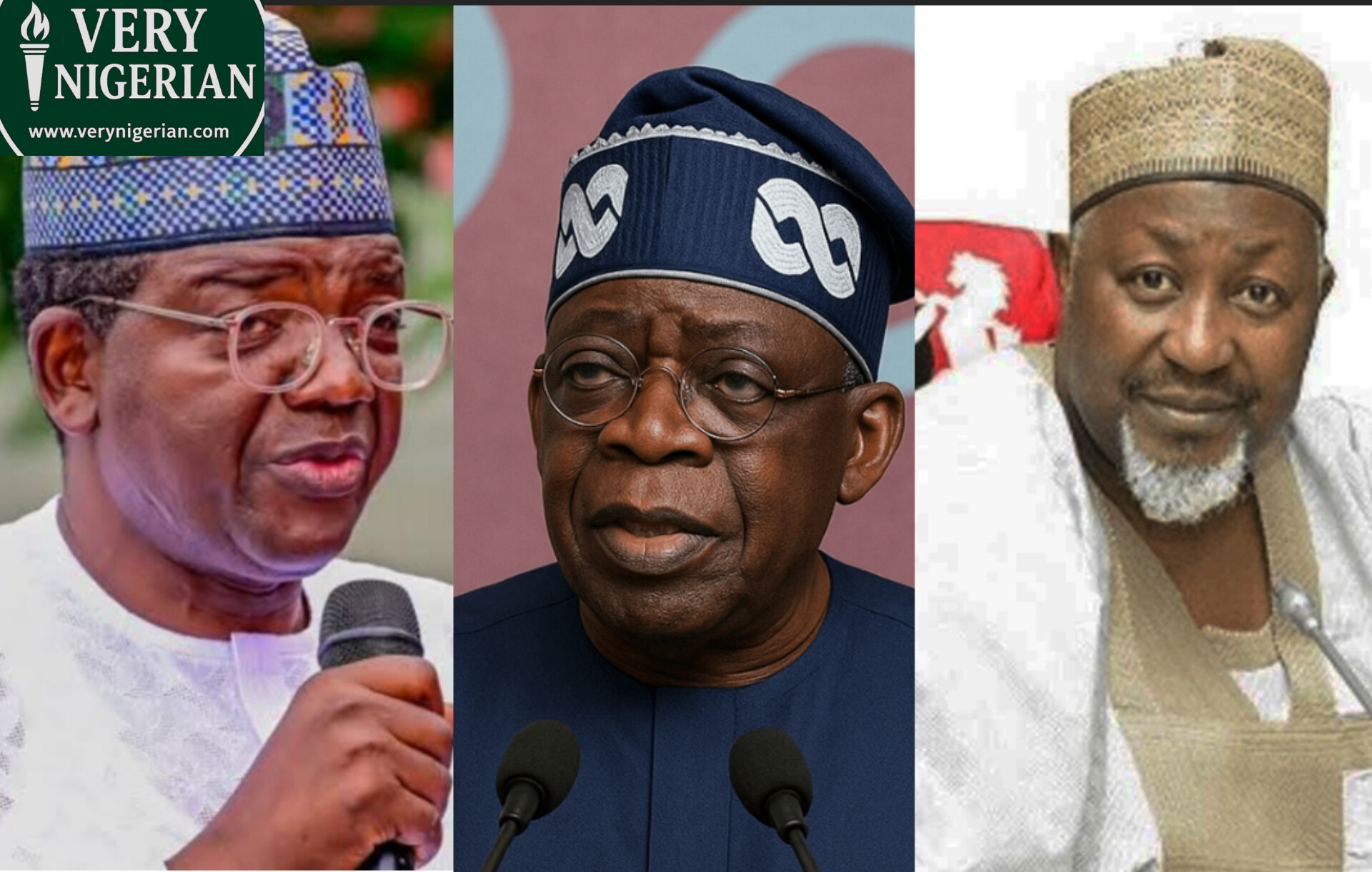
The surprise resignation of Nigeria’s Defence Minister, Mohammed Badaru Abubakar, has opened a fresh chapter in the Tinubu administration’s security struggles, and the pressure is far from over.
What initially appeared to be a quiet exit “on health grounds” has now taken on an entirely different complexion, following revelations that the United States demanded the removal of both Badaru and the Minister of State for Defence, Bello Matawalle, as a condition for deeper security collaboration with Nigeria.
For a country battling terrorism, banditry and spiralling violent crimes, this revelation raises troubling questions. If Washington has reservations about key figures in Nigeria’s defence architecture, then the implications go far beyond cabinet reshuffling.
They speak to credibility, confidence and the capacity of Nigeria’s leadership to command the trust of its partners.
According to senior government officials, the US made its position clear: both ministers must go before any meaningful cooperation could proceed.
Badaru’s resignation, therefore, is only half the story. Matawalle remains in office, but the pressure for his removal is intensifying, and not just from external partners.
Within government circles, there is growing concern that retaining him could complicate Nigeria’s strategic interests at a time when global support is urgently needed.
The chain of events accelerated on Monday when former Chief of Defence Staff, General Christopher Musa, held his first public meeting with President Tinubu since his retirement in October.
Reliable sources disclosed that the President informed Musa of his plan to appoint him as the next Minister of Defence, a signal that Abuja is bracing for a major shake-up within the security sector.
Badaru’s departure after barely two years in office adds another layer to a worrying pattern: frequent turnover in a ministry that demands continuity, experience and steady leadership.
His resignation letter, dated December 1, cited health concerns, and the Presidency promptly announced that Tinubu had accepted it. But the timing, alongside US pressure and Nigeria’s re-designation as a ‘Country of Particular Concern’ (CPC), suggests that the health narrative may not be the whole picture.
The CPC designation, driven by claims of widespread Christian persecution, has put Nigeria in an uncomfortable spotlight. Advocacy groups in Washington insist that no country records more Christian fatalities from extremist violence than Nigeria.
The allegations range from Boko Haram attacks to ISWAP raids and bandit killings across the North.
Some groups have even framed the situation as bordering on genocide, a description Nigerian officials strongly reject.
President Tinubu and his security advisers have argued that the conflict dynamics in Nigeria are complex, multi-layered and not reducible to a religious genocide narrative.
Nevertheless, the renewed designation has consequences. It carries diplomatic weight, affects military cooperation, and shapes how Nigeria is viewed on the global stage.
This explains the urgency behind the high-level delegation led by NSA Nuhu Ribadu to Washington last week.
Nigeria knows what is at stake: intelligence sharing, military support, counterterrorism logistics and broader strategic partnerships. All these require trust, trust that the US is clearly questioning.
The Tinubu administration now faces a delicate balancing act.
On one hand, it must defend Nigeria’s sovereignty and reject oversimplified narratives of religious persecution.
On the other, it must demonstrate seriousness, transparency and commitment in reforming the security sector. If the United States, one of Nigeria’s most critical security partners, has lost confidence in key ministers, then the government must respond decisively.
Badaru’s exit may signal the beginning of a broader realignment.
Whether Matawalle follows remains to be seen, but the stakes are high.
At a time when insecurity continues to overwhelm communities across the country, Nigeria cannot afford political drama within its defence leadership.
The nation needs competence, credibility and partners who trust its intentions.
President Tinubu must act swiftly, not just to appease Washington, but to strengthen a security apparatus that Nigerians themselves have lost confidence in.


 Follow Us on Google Discover




Wike, Akpabio, Uzodimma: Unity at the podium, rival ambitions behind the Scenes? can Tinubu keep his associates together?

Real reason we removed universities from IPPIS, recruitment waiver – FG

Macron condemns looting, vandalism during cost-of-living protests in France

Lagos State: List of LGAs, population, land mass, government, other key facts

Oyo State: List of LGAs, population, land mass, government, other key facts

Osun State: List of LGAs, population, land mass, government, other key facts

Ondo State: List of LGAs, population, land mass, government, other key facts

Eight Nigerian Soldiers killed as ISWAP landmine hits Army patrol vehicle in Borno

Bauchi Health Agency boss, four children die in Road accident

‘Nigeria cannot become prosperous in four years’ — Tinubu’s Economic Adviser says

2027: Tinubu must be stopped, ‘even Buhari saw him as bad news’ — Hakeem Baba-Ahmed

APC sweeps all 21 chairmanship seats, 239 Councillorship positions in Kogi LG poll

‘₦29,000 Cannot sustain a retired officer’ — Atiku challenges Tinubu on police pensions, proposes initiative

FG ends 17-year blackout in Gombe community with 1MW solar mini-grid

EPL: Leeds hold Man Utd to 1-1 draw as pressure mounts on Carrick

2027: Kwankwaso a goat in sheep’s clothing, secretly working for Tinubu – Atiku Campaign Council

Opposition will front a single candidate against Tinubu, announcement will be made few days to election – Lukman
‘₦29,000 Cannot sustain a retired officer’ — Atiku challenges Tinubu on police pensions, proposes initiative

DSS arrests Maina’s fugitive son in Abuja, hands him over to EFCC

Gunmen kill four vigilantes in Plateau community

Tension as traditional ruler collapses, dies in Ondo

Suspended NSCDC commandant apologises over deaths of suspected illegal miners in Niger

Veteran Journalist, diplomat Dele Cole dies at 86

2027: NDC will never step down for Atiku, stop attacking us – Kwankwaso replies ADC Campaign Council

Ogun hospital under fire as Nurse dies of asthma attack amid alleged oxygen failure

2027: ‘APM will beat Tinubu in 12 battleground states’ – Makinde’s campaign team

Buhari backed Osinbajo’s presidential ambition four times, Akande tells Babachir Lawal

Macky Sall quits race for UN Secretary-General position

COAS arrives Borno as Military moves to clear terrorist camps, rescue abductees
