
Editorials
Nnamdi Kanu’s Life Sentence: Justice or deepening division?

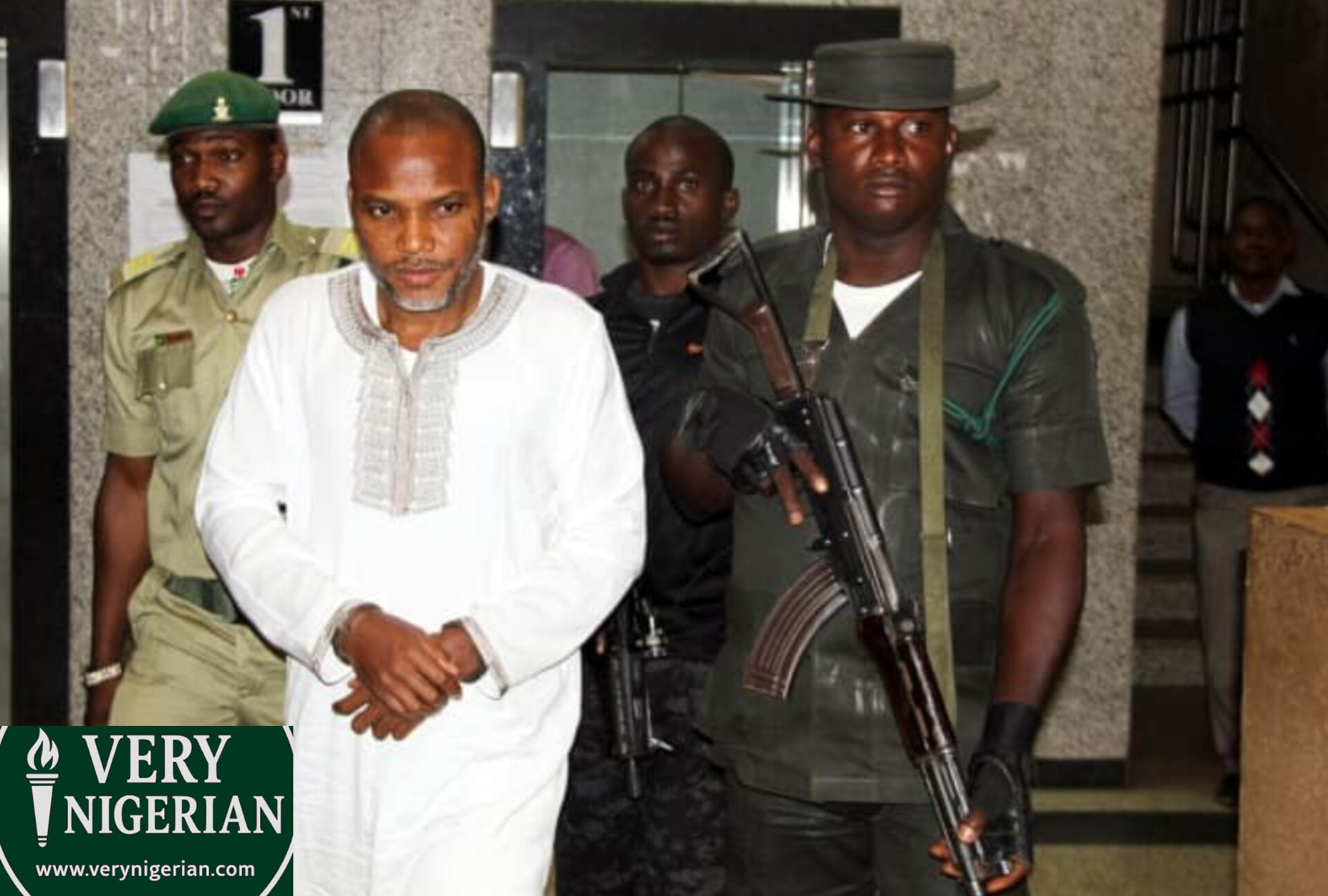
The life imprisonment of Nnamdi Kanu, leader of the proscribed Indigenous People of Biafra (IPOB), by a Federal High Court in Abuja has sent shockwaves across the South East and reignited debates about fairness, justice, and regional bias in Nigeria.
Delivered by Justice James Omotosho, the judgment comes after a legal saga spanning over a decade, marked by arrests, escapes, appeals, and controversies.
Justice Omotosho found Kanu guilty on seven terrorism charges, including incitement to violence through his illegal radio broadcasts.
The court held that these broadcasts were responsible for the killing of 175 security personnel, the destruction of 134 police stations, and the burning of nine INEC offices.
Kanu received life imprisonment on four counts, alongside additional concurrent sentences of 20 and five years, all without the option of a fine. The judge stated that he refrained from applying the death penalty in deference to Biblical injunctions on mercy.
However, for many Nigerians, especially in the South East, mercy appears absent.
Former Senate President Adolphus Wabara expressed shock at the sentence, noting that a Boko Haram leader recently received only five years.
Senator Enyinnaya Abaribe argued that the judgment was expected and highlighted what he perceives as a long-standing injustice: “Justice in Nigeria is not for the South East.”
Comparisons with amnesty programs for militants in other regions only deepen the sense of inequality.
The Igbo Women Assembly condemned the ruling, claiming it was predetermined.
Their national president, Lolo Nneka Chimezie, insisted that IPOB’s agitation was largely peaceful and that real terrorists in other parts of the country are treated more leniently.
Similarly, the Igbo Community Association in Abuja criticized the process, emphasizing that Kanu was denied the chance to fully defend himself in court.
Residents in Imo and Abia states expressed disappointment and frustration.
In Owerri, discussions about the ruling were cautious and hushed, reflecting a mixture of resignation and concern.
Heavy security presence around the Abia State Government House in Umuahia signals the authorities’ awareness of potential unrest, yet the general atmosphere remained calm but tense.
This case has always been about more than terrorism.
It touches on history, identity, governance, and the Nigerian state’s handling of dissent.
Kanu’s legal journey, which included bail, escapes, re-arrest in Kenya, and the Supreme Court’s restoration of charges, underscores the complexities of justice in the country.
While the federal government maintains that the verdict reflects law and order, critics argue that it also exposes systemic double standards.
At this critical juncture, President Bola Tinubu faces intense scrutiny.
Voices from the South East urge political intervention to prevent further alienation and ensure fairness. Nigeria cannot afford to treat the grievances of one region more harshly than others without risking deeper national fractures.
The life sentence may close a long legal chapter for Kanu, but it opens new political and emotional wounds.
If Nigeria is serious about unity, equity, and justice, it must now confront these issues honestly and work toward solutions that go beyond courtroom judgments.
Otherwise, the scars of this case will linger, threatening the fragile fabric of the nation.


 Follow Us on Google Discover







Opposition will front a single candidate against Tinubu, announcement will be made few days to election – Lukman

La Liga: Unstoppable Barcelona beat Real Betis 5-2 to extend winning run

EPL: Super Eagles star Iwobi fires Fulham to first league victory

Ogun hospital under fire as Nurse dies of asthma attack amid alleged oxygen failure

Maryam Babangida Center for Women Devt gets first wheel chair ramp after 34 years

Shettima inaugurates Arewa for Asiwaju campaign office in Abuja

2027: ‘APM will beat Tinubu in 12 battleground states’ – Makinde’s campaign team

Veteran Journalist, diplomat Dele Cole dies at 86

Suspended NSCDC commandant apologises over deaths of suspected illegal miners in Niger

EPL: Martinez rushed to hospital after head injury as Chelsea beat Everton

COAS arrives Borno as Military moves to clear terrorist camps, rescue abductees

Macky Sall quits race for UN Secretary-General position

Buhari backed Osinbajo’s presidential ambition four times, Akande tells Babachir Lawal

Dr. Benjamins‑Laniyi urges media to amplify women’s leadership, adopt gender‑sensitive reporting

Pope Leo XIV set to leave hospital after lung cancer surgery

Erisco Foods announces 13 job openings across Nigeria – Apply Now

2027: Step down if you are not working for Tinubu – Deji Adeyanju dares Obi, Kwankwaso

House Officers, Nurses, Radiographers, Others wanted as DELSUTH opens recruitment – Apply Now

Tinubu reappoints Bala Bila as INEC commissioner, nominates six others

Elon Musk unveils Tesla’s ‘flying’ car in stunning demonstration

2027: Kwankwaso a goat in sheep’s clothing, secretly working for Tinubu – Atiku Campaign Council

2027: Tinubu to miss rallies in over 20 States as APC releases campaign timetable

33 Governors cannot be wrong in supporting Tinubu – Bayo Onanuga

Outrage as suspected cultists unveil renovated police post in Rivers

2027: ‘Atiku, Obi, Duke, Makinde are not threats to Tinubu’, says APC

Atiku fully fit, ready to campaign in all 36 states, interact with Nigerians – ADC PCC

Gunmen storm Plateau, kill traditional ruler at residence

2027: ‘Don’t trust your destiny to ‘kalokalo’ people’ – Wike warns Rivers voters against Atiku, Amaechi, Obi

BREAKING: Oyebanji makes history as first Ekiti Governor to win second consecutive term
