Editorials
When Politics Turns Violent: Nigeria’s Democracy on the edge

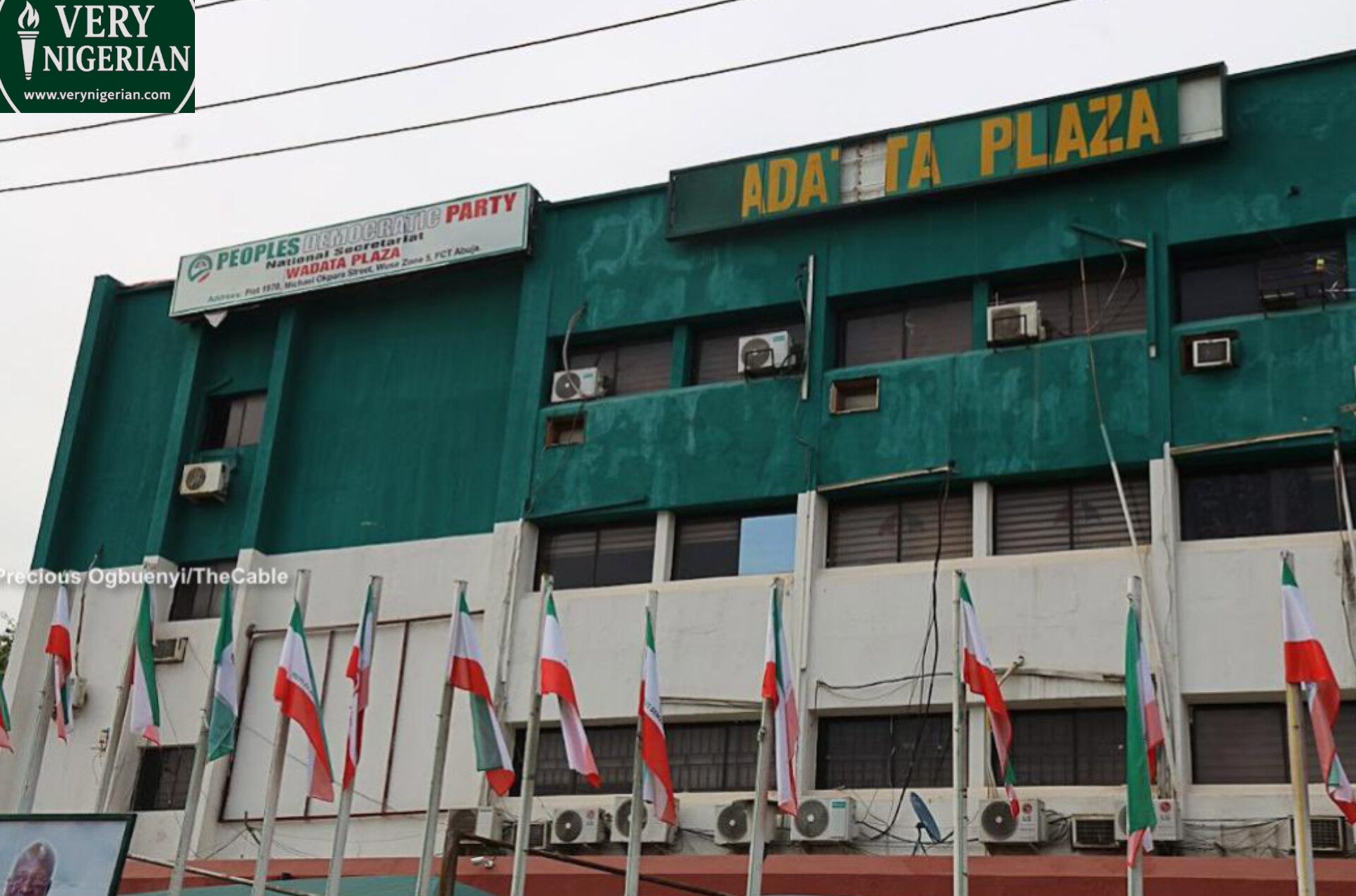
Tuesday’s violent standoff at the Peoples Democratic Party (PDP) national secretariat in Abuja was more than a clash between rival factions, it was a stark reminder of how fragile Nigeria’s democratic institutions have become.
As supporters of the Turaki and Abdulrahman camps confronted one another, the scene descended into chaos: teargas filled the air, journalists and secretariat staff were injured, and the very notion of lawful political engagement was trampled.
The confrontation, sparked by competing National Executive Committee (NEC) and Board of Trustees (BoT) meetings, revealed the depth of division within Nigeria’s once-stalwart opposition party.
Governors Bala Mohammed of Bauchi and Seyi Makinde of Oyo, alongside other key figures, found themselves caught in a maelstrom that exposed the PDP’s lack of internal discipline.
Minister Nyesom Wike, aligned with the Abdulrahman faction, was similarly drawn into the melee, highlighting how political influence and official power are now weaponized in ways that destabilize party structures rather than strengthen them.
The aftermath was predictably severe.
Abdulrahman’s camp moved swiftly to expel Turaki, Makinde, Mohammed, Wabara, Bode George, and several other party stalwarts, while simultaneously dissolving state executives in Bauchi, Oyo, Zamfara, Yobe, Lagos, Edo, and Ekiti.
This administrative purging, framed as a defense of constitutional order, risks further entrenching factionalism and undermining public confidence in the PDP as a viable democratic alternative.
Equally troubling is the apparent role of the Nigeria Police Force in escalating, rather than containing, the confrontation.
Eyewitnesses described officers firing teargas indiscriminately at governors, party leaders, and supporters alike, turning a political dispute into a public safety crisis.
Allegations that the Presidency infiltrated the party to manipulate outcomes only add to the perception that democratic processes are increasingly subverted by power brokers.
What we witnessed is not merely a party feud; it is symptomatic of a broader erosion of political norms.
A major opposition party that cannot resolve its leadership disputes without violence sends a dangerous message to citizens about the fragility of democracy.
When internal party conflicts spill onto the streets, with law enforcement either complicit or ineffective, the implications extend far beyond the PDP. It signals a breakdown in accountability, governance, and respect for constitutional processes.
The long-term consequences are profound.
Nigeria’s citizens are left questioning whether their votes matter if parties, rather than the electorate, determine outcomes through intimidation, factionalism, and legal manipulation.
Young Nigerians, whose engagement is critical to the future of democracy, may grow disillusioned by the spectacle of political infighting and lawless conduct.
The PDP must now choose between entrenching this destructive cycle or pursuing genuine reconciliation and institutional reform.
Nigeria, too, must demand that political parties operate transparently, respect the rule of law, and prioritize democracy over personal ambition.
Anything less risks turning political contestation into a permanent theatre of violence.
Tuesday’s events were a warning. Nigeria’s democracy is fragile, and its political institutions are under siege, not from external enemies, but from internal decay.
If the ruling and opposition parties continue to weaponize power, ignore the rule of law, and involve security forces in political disputes, the country’s democratic future will be the ultimate casualty.


 Follow Us on Google Discover






Eniola Badmus moves to end rift with Laide Bakare after backlash

NUJ FCT Chairman celebrates brother Emeka on 40th birthday, commends his advocacy for Women’s rights

BREAKING: DSS arraigns five suspects over abduction of 20 Prospective Corps Members in Imo

Nigeria would have gone bankrupt without fuel subsidy removal — Tinubu

Big blow for PDP as 21 LG chairmen, 226 councillors defect to APC in Adamawa

‘Life is better in Egypt’ – Rufai knocks Tinubu over fuel subsidy comment

Sanwo-Olu names Hassan Sanuth as new LAWMA MD

Petrol subsidy return could crash naira to N4,000/$ – Oyedele warns

Rivers Assembly reinstates three lawmakers after appeals

NLC upholds two-week ultimatum to FG over petrol prices, wage talks

BREAKING: Tinubu extends tenure of NCoS, Immigration service chiefs until 2028

Portugal hands Ronaldo 30-Day suspension, €255 fine for walking out of camp

Wike’s son Jordan dragged to EFCC over alleged $2.1m land fraud

Subsidy removal is here to stay, ‘we will never go back to Egypt’ – Tinubu

If Buhari a General could not end insecurity, you cannot blame Tinubu – Yari

BREAKING: Former Delta Governor Emmanuel Uduaghan is dead

‘₦29,000 Cannot sustain a retired officer’ — Atiku challenges Tinubu on police pensions, proposes initiative

Bauchi NDC governorship candidate Ibrahim Kashim resigns from party

Eight Nigerian Soldiers killed as ISWAP landmine hits Army patrol vehicle in Borno

2027: Tinubu must be stopped, ‘even Buhari saw him as bad news’ — Hakeem Baba-Ahmed

2027: “Which North? North Korea or North Carolina?” Nigerians mock politicians promising Tinubu Northern votes

FG defends fiscal reforms as World Bank flags ₦7.7tn debt interest

FG to introduce fuel taxes when economy stabilises, Oyedele says

“I saw Akpabio at the State House begging Tinubu to keep his position” — Jake Epelle

Wike, Akpabio, Uzodimma: Unity at the podium, rival ambitions behind the Scenes? can Tinubu keep his associates together?
Subsidy removal is here to stay, ‘we will never go back to Egypt’ – Tinubu

Gregory University founder Gregory Ibe dies at 63

Real reason we removed universities from IPPIS, recruitment waiver – FG

‘Nigeria cannot become prosperous in four years’ — Tinubu’s Economic Adviser says
