National News
Nigeria risks fiscal breakdown with N54tn plan, N15.9tn debt bill — Experts

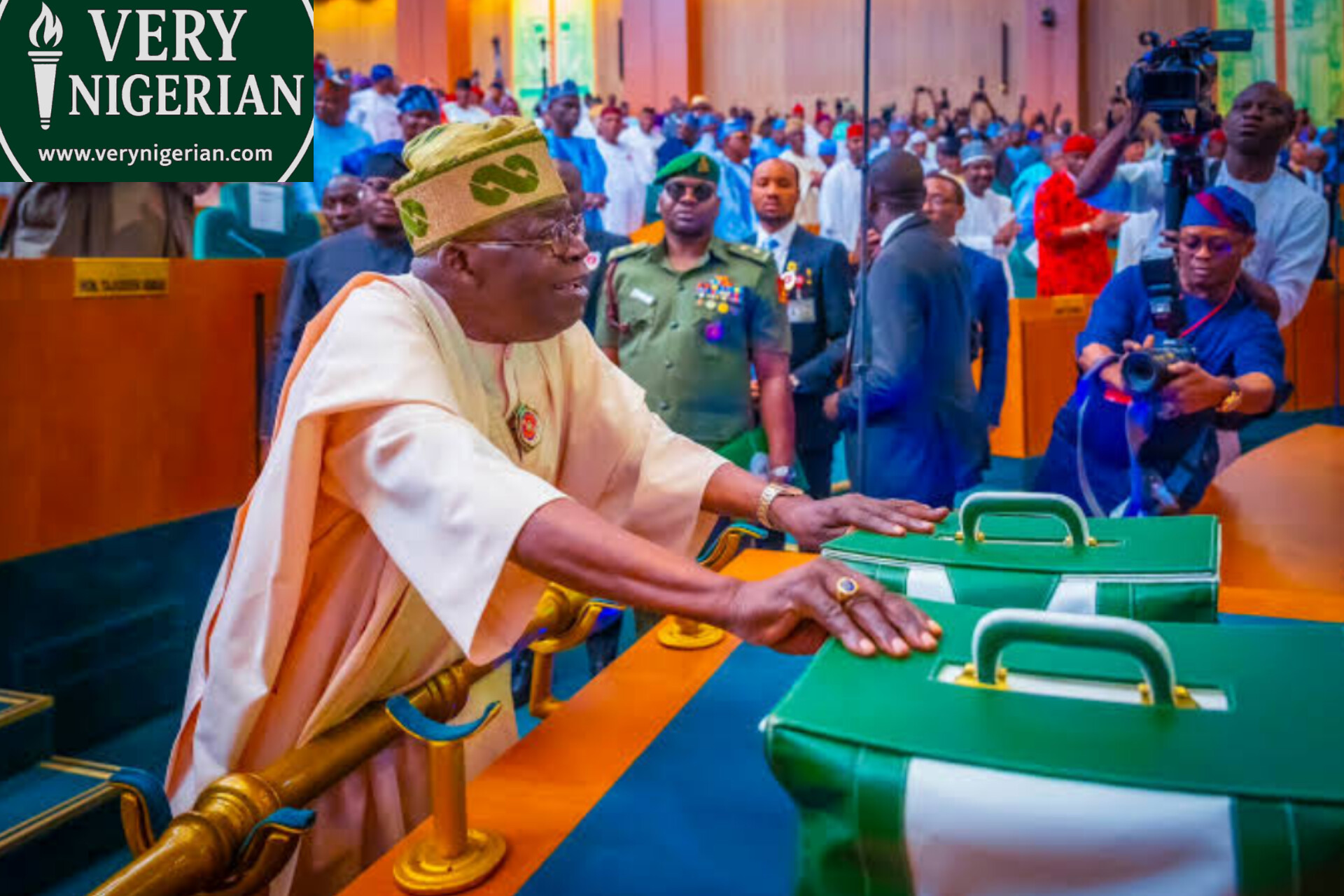
Nigeria is facing what many economists describe as a precarious fiscal road ahead as the Federal Government on Wednesday unveiled a proposed N54.43tn spending plan for 2026 under the newly approved Medium-Term Expenditure Framework and Fiscal Strategy Paper (MTEF/FSP).
Of that figure, a staggering N15.91tn, representing 29.2 per cent of the entire budget, is expected to go into servicing debt alone.
The deficit projection has triggered the loudest alarm.
Estimated at N20.10tn, the shortfall is not only N2.78tn higher than the entire 2022 national budget, it is also more than double the 2025 deficit, rising by 118 per cent.
Analysts warn that the scale of borrowing implied could push Africa’s largest economy into a deeper fiscal bind if not aggressively managed.
Briefing State House correspondents after the Federal Executive Council meeting, Minister of Budget and Economic Planning, Atiku Bagudu, said the 2026–2028 MTEF/FSP will be transmitted to the National Assembly on Monday.
He noted that the framework was built on a cautious oil price benchmark of $64.85 per barrel and an exchange rate of N1,512/$, with two production benchmarks, 2.06 million barrels per day as the industry target and 1.8mbpd as the budget benchmark.
The dual system, he explained, provides a 12.6 per cent safety margin in the event of production disruptions.
The government projects N50.74tn in federation revenue for 2026, of which the Federal Government is expected to receive N22.60tn, states N16.30tn, and local governments N11.85tn.
Total federal revenue from all sources is pegged at N34.33tn, including N4.98tn expected from government-owned enterprises.
The numbers, however, represent a 16 per cent decline from the 2025 revenue estimate despite a projected GDP growth rate of 4.68 per cent.
Bagudu further warned that 2026, being a pre-election year, could witness heightened political expenditure and renewed pressure on the exchange rate.
Statutory transfers are projected at N3tn, while non-debt recurrent expenditure is expected to hit N15.27tn.
But it is the N15.91tn debt service estimate, almost 300 per cent higher than the N3.98tn spent in 2022, that has deepened concerns about the sustainability of Nigeria’s public finances.
Recurrent expenditure has more than doubled within four years, rising from N7.11tn in 2022 to N15.27tn in 2026, while capital spending has grown at a much slower pace.
Experts who spoke to this newspaper cautioned that Nigeria risks drifting into a debt trap if the current trajectory is not corrected. CEO of the Centre for the Promotion of Private Enterprise, Dr. Muda Yusuf, described the deficit as “deeply concerning,” warning that excessive borrowing could “choke the fiscal space” and reverse recent gains in price and currency stability.
“We need to worry about debt sustainability,” Yusuf said. “High deficits and rising debt can trigger a vicious cycle. If we lose the fragile recovery achieved so far, inflation and exchange rate pressures will escalate again.”
Similarly, a professor of economics at Olabisi Onabanjo University, Sheriffdeen Tella, faulted the timing of the projections, arguing that the 2025 budget has barely commenced implementation.
“There is no basis for these projections,” he said. “They only started implementing 2025 in December. How can 2026 projections rest on nonexistent performance indicators? It means figures are being cooked up.”
Tella warned that Nigeria risks operating “multiple budgets within one fiscal year,” which he described as a sign of deepening fiscal disorder.
National President of the Nigerian Economic Society, Professor Adeola Adenikinju, expressed worry that Nigeria is once again veering away from the January–December budget cycle, creating uncertainty for investors.
He reminded the government that the Fiscal Responsibility Act caps deficits at 3 per cent of GDP, a threshold the new projections clearly violate.
Adenikinju noted that heavy domestic borrowing could crowd out the private sector, raise interest rates, and worsen the investment drought currently affecting the manufacturing and services sectors.
He also stressed that the effectiveness of capital spending remains weak, as releases often come late in the fiscal year.
Bagudu said President Tinubu had secured the support of the National Economic Council for stronger coordination between monetary and fiscal authorities, improved security investments, and stricter efforts to plug leakages in the oil, gas, and solid minerals sectors.
The minister added that the “Renewed Hope” agenda would prioritize infrastructure, productivity, and domestic manufacturing.
The MTEF/FSP, which forms the backbone of the 2026 Appropriation Bill, reflects extensive consultations among ministries, agencies, experts, and industry stakeholders, according to Bagudu.
But as debt servicing continues to outpace revenue growth and deficits widen at an unprecedented rate, fears persist that 2026 may become Nigeria’s most difficult fiscal year since the 2016 recession.


 Follow Us on Google Discover






Rugby star Hyron Andrews dies at 31 after accidental fall in South Africa

LAUTECH Resident Doctors halt 50-day strike as Makinde intervenes

House Officers, Nurses, Radiographers, Others wanted as DELSUTH opens recruitment – Apply Now

FG raises health fund allocation to N40.76bn, extends insurance to prison inmates

Erisco Foods announces 13 job openings across Nigeria – Apply Now

Tinubu reappoints Bala Bila as INEC commissioner, nominates six others

2027: ‘Don’t trust your destiny to ‘kalokalo’ people’ – Wike warns Rivers voters against Atiku, Amaechi, Obi

BREAKING: Cross River PDP Chairman Venatius Ikem resigns, cites leadership crisis

Real Madrid call for immediate resignation of La Liga President over controversial remarks

BREAKING: Oyebanji makes history as first Ekiti Governor to win second consecutive term

Atiku fully fit, ready to campaign in all 36 states, interact with Nigerians – ADC PCC

2027: Tinubu afraid to face Nigerians, has no business seeking re-election — Atiku campaign council

2027: Hamzat visits MFM GO Olukoya with running mate in Lagos(Photos)

BREAKING: Tragedy averted as Aircraft makes emergency landing in Abuja after door opens mid-air

Outrage as suspected cultists unveil renovated police post in Rivers

Popular gospel singer Toluwanisings is dead

2027: ‘I won’t go to every state with you’ — Tinubu tells APC campaign team

2027: Atiku, Obi, Makinde, Adebayo, Duke hold talks with six opposition parties

Ex-Senator Bello Mandiya’s body found in Abuja home three days after he slipped, hit his head in the bathroom

‘You Betrayed Osun People’ — Adeleke, Davido face backlash over support for Tinubu

‘Nobody can destabilise Tinubu through N’Assembly’, Akpabio declares support for 2027 re-election

JUST IN: Finnish Appeal Court reduces Simon Ekpa’s jail term to four years, upholds terrorism conviction

Zamfara govt set to empower 36,176 residents with Dangote shares

Umahi reopens first Niger bridge after emergency repairs, displays Tinubu’s photos

Over 10 soldiers, four civilians feared dead as Boko Haram terrorists attack Borno military base

Tension escalates as thugs attack NDC secretariat in Edo, destroy properties

Tension mounts as NLC rejects FG’s response to 14-day ultimatum

‘I love Islam, I’ve sent people to Mecca to pray for me, Nigeria for 25 years’ – Akpabio

‘Local champion’ – Donald Duke takes fresh swipe at Gov Diri over Lagos-Calabar coastal highway
