
Editorials
Rivers 2027: ADC, NDC others plot single candidacy to dismantle, defeat Wike’s rainbow coalition

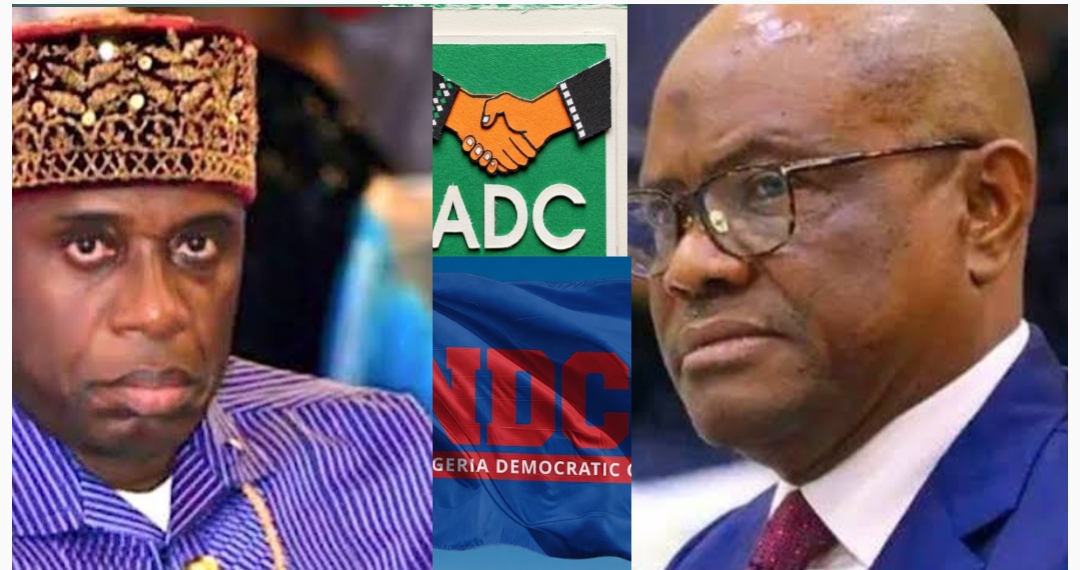
As the 2027 governorship race in Rivers State gradually takes shape, the political atmosphere is already defined by shifting alliances, behind-the-scenes negotiations, and a renewed push by opposition forces seeking to end the dominance of Minister of the Federal Capital Territory, Nyesom Wike’s political structure.
With the incumbent administration of Governor Siminalayi Fubara appearing to wind down after a turbulent tenure marked by prolonged political conflict, attention has now shifted firmly to the next phase of leadership in the oil-rich state, and who will control its political future.
Very Nigerian can conveniently confirm that opposition figures are actively working toward building a consensus platform aimed at unseating the entrenched political influence associated with Wike’s camp.
At the heart of these discussions is a growing belief among some stakeholders that only a united front can alter the state’s current power structure.
Among those being mentioned in emerging alignments are Gabriel Pidomson of the African Democratic Congress (ADC), Dumo Lulu-Briggs of the National Democratic Congress (NDC), and Farah Dagogo, all of whom are reportedly backed by different national-level political actors seeking influence in Rivers State’s evolving political equation.
The central argument driving this coalition effort is simple: avoid the fragmentation of opposition votes and present a single, viable candidate capable of challenging the political machinery that has shaped Rivers politics in recent years.
However, loyalists of Wike insist that the balance of power has not shifted. They maintain that the existing coalition structure, which cuts across major political parties including the APC, PDP, LP and AA, remains firmly in control of the state’s political direction.
According to the Rivers State APC Chairman, Tony Okocha, no opposition bloc currently possesses the organisational strength or political reach to dislodge the dominant structure, describing it as “a moving train” that cannot be easily derailed.
This confidence is rooted in the belief that the political machinery built over the years remains intact and will ultimately determine the outcome of the 2027 governorship contest.
Yet, beneath this assertion of control lies a state still grappling with the consequences of prolonged political instability.
The crisis between Wike and Fubara over the past years significantly slowed governance, disrupted development projects, and deepened political divisions across communities.
Major infrastructure projects, including the Port Harcourt Ring Road, experienced setbacks, while investor confidence weakened as political uncertainty overshadowed governance priorities. Small businesses and ordinary residents bore the brunt of the instability.
Legal practitioner, Dr. Innocent Ekwu, described residents as the ultimate losers of the political conflict, noting that governance suffered while political survival took precedence over public welfare.
As the state prepares for 2027, calls for consensus-building have intensified. Some stakeholders argue that only a unified candidate can restore stability, rebuild trust, and redirect governance toward development rather than political rivalry.
Political analyst, Olalekan Ige, believes the post-Fubara era could open a new chapter for Rivers State, with emerging aspirants such as Kingsley Chinda, Dumo Lulu-Briggs and Gabriel Pidomson expected to shape the direction of the contest.
However, uncertainty remains over whether any coalition can successfully bridge deep political, ethnic and party divisions long entrenched in the state’s politics.
As Rivers edges toward another critical election cycle, the stakes extend beyond party competition.
At issue is whether the state can finally break free from prolonged political conflict and refocus on governance, stability and economic development.
Ultimately, the 2027 governorship election will not only determine who occupies the Brick House, but whether Rivers State can move beyond years of political turbulence and reclaim a path toward institutional stability and public trust.
CC: The Guardian Nigeria


 Follow Us on Google Discover



El-Rufai: court sets October 26 for ruling on bid to stop trial

NDC set to inaugurate PCC, gives Obi, Kwankwaso nomination powers

White House launches ‘Trump TV’ amid US networks’ coverage boycott

‘My administration left substantial funds in the Anambra Government’s accounts, – Peter Obi releases fresh evidence (Photos)

UK bars Teachers trained in Nigeria, Ghana from applying for QTS

Macron leaves for UNGA in New York as Tinubu remains in Paris, Nigerians react

2027 AFCON Qualifier: Super Eagles resume training ahead of Madagascar clash

Benue govt suspends two Muslim pilgrims board officials over alleged misconduct

NAF moves to acquire 12 US attack helicopters

Unity College staff defy FG’s resumption order, continue strike

US networks suspend Trump coverage after White House bars three media outlets

BREAKING: Dangote refinery cuts petrol price to N1,325 per litre

‘It’s Not Only Me’ — Wike lists G5 Governors who have benefited under Tinubu

Obi supporters won Rivers only in their imagination – Wike

BREAKING: Tinubu extends vacation by one week, expected to return Weekend

BREAKING: Tinubu confirms absence from 81st UN General Assembly in New York, directs Shettima to lead Nigerian delegation

NSCDC releases names of 37 suspected illegal miners who died in custody (Full list)

Hardship: Civil Servants ask Tinubu to stabilise petrol at N500, pay N500,000 minimum wage

Tinubu to appoint Wike as Rivers, FCT campaign council coordinator amid rift with APC Govs

Crisis looms in NDC as OK Movement clash with pary chairman, Head of Operations resign over campaign council list

“The Pits You Dig for Me, You Shall Fall Into It – Sen. Natasha blast Akpabio over leaked audio

21 Days have come and gone, you are still on vacation, who is in charge of Nigeria – Atiku tackles Tinubu

By what magic are you going to force people to farm? – Sowunmi knocks Peter Obi

Mambilla Project: EFCC opens probe into Adesanya, Atiku, Malami, others named in Tribunal Award

Falconets crash out of 2026 U-20 Women’s World Cup after 1-0 loss to Colombia

‘Why are afraid of entering America?’, Atiku blasts Tinubu for missing third consecutive UNGA

Protest rock Taraba Nursing College as hoodlums attack female hostel, rape student

UNGA: Tinubu afraid of becoming Trump’s next Nicolas Maduro – Atiku

NDLEA seizes N3.4bn drugs, nab fake cop, mechanic