National News
Tinubu’s govt budgets ₦962.83bn for new SUVs, empowerment projects amid rising debt, hardship

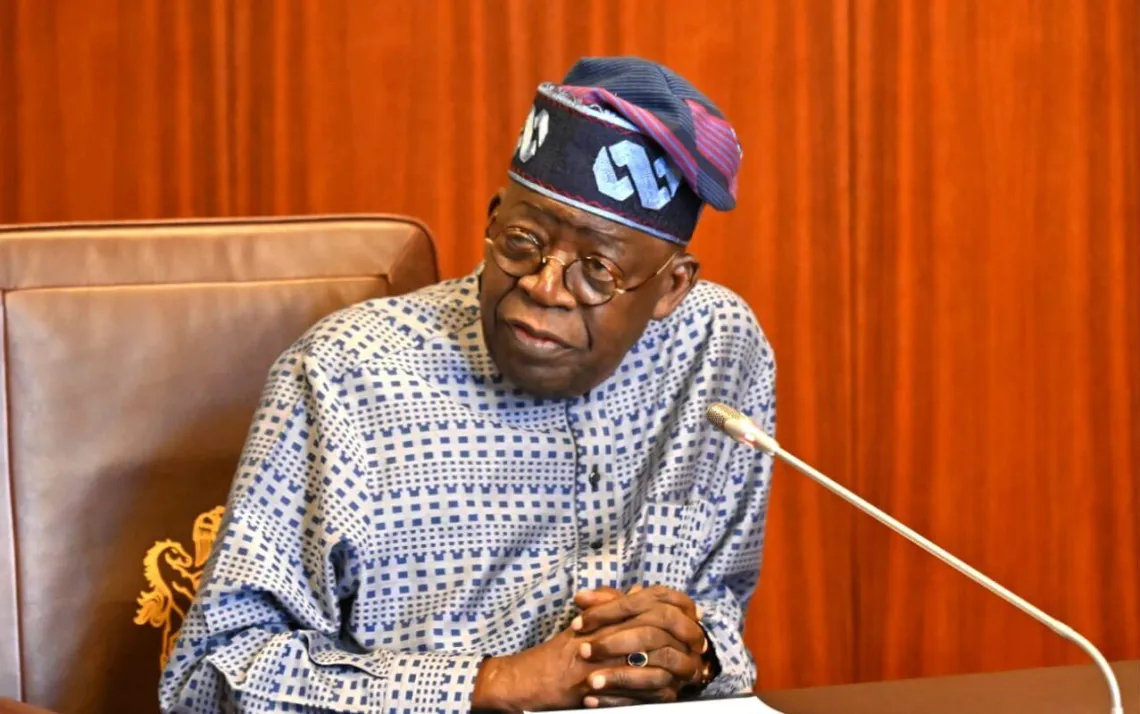
The Federal Government has earmarked ₦962.83 billion for the procurement of Sport Utility Vehicles (SUVs) and empowerment projects in the 2026 Appropriation Act, despite mounting concerns over Nigeria’s rising debt burden and the government’s increased borrowing plans.
The allocation comprises ₦15.13 billion for the purchase of 39 SUVs and ₦947.70 billion for the execution of 2,579 empowerment projects across the country.
An analysis of the 2026 budget by civic technology organisation, Tracka, revealed that the amount set aside for the SUVs and empowerment initiatives exceeds the combined ₦960.27 billion allocation to seven major federal ministries.
According to the organisation, the Federal Ministry of Industry, Trade and Investment received ₦156.8 billion, the Ministry of Housing and Urban Development got ₦145.3 billion, while the Ministry of Women Affairs was allocated ₦169.39 billion. The Ministry of Justice received ₦150.7 billion, the Ministry of Livestock Development ₦177.6 billion, the Ministry of Aviation and Aerospace Development ₦87.3 billion, while the Ministry of Petroleum Resources was allocated ₦73.1 billion.
Tracka also expressed concern over what it described as inadequate transparency in the implementation of the empowerment projects, disclosing that only 70 out of the 2,579 projects have clearly identified locations.
The organisation questioned how citizens and oversight agencies would monitor projects without specific locations.
“How can citizens track projects with no stated location? How can oversight institutions verify implementation? How can taxpayers know who ultimately benefits from these allocations?” Tracka queried.
According to the organisation’s findings, the empowerment projects are spread across 184 implementing agencies, including institutions that are not ordinarily mandated to execute such programmes.
It disclosed that the Federal Cooperative College, Oji River, was assigned 393 projects valued at ₦127.1 billion, while the National Agricultural Development Fund received six projects worth ₦89.5 billion.
Similarly, the Federal College of Horticulture, Dadin-Kowa, Gombe State, was allocated 216 projects valued at ₦88.1 billion, while the Federal Cooperative College, Ibadan, received 94 projects worth ₦36.9 billion.
Further analysis showed that the single largest empowerment allocation is ₦89.09 billion for the Renewed Hope Fertiliser Support Programme under the National Agricultural Development Fund.
Other major allocations include ₦14 billion for the procurement and distribution of empowerment equipment and utility vehicles through the Federal Cooperative College, Oji River; another ₦14 billion for youth empowerment under the Federal Ministry of Youth Development; and ₦14 billion for youth empowerment and medical outreach under the Federal Ministry of Humanitarian Affairs and Poverty Alleviation.
The budget also contains allocations for buses, tricycles, motorcycles, electric vehicles, sewing machines, fertilisers, vocational equipment, grants and several other empowerment items to be distributed through different agencies and across various parts of the country.
While acknowledging that empowerment programmes can improve livelihoods when properly implemented, Tracka warned that poorly designed interventions often become tools for political patronage instead of genuine economic development.
“There is nothing inherently wrong with empowerment programmes. When well-designed and transparently implemented, they can improve livelihoods, create economic opportunities and support vulnerable Nigerians,” the organisation stated.
It, however, added that experience has shown that many poorly defined empowerment projects have become vehicles for rewarding political loyalists rather than delivering broad-based benefits to citizens.
“When projects have no clear location, no transparent beneficiary selection process, and are assigned to agencies without the appropriate mandate, public confidence is eroded, and accountability becomes difficult,” it added.
Tracka further linked its concerns to the Federal Government’s current fiscal position, noting that the 2026 budget is projected to be financed with a deficit of about 46 per cent, meaning that a significant portion of government expenditure will be funded through borrowing.
“This concern is even more pressing given that the 2026 Budget is projected to be financed with a deficit of about 46 per cent. At a time when government is borrowing heavily to fund public expenditure, every naira should be directed toward investments with clear development outcomes, measurable impact, and value for money, not opaque allocations that citizens cannot effectively track,” the organisation said.
Tracka called on the government to improve transparency in future budgets by ensuring that every project has a clearly defined purpose, location, implementing agency, identifiable beneficiaries and measurable outcomes.
The concerns come amid the Federal Government’s recent decision to increase its 2026 borrowing plan to ₦29.20 trillion from the earlier projection of ₦17.89 trillion after expanding the proposed budget to ₦68.32 trillion against projected revenues of ₦36.87 trillion, resulting in a fiscal deficit of ₦31.46 trillion.
Economists have also questioned the spending pattern.
Professor of Economics at Olabisi Onabanjo University, Sheriffdeen Tella, urged the government to ensure that empowerment programmes support local production rather than importation.
“Any empowerment should be based on what we produce here. Spending empowerment money to import things simply means that the money is not here, it is not being used here, and it cannot have much positive impact on our economy,” he said.
Also commenting, Lagos-based economist, Adewale Abimbola, described the allocation as evidence of poor fiscal prioritisation, arguing that greater investments in infrastructure and human capital development would produce better long-term economic returns.
“It shows a lack of prioritisation on the part of the Federal Government. It paints the Federal Government as a poor manager of financial resources,” Abimbola said.
He further stressed that empowerment programmes should be carefully designed and transparently implemented to ensure they reach genuinely vulnerable Nigerians instead of becoming channels for waste, abuse and political patronage.


 Follow Us on Google Discover







FG, Labour resume talks on minimum wage, petrol price dispute

Bandits abduct over 10 passengers, driver travelling from Kebbi to Abuja

Presidency tackles Atiku over economic policy, questions his qualifications

BREAKING: Harry Kane wins 2026 Ballon d’Or

‘Ebola may force postponement of 2027 elections’ – NCDC

‘Nomination Was Unlawful’ — NDC aspirant drags Omo-Agege, party to court

Prof Ochefu rejects NDC Campaign Council appointment, give reason

Burna Boy presents Socrates Award to Bukayo Saka at 2026 Ballon d’Or ceremony

NDC unveils new National Secretariat in Abuja

INEC bows to pressure, makes preliminary Voters’ Register available online for public inspection

‘Atiku wants to push Nigeria back into poverty’ — Shettima

Why data may be used even when mobile data is switched off – MTN

Fani-Kayode arrives in South Africa, pledges to strengthen bilateral ties

“I know what I came into office to do” — President Tinubu

Court remands man at Kuje prison over alleged threat to release nude videos of Kano Governor

BREAKING: NDC unveils 2027 National Campaign Council, names Babachir Lawal, Galadima to key roles (Full List)

2026 Ballon d’Or: Date, time, venue, streaming details revealed

Troops storm bandits’ hideout, rescue three kidnap victims in Kebbi

US Pastor marries second wife, describes monogamy as unbiblical

Blessing CEO regains freedom after four months in prison

BREAKING: NCDC identifies two additional suspected Ebola cases, tracks 53 primary contacts

Woman killed, two injured as gunmen attack groundnut farmers in Plateau

FIFA U-17 Women’s World Cup: Round of 16 fixtures, dates, kick-off times revealed

Outrage as viral video shows JIBWIS members demanding AK-47s, threaten to kill ‘Infidels’ in Enugu, Jos on a Sunday

Lone Ebola patient to be flown out of Nigeria for further treatment
“I know what I came into office to do” — President Tinubu

Reaction trails as APC youth leader Dayo Israel gifts 2026 Toyota Prado SUVs to party officials

2027: Sowore accuses Peter Obi of ‘renting’ NDC for election, criticizes party

NCDC approves ₦100,000 weekly support for people isolated over Ebola concerns