
Editorials
Nigerians lament as cooking gas price jumps to ₦1,500 per kg

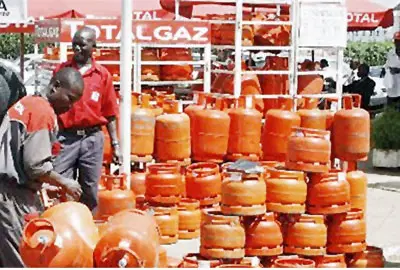
For millions of Nigerians already battling rising food prices, unstable electricity, worsening insecurity and crushing transport costs, the latest increase in the price of cooking gas has become yet another painful reminder of the country’s deepening economic crisis.
Across homes and marketplaces, frustration is boiling over.
Over the weekend, the price of Liquefied Natural Gas (LNG), popularly known as cooking gas, surged sharply from about N1,200 per kilogramme to between N1,400 and N1,500 in many locations, pushing the cost of refilling a 12.5kg cylinder from roughly N14,200 to as high as N17,500.
For ordinary Nigerians, the increase is not just another market adjustment; it is another direct blow to survival.
At several gas stations around Amuwo Odofin, Festac and other parts of Lagos, residents were seen lamenting openly over what many described as unbearable hardship under worsening economic conditions. Some buyers who arrived with money meant for a full 12.5kg refill were forced to settle for smaller quantities, while others quietly returned home empty-handed.
The mood was not just frustration; it was exhaustion.
For many families, cooking gas had become the last relatively manageable energy option after petrol prices skyrocketed following subsidy removal. But with the latest increase, even that alternative now appears to be slipping out of reach.
The development has also revived fears that many Nigerians may begin returning massively to firewood and charcoal for cooking, a shift experts warn could trigger another environmental crisis through deforestation, erosion and destruction of wildlife habitats.
A resident, John Chukwuebuka, who spoke at a gas station in Festac, warned that the consequences may go beyond economics.
“When people can no longer afford cooking gas, they will return to firewood and charcoal. That means more trees will be cut down. It will affect forests, wildlife and even worsen environmental disasters. This hardship is becoming dangerous,” he said.
Another resident, Morenike, blamed the worsening living conditions on years of economic decline and poor governance, insisting that Nigerians are gradually being pushed to the wall.
According to her, the latest increase reflects a wider national problem where insecurity, inflation and collapsing purchasing power continue to define everyday life for ordinary citizens.
Public affairs analyst, Chief Rowland Adenuga, also described the situation as alarming, arguing that cooking gas should ordinarily have been protected from market instability because of its importance to households and environmental sustainability.
“Instead of making cooking gas more affordable after fuel subsidy removal, the price keeps going higher. At this point, many families may abandon it completely. If there is anything government should subsidise, it should be cooking gas,” he said.
He warned that continued increases could worsen deforestation as more households embrace charcoal and firewood, adding that the environmental consequences may eventually become severe.
The rising anger among citizens also reflects broader frustrations over the state of the economy. Since the removal of fuel subsidy, the prices of transportation, electricity, food and basic household items have all risen sharply, leaving many Nigerians struggling to cope with declining incomes.
Economic analysts say the latest spike in cooking gas prices is partly linked to inflation, foreign exchange pressures, rising distribution costs and broader instability in the energy market.
But for ordinary Nigerians, the technical explanations matter less than the daily reality confronting them.
For families already rationing meals, skipping medical treatment, and cutting back on transportation, the inability to afford cooking gas now represents another layer of hardship in an economy many believe is becoming increasingly unbearable.
Education rights activist, James Hamilton, said the situation reflects the wider inflationary pressure across the country, but warned that government must urgently intervene before public frustration deepens further.
“When people can no longer afford to cook in their homes, the danger is not just economic anymore; it becomes social. The hardship is reaching a point where people feel abandoned,” he said.
As Nigeria edges closer to the 2027 elections, many citizens say political leaders appear more focused on campaigns and power calculations than on the worsening conditions confronting the people.
Yet beyond politics, the reality remains stark: for millions of Nigerians, even the simple act of preparing a meal is gradually becoming a luxury.



 Follow Us on Google Discover

Four Corps members, soldier, one other burnt to ashes as military truck collides with passenger bus in Adamawa

Kwankwaso may struggle to market Obi in the North — Datti Baba-Ahmed

Benue Gov appoints Eunice Ogbenyi as Acting Head of Service

Accept results in good faith – Obi, NDC tells aspirants who lost primaries

Three former Osun lawmakers resign from APC

Nasarawa Assembly passes 37 bills, adjourns for legislative recess

2027: ‘Make Amaechi your running mate’ – ADC chieftain tells Atiku

BREAKING: Police arrest INEC officer, quiz Wike’s aide Lere Olayinka over voter data leak

Oyo Abductions: We are silent because our children are not in Nigeria — Lawmaker Salami knocks Nigerian government

Bandits storm polytechnic community in Zamfara, abduct seven students

Gov Eno sacks aide for calling on Tinubu to resign

Three lawmakers dump APC for ADC, PRP

‘It is unrealistic to expect Adeboye to lead protest’ – Bamiloye slams critics

Delta Teachers join nationwide protest against insecurity, demand release of abducted colleagues

Davido to perform at FIFA World Cup 2026 countdown concert
BREAKING: Police arrest INEC officer, quiz Wike’s aide Lere Olayinka over voter data leak
Gov Eno sacks aide for calling on Tinubu to resign

BREAKING: Gunmen abduct Adelabu’s brother’s wife, twin children in daylight attack in Oyo

BREAKING: Eliminate terrorists within 90 days or resign – Adeboye to service chiefs

JUST-IN: ADA drags INEC to court, seeks deregistration of NDC over alleged illegal registration

BREAKING: Tension as gunmen storm Immigration office in Ogbomoso, disarm officers

I endorse Obi, but I still support Tinubu – NDC chieftain Omo-Agege

Bandits can be tracked if security agencies are willing – Buratai
Three lawmakers dump APC for ADC, PRP
Oyo Abductions: We are silent because our children are not in Nigeria — Lawmaker Salami knocks Nigerian government

BREAKING: Wike’s ally Chinda dumps PDP after clinching APC guber ticket

BREAKING: Court sentences 4 Al-Shabaab members to death by hanging over Owo church attack

‘They will not escape this’ – Emeka Ike storms INEC office over NDC primary election
I didn’t join APC because of deep seaport — Gov. Eno
